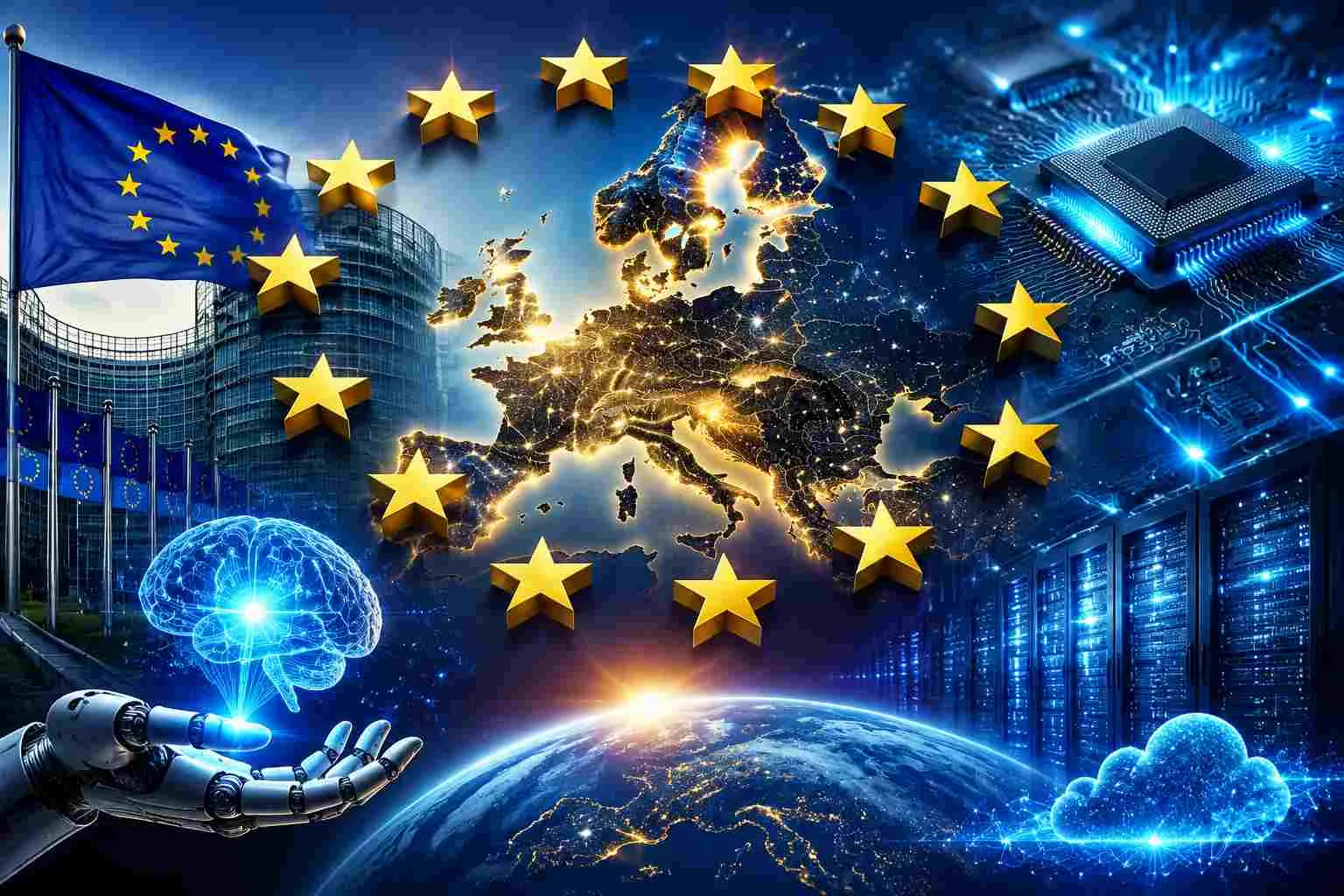
The European Union is investing billions of euros in artificial intelligence, semiconductors, and digital infrastructure as part of a sweeping strategy to achieve technological sovereignty. The bloc's central objective is to reduce dependence on foreign suppliers and strengthen its capacity to develop and control critical technologies. The initiative spans multiple domains including AI, cybersecurity, cloud computing, semiconductor manufacturing, quantum technologies, and data protection. For companies, governments, and investors around the globe, this strategy may become one of the defining stories of the digital age.
What does technological sovereignty mean for the European Union?
Technological sovereignty in the European context refers to the bloc's ability to develop, maintain, and control essential technologies without excessive reliance on external powers. It is not about isolation but about ensuring that Europe possesses the capabilities, infrastructure, and expertise needed to compete and protect itself in a rapidly evolving digital world. The concept has gained importance as global supply chains have become more interconnected and as advanced technologies have become essential for economic growth and national security. European authorities argue that excessive dependence on foreign suppliers can create vulnerabilities in critical sectors such as healthcare, energy, transportation, telecommunications, and defense.
Why is Europe concerned about its digital dependency?
For decades, Europe has relied heavily on technologies developed outside its borders. Many of the largest cloud computing providers, artificial intelligence companies, social media platforms, and semiconductor manufacturers are headquartered in the United States or Asia. Today, essential digital services used across Europe are often powered by infrastructure controlled by international corporations. European leaders believe that maintaining long-term competitiveness requires greater domestic capabilities in these critical areas. The issue is not only economic but also involves cybersecurity, data governance, privacy protection, and strategic autonomy.
What are the four pillars of Europe's technology strategy?
European institutions have structured their push for technological sovereignty around four core areas. Each pillar represents a strategic domain where the bloc aims to build independent capacity and reduce external vulnerabilities.
- Leadership in artificial intelligence. AI has emerged as one of the most important technologies of the modern era. From healthcare diagnostics and financial services to transportation and manufacturing, AI is transforming virtually every sector of the economy. European institutions are investing heavily in AI research, infrastructure, and innovation, aiming to create a competitive ecosystem that supports both startups and established companies. European authorities believe that AI must be developed responsibly, maintaining high standards of transparency, accountability, and human rights. The region has also become a global leader in AI regulation, introducing frameworks to balance innovation with public trust.
- Semiconductor independence. Semiconductors are the foundation of modern technology. Smartphones, AI systems, vehicles, industrial equipment, telecommunications networks, and consumer electronics all depend on advanced chips. Recent disruptions in global supply chains have highlighted the risks of relying on a limited number of manufacturing hubs. In response, Europe has launched major initiatives to boost domestic semiconductor production. The goal is not only economic competitiveness but also supply chain security and technological resilience. By expanding its manufacturing capabilities, Europe hopes to reduce vulnerabilities and strengthen its position in the global tech ecosystem.
- Cloud computing and digital infrastructure. Cloud computing has become the backbone of the modern digital economy. Businesses, governments, and consumers increasingly rely on cloud services for data storage, software applications, analytics, and artificial intelligence. European leaders have expressed concerns about excessive dependence on foreign cloud providers. As a result, the European Union is encouraging the development of sovereign cloud infrastructure capable of supporting strategic sectors with high standards of security, privacy, and regulatory compliance. New investments are being directed toward data centers, digital networks, and next-generation computing resources.
- Cybersecurity and digital resilience. As societies become more digitally connected, cybersecurity has become a critical priority. Cyberattacks targeting governments, hospitals, energy systems, and companies continue to rise worldwide. European institutions are investing in cybersecurity capabilities to strengthen digital resilience and protect critical infrastructure. The aim is to ensure that essential services remain secure in the face of increasingly sophisticated threats. Experts consider cybersecurity one of the most important components of technological sovereignty.
How did artificial intelligence become the center of the strategy?
Artificial intelligence sits at the heart of Europe's technological ambitions. The global competition in AI has intensified significantly as companies and governments race to develop increasingly powerful models and applications. Generative AI, large language models, machine learning systems, and autonomous technologies are expected to influence economic growth for decades. European authorities recognize that leadership in AI will play a crucial role in determining future competitiveness. As a result, substantial investments are being directed toward research institutions, innovation hubs, startups, and AI infrastructure projects.
How does the European strategy impact companies and investors?
The pursuit of technological sovereignty creates opportunities across multiple industries. Technology companies, cloud providers, cybersecurity firms, semiconductor manufacturers, and AI startups stand to benefit from increased investment and policy support. Businesses operating in Europe may also experience changes in procurement practices, data governance requirements, and technology standards. Companies that can align themselves with European digital priorities may find significant growth opportunities in the coming years. Investors are closely monitoring developments as billions of euros flow into strategic technology sectors.
What is the global context of the race for technological leadership?



Europe is not alone in its pursuit of technological independence. The United States continues to invest heavily in artificial intelligence, advanced manufacturing, and semiconductor production. China has also prioritized technological self-sufficiency through major investments in innovation, infrastructure, and industrial development. This has created a global race for technological leadership unlike any seen before. Countries increasingly view advanced technologies as strategic assets essential for economic prosperity and national security. The competition extends beyond commercial interests and increasingly influences geopolitics, trade policies, and international partnerships.
What role does open-source software play in digital sovereignty?
Open-source software plays an increasingly important role in Europe's technology strategy. Many policymakers believe that open-source solutions can help reduce dependence on proprietary platforms while encouraging innovation and collaboration. Open-source technologies support transparency, interoperability, and flexibility across digital ecosystems. They also allow organizations to tailor software to specific needs without being locked into a single vendor. As digital sovereignty initiatives expand, open-source development is expected to remain a key area of focus.
What are the main challenges for European technological sovereignty?
Despite strong political support, achieving technological sovereignty presents significant challenges. Developing world-class semiconductor manufacturing facilities requires enormous capital investments. Competing with established tech giants demands sustained funding, innovation, and talent development. The rapid pace of technological change also creates uncertainty about future priorities and market dynamics. Furthermore, global tech ecosystems remain highly interconnected, making complete independence unrealistic. Most experts believe the goal is not total self-sufficiency but rather strategic resilience and the reduction of vulnerabilities.
Frequently Asked Questions
What is the European Union's technological sovereignty strategy?
It is an ambitious plan to strengthen Europe's ability to develop, control, and protect critical technologies such as artificial intelligence, semiconductors, and cloud computing, reducing dependence on foreign suppliers.
Why is Europe investing so heavily in semiconductors?
Due to recent disruptions in global supply chains and the strategic importance of chips across many sectors, Europe aims to increase domestic production to ensure security and competitiveness.
How does artificial intelligence fit into European technological sovereignty?
AI is considered central to future competitiveness. Europe is investing in research, infrastructure, and regulation to lead responsible AI development, balancing innovation with human rights.
What are the benefits for businesses from the European strategy?
Technology, cybersecurity, and semiconductor companies can benefit from increased investments and supportive policies. Businesses aligned with European digital priorities may find growth opportunities.