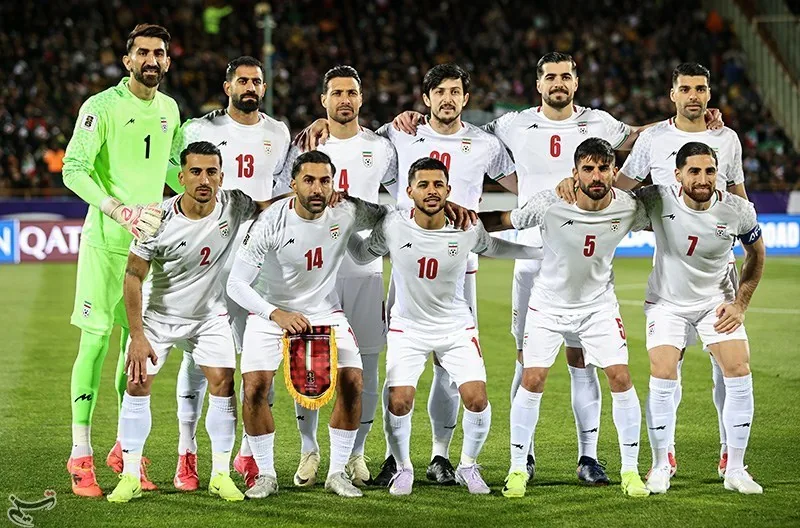
Iran's national football team is preparing for the 2026 World Cup under the dual pressures of ongoing armed conflict with the United States and Israel, and unresolved bureaucratic hurdles for entering US soil. The players, currently training in Antalya, Turkey, describe a mix of anxiety and uncertainty as they await visa approvals. The war, which began on February 28, continues without a permanent ceasefire, and news from the front lines mixes with daily training routines. The team is more than two weeks into their Turkish camp, intensifying preparations this week.
The Weight of War News in Training Camp
Midfielder Saeid Ezatolahi, 29, participating in his third World Cup, acknowledges that past experience does not shield him from the conflict's impact. "This is going to be my third World Cup. So for me and some other players, maybe it's easier to deal with this kind of thing," he told the Associated Press. "But in the end... it will be difficult for us because at the same time, we are following the news in our country," he added. Political issues, he suggested, can affect the minds of both players and the wider public.
A Veteran's Perspective on Conflict
Ezatolahi's comments highlight the challenge of maintaining focus while war rages at home. The squad is aware that the political situation may influence their performance. The team's ability to compartmentalize is tested daily as updates from the front arrive. For the veteran midfielder, the third World Cup carries an emotional weight unlike any previous tournament.
Bureaucratic Barriers and a Relocated Base
The Iranian delegation faces diplomatic obstacles to enter American territory. Originally, the team's training base was planned for Tucson, Arizona, but it was moved to Tijuana, Mexico, on the border with California. Although entry permissions for all members have been finalized, the team still awaits authorizations to enter the United States — with no confirmed date. Part of the squad even traveled to Ankara to handle visa matters amid logistical adjustments for the tournament.
Diplomatic Logjams Before Kickoff
The unresolved visa situation adds another layer of uncertainty to an already tense preparation. With the first match scheduled for June 15 against New Zealand at the Los Angeles Rams' stadium in Inglewood, the team does not need to enter the US before June 14. Still, the lack of a confirmed entry date creates unease. The delegation's base in Tijuana allows proximity to the border, but official clearance remains pending.
Pressure from the Stands and Hopes for Unity
Iran's early games will take place near Los Angeles, home to a large Iranian community, including opponents of the current government. Ezatolahi acknowledged that this expectation generates extra pressure. "Certainly we hope to have many fans during our games at the stadium. That will be a lot of pressure for us because expectation will be high," he said. "I just wish we can make them proud and show that Iranians are prepared for any hard work in the world."
Mohammad Ghorbani, 24, tries to separate football from politics without ignoring reality. "It's true that we are facing special circumstances now, but we are football players and we have to play, train and prepare for the competitions ahead," he stated. The group seeks a result that eases the mood among Iranians. "We know our people have been through many difficulties during the war, and we are going for them," Ghorbani said. He emphasized a message of unity: "The best message I can give now is that the Iran national team is showing what it means to be a team. We are showing that we are a team under one flag that can bring joy to our entire country and show the strength of Iranian players and the Iranian people to the world."
The Group G Challenge
Iran is in Group G alongside New Zealand, Belgium, and Egypt. After the opener on June 15, the team returns to Inglewood on June 21 to face Belgium. The group stage concludes on June 26 in Seattle against Egypt. According to AP, the team does not need to enter the US before June 14, one day before the first game. Ezatolahi summarized the group's focus: "We need to clear our minds and be renewed because our goal and our duty is to fight for our people, represent our country and show how good we are."
The Iranian squad's preparations are unprecedented in recent World Cup history. With the tournament looming, the players must navigate not only formidable opponents like Belgium and Egypt but also the psychological toll of a war at home. Their resilience will be tested on and off the pitch. The world will watch how this team handles the weight of expectations and the burden of conflict.