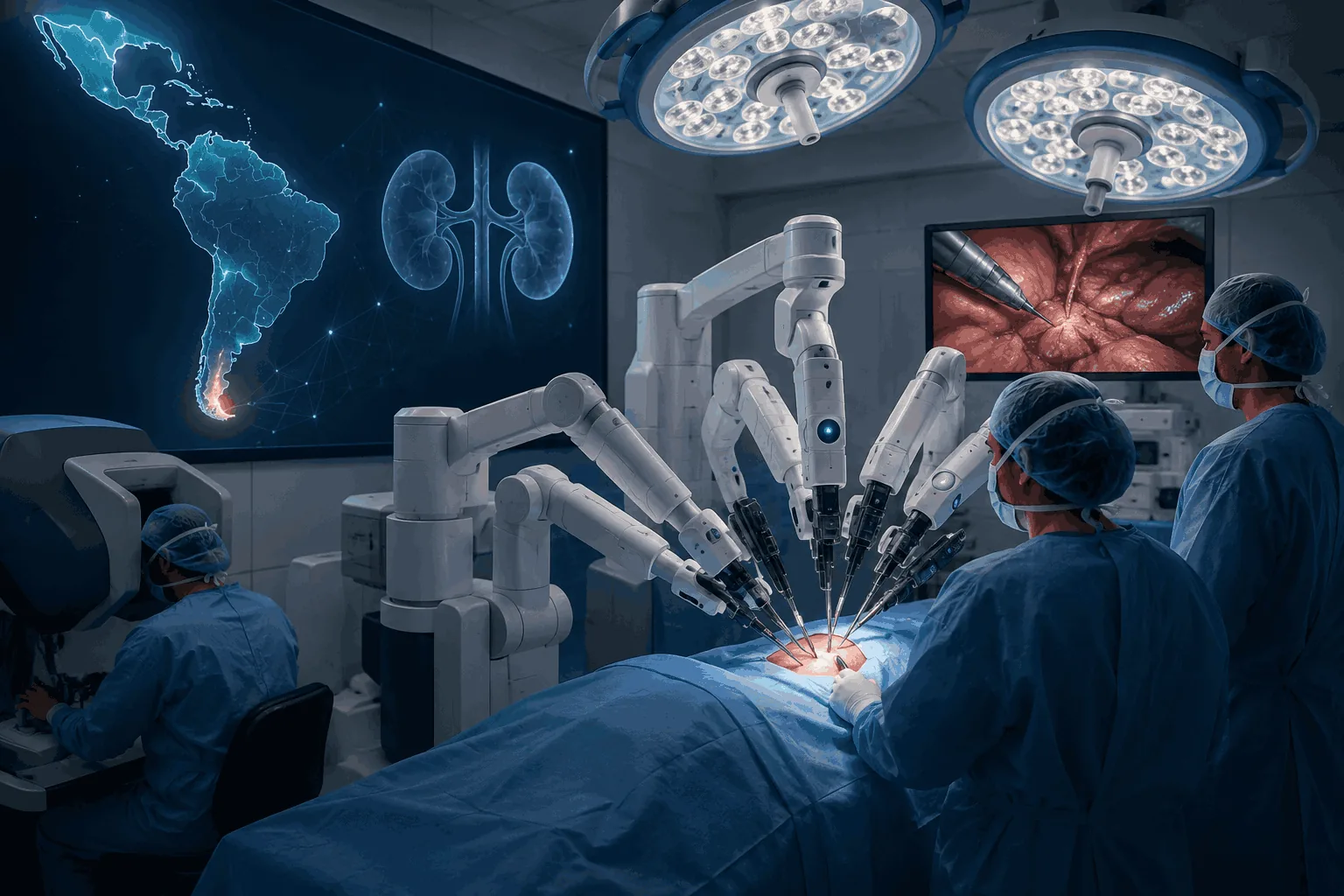
A historic robotic kidney transplant between living donors has been successfully performed for the first time in Latin America. The procedure, carried out entirely with robotic arms controlled remotely by surgeons, involved André Marques de Oliveira donating a kidney to his sister, Adriana Marques de Oliveira, who suffered from advanced kidney failure. This achievement marks a significant leap in surgical precision and patient recovery. The operation united cutting-edge technology with an act of family solidarity.
Robotic Precision in the Operating Room
Surgeons performed the procedure without directly touching the patients for the majority of the operation. Instead, robotic arms positioned beside the surgical tables executed every move under remote command. The surgery involved small cannulas inserted into the abdomen, through which various instruments passed. Some clamps held tissues and organs, others made incisions, while a camera transmitted magnified images of the surgical area. This setup eliminated natural hand tremors and enhanced the accuracy of every movement.
A Console That Mimics Human Touch
The equipment allows the surgeon to control instruments from a console with a design resembling a joystick. According to medical staff, the magnified view — 10 to 12 times larger than what the naked eye sees — is one of the major advantages. One professional described the experience: "It's like I'm dressing through this joystick." The technology provides a more intuitive interface and reduces fatigue for the surgeon during lengthy procedures. The combination of ergonomics and high-definition imagery was crucial to the operation's success.
Donor and Recipient: A Story of Compatibility and Courage



André decided to donate his kidney after tests confirmed compatibility with his sister. Adriana had reached the point where only 6 percent of her kidney function remained, forcing her to rely on hemodialysis three times a week. The draining treatment routine and poor quality of life drove the family to seek other options. During an interview, Adriana became emotional when speaking about her brother's decision. Doctors emphasized that healthy individuals can live normally with a single kidney, as the remaining organ compensates for the other.
From Dialysis to a New Lease on Life
Adriana's condition before the transplant was severe, with her kidney function at a critical low. The frequent dialysis sessions prevented her from working and severely limited her daily activities. The family's search for alternatives eventually led them to this pioneering robotic procedure. The medical team highlighted that the donation from a living relative significantly increased the chances of long-term success. Compatibility between the siblings was a crucial factor in moving forward with the surgery.
Recovery Marks a New Standard
Four hours after the operation began, the teams celebrated the success of the procedure. Specialists state that the robotic technique is less invasive than conventional surgery, leading to faster and less painful recovery. One doctor noted, "The pain is almost nonexistent." André was discharged the day after the surgery, while Adriana remained hospitalized for ten days and is now recovering at home with her family. The reunion between the siblings was filled with emotion, gratitude, and even jokes.
André declared, "I wouldn't have any doubts, I wouldn't think twice. For my sister, I would do it again." For the family, the procedure represented far more than a technological advance: it meant the chance to start a new life. The successful transplant underscores how robotics can facilitate living-donor procedures with minimal trauma. It also highlights the potential for broader adoption of such techniques across Latin America.