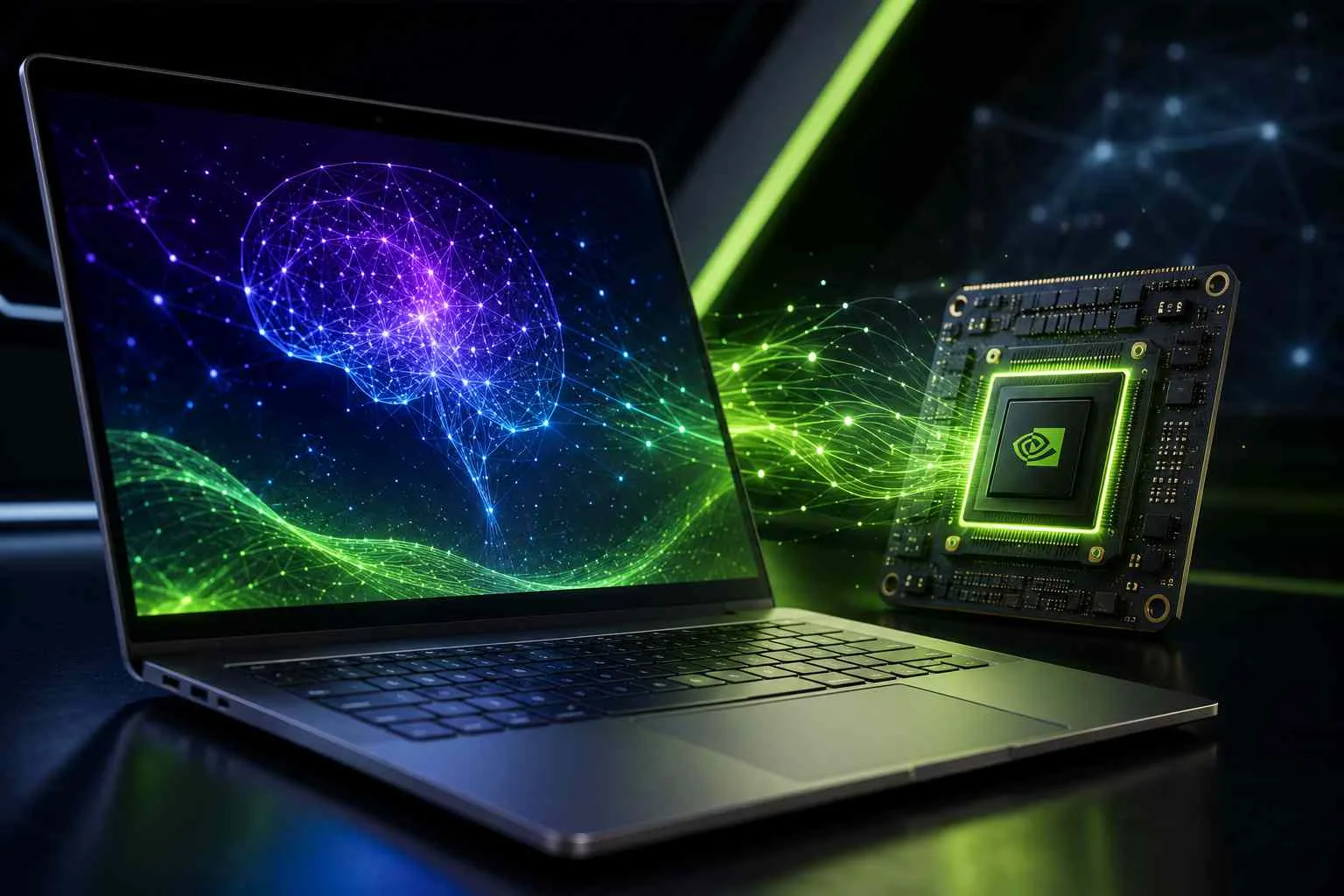
NVIDIA unveiled the RTX Spark platform at Computex 2026 as part of an ambitious strategy to bring advanced artificial intelligence directly to personal computers. CEO Jensen Huang described AI PCs as the next major technological revolution, comparing their potential impact to the internet in the 1990s and smartphones in the 2010s. The company aims to enable users to run AI models locally on their own machines, reducing reliance on remote servers and cloud services. This shift, according to NVIDIA, will accelerate as more powerful and efficient chips become capable of handling AI tasks without an internet connection.
What Makes the RTX Spark Platform a Game-Changer for Local AI?
The RTX Spark platform combines several key components purpose-built for local AI processing. It integrates a CPU based on the N1X architecture, a next-generation Blackwell GPU, high-speed unified memory, dedicated AI accelerators, and processing optimized for generative models. This system was developed after years of collaboration between NVIDIA and Microsoft. The goal is to deliver enough performance to run large language models, image generation tools, and intelligent agents directly on the user’s device.
- CPU based on the N1X architecture
- Blackwell next-generation GPU
- High-speed unified memory
- Dedicated AI accelerators
- Optimized processing for generative models
Which Hardware Components Power an AI PC?
AI PCs are computers specifically engineered to run artificial intelligence applications with high performance. Unlike traditional computers, they include dedicated components for AI workloads. The table below outlines the main parts and their roles:
| Component | Function |
|---|---|
| CPU | General system processing |
| GPU | AI training and inference |
| NPU | Dedicated acceleration for artificial intelligence |
| Unified memory | Fast data transfer |
| SSD NVMe | Quick model loading |
These components work together to ensure complex AI models can run locally without relying on an internet connection.
What Local AI Tasks Can Users Perform Without an Internet Connection?
With the new generation of computers equipped with NVIDIA chips, users will be able to execute a wide range of AI tasks directly on their devices. The planned applications cover many everyday activities:
- Personal offline chatbots
- Advanced virtual assistants
- AI-powered image creation
- Automatic video generation
- AI-assisted programming
- Document summarization
- Intelligent file search
- Real-time translation
- Presentation generation
- Advanced photo editing
These functions can be performed without sending data to remote servers, which enhances privacy and reduces latency.
Why Does NVIDIA Aim to Reduce Cloud Dependency for AI Workloads?
Cloud computing has transformed technology but also introduced significant challenges. The following table compares current problems with the solutions offered by local processing:
| Current Problem | Local Solution |
|---|---|
| Internet dependency | Offline operation |
| Server costs | Processing on the device itself |
| Latency | Instant responses |
| Limited privacy | Data stays on the PC |
| Queues for online services | Immediate execution |
This approach can significantly lower operational costs for companies and improve the user experience. It also eliminates the need for a constant internet connection for everyday AI tasks.
How Is Microsoft Integrating AI Features Into Windows 11 for RTX GPUs?
NVIDIA’s strategy is being driven forward by Microsoft. Windows 11 has been receiving advanced artificial intelligence features that leverage the power of RTX GPUs. Among the functions available or in development are:
- Automatic text rewriting
- Intelligent summarization
- Contextual file search
- Integrated system assistants
- Instant translation
- Automatic document organization
This integration with Microsoft’s operating system allows AI PCs to deliver a native and smooth experience to users.
What Is the Projected Growth of the AI PC Market Through 2030?
Industry projections indicate that AI PCs could become the dominant category in the computer market in the coming years. The estimated market share for these devices is shown below:
| Year | Estimated AI PC Market Share |
|---|---|
| 2025 | Less than 10% |
| 2026 | 20% to 30% |
| 2027 | 40% to 50% |
| 2030 | Majority of the global market |
Manufacturers including Dell, ASUS, Lenovo, Acer, MSI, and HP are already working on models based on this new generation of hardware. Demand is expected to grow rapidly as more AI applications become available.
Which PC Manufacturers Are Adopting NVIDIA’s RTX Spark Hardware?
Major PC manufacturers have already begun developing systems based on the RTX Spark platform. Dell, ASUS, Lenovo, Acer, MSI, and HP are among those collaborating with NVIDIA. These companies are expected to release devices that take full advantage of local AI processing capabilities. The involvement of such a broad range of partners signals strong industry confidence in the AI PC concept.
How Will AI PCs Specifically Benefit Content Creators and Professionals?
Journalists, designers, programmers, video producers, and marketing professionals are expected to be among the biggest beneficiaries. The main advantages include:
- Faster content production
- Automation of repetitive tasks
- Local image generation
- Intelligent video editing
- AI-assisted code creation
- Greater project privacy
This could significantly reduce the time needed to produce digital content. Professionals working with digital materials will have more powerful tools at their disposal without depending on external servers.
Who Are NVIDIA’s Main Rivals in the AI Chip Market?
The race for AI PCs is only just beginning. NVIDIA faces competition from several major technology companies, each with its own strategy. The table below outlines these competitors:
| Company | Strategy |
|---|---|
| AMD | Ryzen AI processors |
| Intel | Core Ultra line with NPU |
| Qualcomm | Snapdragon X Elite |
| Apple | M-Series chips with integrated AI |
Despite the competition, NVIDIA continues to lead the global market for artificial intelligence hardware. The company is betting on its GPU expertise and software ecosystem to maintain its edge.
Can NVIDIA Maintain Its Leadership Despite Intense Competition?
NVIDIA’s deep experience in GPUs and its robust software ecosystem give it a strong position. The company has invested heavily in AI-specific hardware like the RTX Spark platform and maintains close partnerships with Microsoft and PC manufacturers. However, rivals such as AMD, Intel, Qualcomm, and Apple are developing their own AI-focused solutions. The next few years will determine whether NVIDIA can hold its lead as the market expands.
Frequently Asked Questions About AI PCs and the RTX Spark Platform
What Is an AI PC?
An AI PC is a computer equipped with specialized hardware designed to execute artificial intelligence tasks locally on the device. This includes components like GPUs, NPUs, and unified memory that enable efficient AI processing without requiring a constant internet connection.
What Is the RTX Spark Platform?
The RTX Spark is NVIDIA’s new platform created to accelerate artificial intelligence applications on PCs. It combines an N1X CPU, Blackwell GPU, unified memory, dedicated AI accelerators, and optimized processing for generative models, developed in collaboration with Microsoft.
Will AI Work Without an Internet Connection on RTX Spark PCs?
In many cases, yes. NVIDIA states that numerous tasks including chatbots, image generation, translation, and document summarization can be executed locally without internet access. This offline capability enhances privacy and reduces latency.
Who Are NVIDIA’s Main Competitors in the AI PC Space?
AMD, Intel, Qualcomm, and Apple are all developing rival solutions for AI PCs. AMD offers Ryzen AI processors, Intel has the Core Ultra line with NPU, Qualcomm provides the Snapdragon X Elite, and Apple integrates AI into its M-Series chips.
When Will These AI PCs Be Available to Consumers?
According to the source, the first models based on RTX Spark hardware are expected to launch later in 2026. Manufacturers such as Dell, ASUS, Lenovo, Acer, MSI, and HP are already developing devices for this new generation.