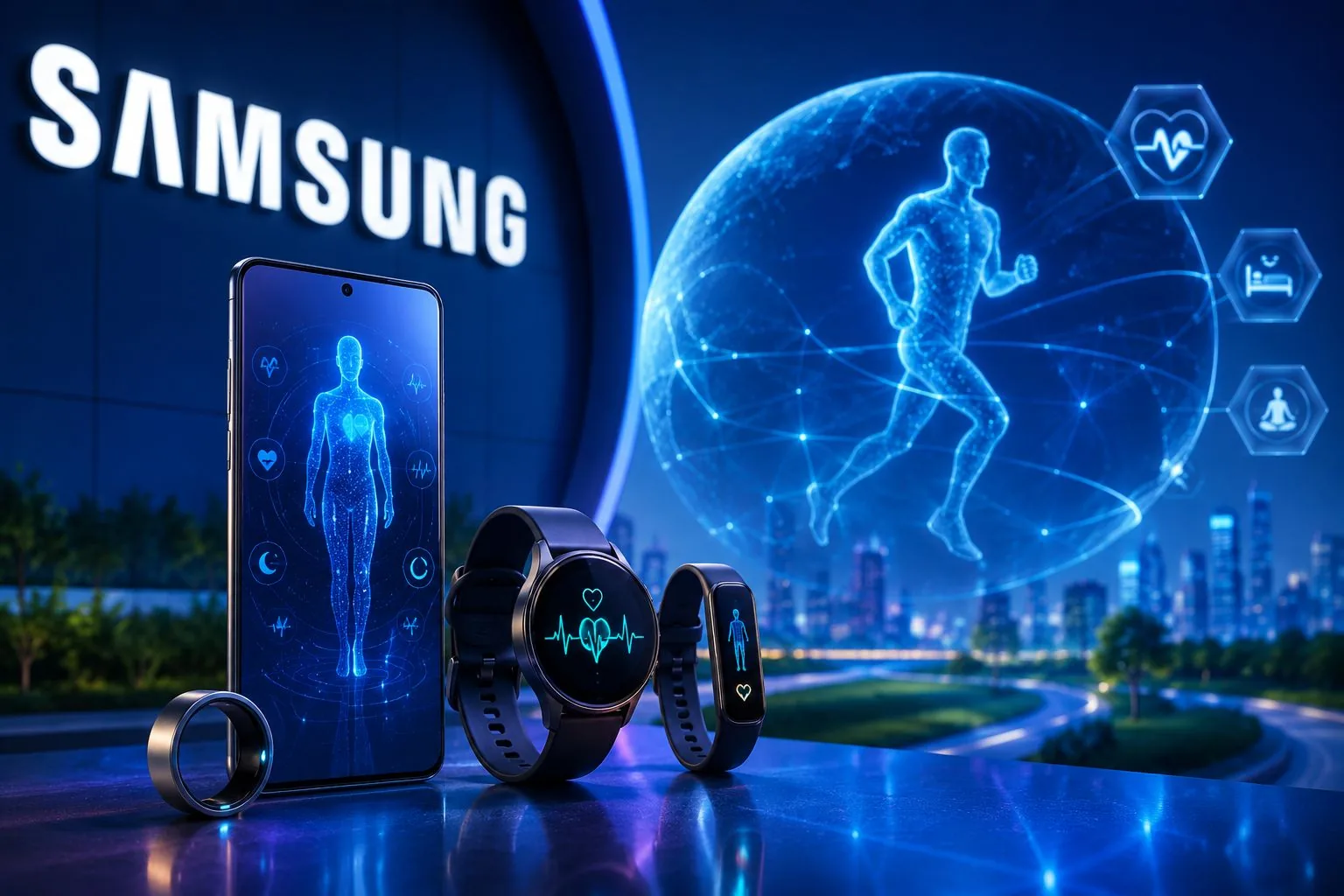
Samsung Electronics unveiled a sweeping artificial intelligence-driven health strategy at the VivaTech 2026 conference in Paris, positioning its ecosystem to transform preventive care for millions of users worldwide. The South Korean tech giant presented an integrated network of smartphones, smartwatches, smart rings and other connected devices, all powered by advanced algorithms that continuously analyze personal health data. With the event themed “Artificial Intelligence: Impact, Not Illusion,” Samsung joined over 4,000 companies and startups in showcasing practical AI applications for consumers and governments. The company’s vision centers on shifting health management from reactive treatment to proactive, personalized prevention.
Samsung Health Becomes the Central Hub for Continuous Monitoring
The company plans to significantly expand the capabilities of its Samsung Health platform by leveraging advanced artificial intelligence to process data from multiple sources. The system will continuously analyze information collected from smartphones, wearables and other connected gadgets to build a comprehensive profile of each user's physiological state. Samsung defined a set of key health domains that the AI will monitor to generate dynamic user profiles:
- Sleep quality
- Heart rate
- Physical activity levels
- Stress management
- Cardiovascular monitoring
- Dietary habits
- Metabolic indicators
- Overall well-being
Based on this continuous data stream, the system will deliver specific, context-adapted recommendations aimed at identifying risks before they develop into clinical conditions.
From Passive Assistant to Proactive Health Guardian
One of the most significant shifts Samsung announced is the transition of artificial intelligence from a purely assistive role to a preventive function. Traditionally, health applications acted as passive data loggers. Now, the AI interprets trends and identifies patterns, generating intelligent alerts based on gradual changes in physiological indicators. Specialists argue that this approach could represent a crucial advance in how individuals manage their own health, enabling actions before symptoms become evident.
Wearables Take Center Stage in Continuous Data Collection
Wearable devices emerge as critical components of Samsung’s connected health strategy. Smartwatches, smart rings and future biometric sensors will serve as permanent sources of information, operating around the clock to feed algorithms with constant data. This unbroken surveillance allows artificial intelligence to identify patterns that traditional, infrequent medical exams might miss. The combination of wearables with predictive analytics promises a far more comprehensive and real-time view of each person’s health status.
Personalization at Global Scale with a Focus on Longevity
Another pillar of the vision presented at VivaTech is hyper-personalization on a global scale. Instead of generic recommendations, Samsung intends to use AI to understand individual characteristics, routines and goals. Two users with seemingly similar conditions could receive completely different guidance tailored to their specific profiles. The company also highlighted healthy longevity as a priority investment area, responding to aging populations that are straining healthcare systems worldwide. AI-powered tools can assist in early identification of age-related risks and encourage behavioral changes.
Pet Health and an Open Innovation Ecosystem
A surprise element in Samsung’s presentation was the inclusion of solutions for pets. The company revealed plans to explore connected technologies to monitor the well-being of animals, though specific details have not yet been released. This initiative demonstrates how Samsung sees digital health expanding beyond humans. At the same time, the company reaffirmed its open innovation strategy, intending to collaborate with startups, developers, research institutions and technology firms to accelerate the creation of new health ecosystem features.
Samsung’s appearance at VivaTech 2026 comes amid an intense global race for AI health solutions. Major technology companies from the United States, Europe and Asia are investing billions in platforms that integrate biometric data, predictive analytics and remote monitoring. Analysts project that the AI-driven digital health sector will move hundreds of billions of dollars in the coming decade. Samsung’s vision suggests a future where smartphones, watches, sensors and AI systems form an integrated monitoring network, transforming health from reactive to preventive, intelligent and highly personalized. For the company, this transformation represents one of the biggest technological opportunities of the period.