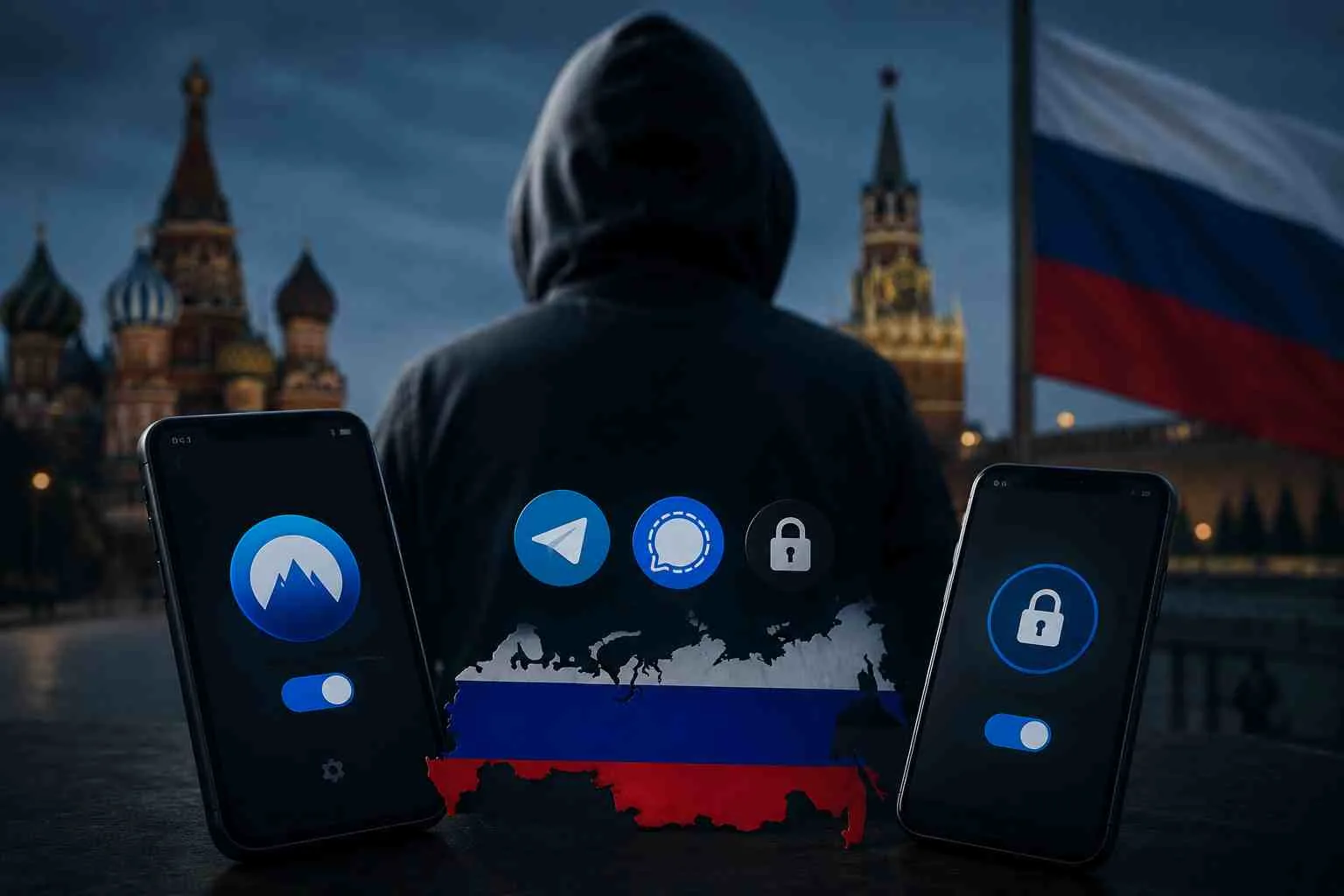
Digital censorship under Vladimir Putin is driving Russians to adopt increasingly elaborate workarounds, including virtual private networks, second smartphones and state-backed alternative applications. In a Moscow café, a 41-year-old interior designer identified only as Irina described switching her VPN on and off throughout the day — using it to access WhatsApp and then disabling it to buy tickets from Russian Railways. She also carries a second phone to communicate with clients via the state-promoted app MAX. This routine, which she called a massive nuisance, has become widespread among citizens navigating an online environment riddled with blocks and restrictions, ahead of the parliamentary election scheduled for September.
Why the Kremlin intensified its internet clampdown
Kremlin spokesperson Dmitry Peskov justified the measures as necessary during what Moscow characterizes as an existential confrontation with the West over Ukraine. Authorities are promoting so-called digital sovereignty, urging the adoption of domestic alternatives to foreign apps and websites. The Federal Security Service (FSB), the successor to the KGB, has ordered telecom operators to shut down mobile internet for days in multiple regions, arguing that Ukrainian drones could use the networks for navigation. Meanwhile, communications regulator Roskomnadzor blocks or throttles access to a growing list of platforms it accuses of hosting illegal or extremist content.
Putin's falling approval and growing discontent with restrictions
Frustration with digital controls, combined with rising prices, tax increases and war fatigue, has contributed to a decline in Vladimir Putin's approval ratings. According to state pollster VTsIOM, the president's approval fell from 75.1% in February to 65.6% in April — the lowest since the full-scale invasion of Ukraine in 2022. It has since recovered slightly to nearly 67%. Internet disruptions affecting banks, transport and e-commerce have angered the population just as the country gears up for the September parliamentary election. Even bloggers and influencers who usually avoid politics have criticized the measures.
How are Russians getting around app restrictions?
Use of VPNs has surged across Russia. Data from consultancy Digital Budget, cited by the newspaper Kommersant, shows that in March there were 9.2 million downloads of the five most popular VPN services on the Google Play Store — 14 times more than in the same month a year earlier. Sarkis Darbinyan, a Russian internet freedom activist based in Lisbon who is classified as a foreign agent by Moscow, said he had never seen such high adoption rates. Many users also rely on a second phone to isolate the MAX app, owned by tech giant VK, which the government promotes as a replacement for foreign services. Irina described the daily ritual of turning VPNs on and off and switching between messengers and phones as a necessity.
What role does the MAX app play in Russia's digital sovereignty push?



The MAX app, launched last year, already has more than 85 million daily users, according to its owner VK as of May. Authorities are pressing Russians to adopt the platform as part of the digital sovereignty campaign, but many remain suspicious. Kremlin critics and some Western technology companies warn that MAX could be used to monitor users — an accusation VK denies. To feel safer, Irina keeps the app on a separate device. Sources close to the Kremlin told Reuters that even loyal government employees use VPNs and carry multiple phones, and some have removed microphones and cameras from devices with MAX installed, fearing the FSB could access them.
Is using a VPN illegal in Russia?
According to reports, using VPNs is not illegal in the country. However, Roskomnadzor has restricted access to hundreds of these services, creating a cat-and-mouse game where users must constantly download new tools to reach desired content. In April, government agencies, banks and major online retailers — following regulator instructions — began blocking users with active VPNs from accessing their websites. The move coincided with a 10% drop in traffic on Wildberries, the Russian equivalent of Amazon, according to Digital Budget, which noted that many users simply lose interest in buying when they cannot open a product page.
How are internet outages affecting the economy and e-commerce?
The impact extends beyond personal inconvenience. When navigation apps stopped working in Moscow in March, delivery drivers for Flowwow, an online flower-and-gift marketplace, had to use sellers' Wi-Fi to download routes to customers, said logistics chief Yuri Semichastnov. Sales of paper maps more than doubled in the capital during the blackout, according to Wildberries data. The nearly three-week outage in Moscow also irritated high-ranking bureaucrats who rely on the internet and Telegram to canvass votes for the ruling United Russia party, according to two Kremlin sources and analysts. Tatiana Stanovaya, senior fellow at the Carnegie Russia Eurasia Center, wrote in April that the issue is not whether the regime will secure the desired outcome, but whether the electoral process will proceed smoothly.
Frequently Asked Questions
Is the MAX app safe to use?
Kremlin critics and some Western tech companies warn that MAX could be used to track users, though its owner VK strongly denies this. Many Russians prefer to keep the app isolated on a second phone as a precaution, and some government employees have even removed microphones and cameras from devices where MAX is installed.
Will the internet restrictions end?
The Kremlin has softened its rhetoric in recent weeks and assured that the mobile internet shutdowns are temporary. A plan to charge customers extra for using more than 15 gigabytes of foreign data per month was postponed in May, and Russian media reported that the requirement, targeting VPN users, will likely be introduced after the election. Putin also asked the government and the FSB to work together to ensure that critical services, such as health platforms and online payment systems, remain operational.