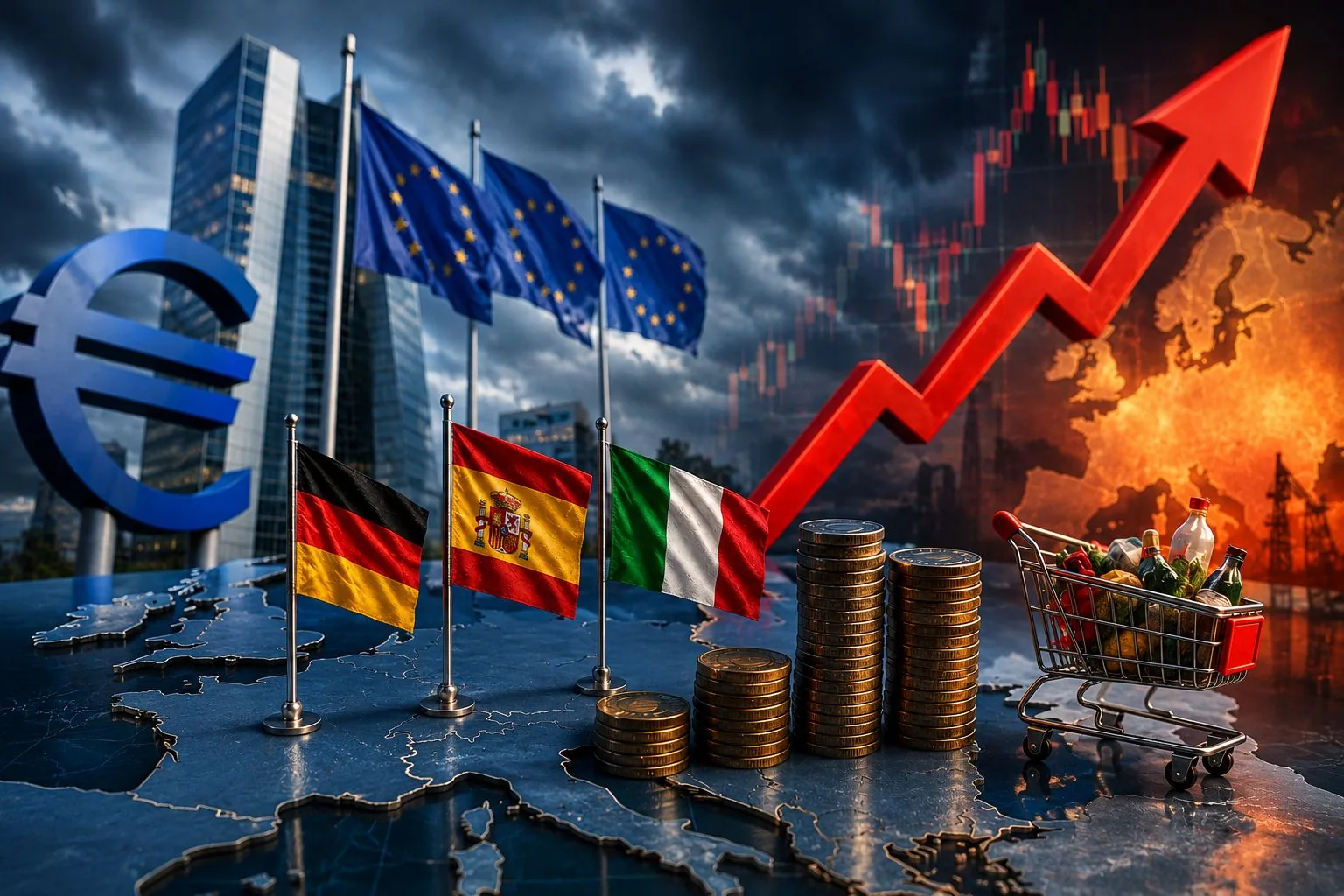
Inflation is accelerating across Germany, Spain, and Italy, rising above expectations and intensifying the pressure on the European Central Bank to maintain its restrictive monetary policy. New data from national statistical agencies reveal that consumer price gains in these three leading eurozone economies are once again overshooting projections, dashing hopes that the inflation crisis was nearly over. The uptick, driven primarily by higher energy costs and a resilient services sector, has caught many analysts off guard after several months of deceleration. The moves signal that the battle against high prices is far from finished, posing fresh questions about the ECB's next steps.
Energy and Services Fuel Resurgent Price Pressures
At the core of the renewed inflationary trend is the persistent rise in energy costs. The ongoing conflict in the Middle East has heightened risks to global oil and natural gas supplies, directly affecting energy expenses across Europe. The continent's heavy reliance on imported energy leaves it particularly exposed to external shocks, as companies pass higher electricity and fuel bills on to consumers. Economists describe energy as an inflationary multiplier: when one business pays more for power or transport, those costs cascade through the supply chain, driving up prices for nearly all goods and services.
Tourism Boom Deepens Services Inflation
A second major driver is the robust performance of the services sector, especially tourism. In 2026, European destinations such as Spain, Italy, France, and Greece continue to attract record numbers of travelers, allowing hotels, restaurants, airlines, and leisure firms to raise prices without a noticeable drop in demand. This phenomenon worries ECB officials because services inflation tends to be stickier than commodity-driven price increases. While oil prices might fall quickly if global markets stabilize, service charges often remain elevated for extended periods. Furthermore, wage increases across several European sectors help sustain consumer purchasing power, reinforcing the upward price momentum.
ECB Faces Critical Balancing Act as Price Growth Persists
The return of inflationary pressures places the ECB in a delicate position. The central bank's primary mandate is to keep inflation near 2% over the medium term, but it must also safeguard economic growth. Over the past few years, the ECB has implemented one of the most aggressive tightening cycles since the euro's creation, raising interest rates multiple times to combat post-pandemic price spikes. With inflation now accelerating again, expectations are rising that the bank will keep borrowing costs elevated for longer or even impose further increases. The dilemma is that higher rates make loans, financing, and investments more expensive, slowing economic activity as businesses postpone expansion plans and consumers cut spending due to tighter credit conditions.
Investors worldwide are closely monitoring these European inflation figures because they directly influence global financial markets. When inflation comes in above forecasts, the likelihood of sustained high interest rates increases, affecting stock exchanges, bond yields, currencies, and commodity prices. The euro might strengthen if markets bet on further ECB rate hikes, though weaker growth could limit that appreciation. European stock markets face a contradictory environment: financial firms often benefit from higher rates, while credit-dependent sectors may suffer losses. This dynamic generates volatility and heightens the importance of upcoming economic reports.
Real Economic Consequences for Households and Global Trade
For ordinary citizens, the impact of rising prices is most acutely felt in the erosion of purchasing power. Even when wages increase, constant price hikes reduce families' ability to afford goods and services. Food, energy, rent, transport, and leisure are among the categories most sensitive to inflationary changes. In recent months, many European households have again reported difficulties balancing their budgets, particularly in regions where salary growth lags behind the cost of living. Although the situation is much better than during the peak of the inflation crisis, consumers remain vigilant about price developments.
As one of the world's largest economic blocs, Europe's inflation trends have far-reaching implications. Exporters that depend on European demand may face weakened orders if the economy slows. At the same time, international investors adjust their strategies in stocks, bonds, and currencies based on ECB actions. A weaker Europe could also dampen global growth at a time when other major economies are grappling with their own inflation and expansion challenges. The interplay between European price dynamics and global trade underscores the interconnected nature of modern finance.
The coming months will be crucial in determining whether the recent acceleration represents a temporary blip or the start of a more persistent phase of high inflation. Much depends on energy prices, wage behavior, and the geopolitical landscape. If energy costs decline and economic activity remains moderate, inflation could gradually decelerate. However, new external shocks may force the ECB to maintain a more aggressive posture for longer. Economists still see a baseline scenario of inflation slowing over the next few years, but they acknowledge that risks have risen significantly in recent weeks.