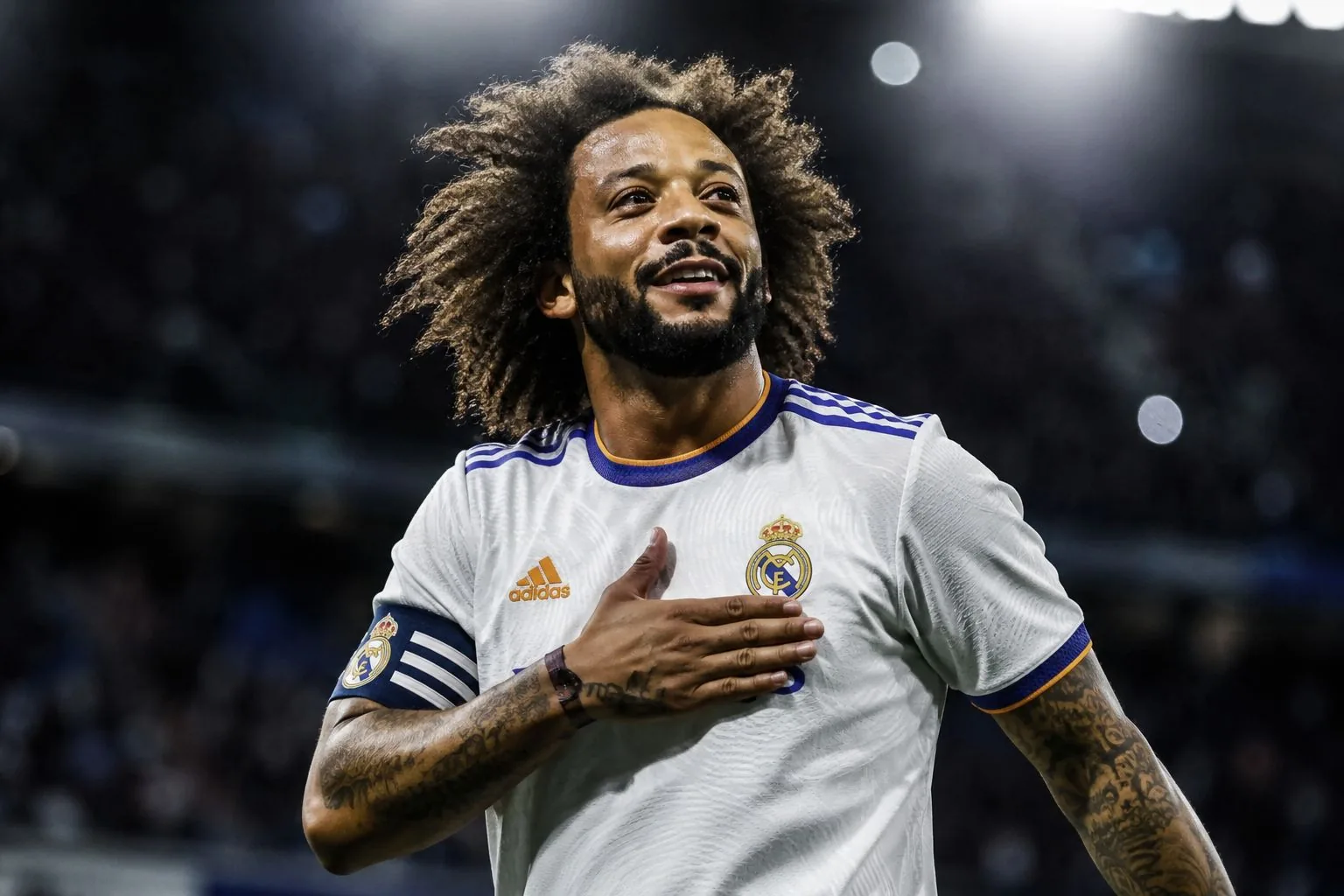
Former Brazil full-back Marcelo was escorted by security agents during a confrontation between demonstrators and police outside Mexico City’s Azteca Stadium on Thursday (June 11), as the host nation Mexico faced South Africa in the 2026 World Cup opener. Images captured the ex-Real Madrid player being pulled from the tumult under police protection, turning a day meant for celebration into a scene of tension.
Protests Erupt Outside Azteca During World Cup Opener
A group of protesters clashed directly with law enforcement on the stadium’s periphery just as the match kicked off. The disturbance drew the attention of fans and the press, generating tense images on what was supposed to be a festive occasion. While the Mexico–South Africa match continued normally on the pitch, the situation outside escalated rapidly. Officials later confirmed that the confrontation involved physical altercations between demonstrators and police forces.
Mega-Security Operation Fails to Deter Planned Demonstrations
Local authorities had deployed a mega-security operation to maintain order on opening day. Thousands of police officers were mobilized and scattered both around the Azteca Stadium and at strategic points across the Mexican capital. Despite this heavy police presence, various collectives and social movements had scheduled marches for Thursday, with the opening-day stadium as the final destination of the protests. The involvement of organized groups indicates that the act was planned in advance, catching the security apparatus off guard.
Incident Exposes Security Challenges for Global Sporting Events

The confrontation underscores the complexity of guaranteeing security at an event of global proportions like the World Cup. Even with a robust security scheme, the concentration of demonstrators near the Azteca shows that the apparatus was insufficient to prevent the clash. The escort of former player Marcelo became one of the most emblematic moments of the chaos, highlighting the risks faced even by high-profile individuals. Police acted quickly to remove the ex-Brazil international from the area, suggesting authorities were prepared to protect prominent figures present at the venue.
Marcelo’s Illustrious Career: From Real Madrid to Fluminense
The former athlete, who built a successful career in European football, boasts an impressive list of achievements. While at Real Madrid, Marcelo accumulated 25 trophies over nearly 16 years at the club, making him one of the most decorated players in the club’s history. After a long period in Europe, he returned to Fluminense, the club that launched his career, where he won the Copa Libertadores and the Recopa Sudamericana. His presence in Mexico during the World Cup opener attracted attention, though no official information has been released about his specific role at the event.
Brazil National Team Stints Across World Cups and Olympics
Wearing the green and yellow shirt, the full-back played in two World Cup editions: 2014 and 2018. He also won the 2013 Confederations Cup and earned two Olympic medals: a bronze at the 2008 Beijing Games and a silver at the 2012 London Games. The episode involving the former player serves as a stark reminder that even for celebrated public figures, safety can be compromised amid large-scale disturbances. The swift police intervention to escort him indicates that authorities had contingency plans for protecting dignitaries and personalities present at the stadium.