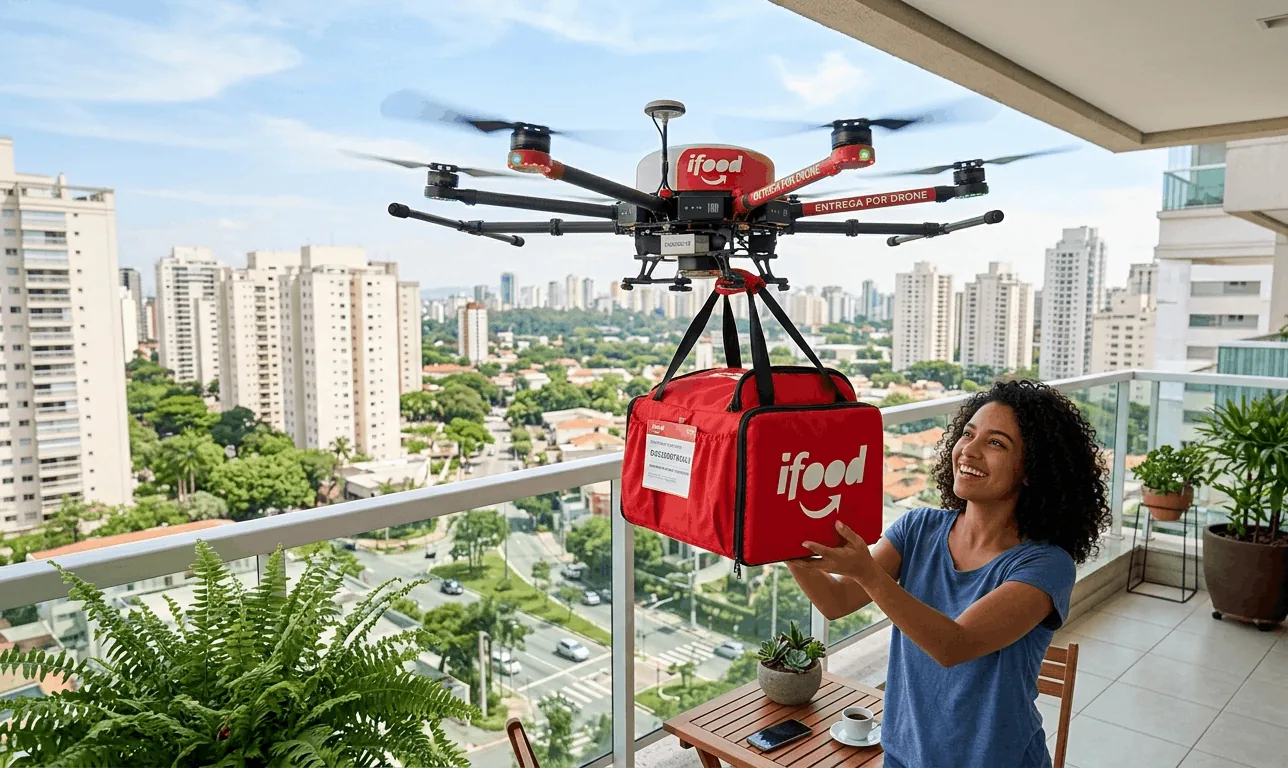
iFood has launched drone deliveries in São Paulo state as of June 1, 2026, targeting order rejection rates that exceed 50% in the region. The service operates daily from 10:30 to 22:30 between Iguatemi Alphaville shopping mall and condominiums in Barueri. This marks the company’s second commercial aerial route, following a pioneering operation in Sergipe that began in 2021. The initiative seeks to overcome access difficulties and long wait times at residential gates that discourage delivery partners.
Drone Delivery Route Targets Chronic Rejection Problem
Nearly half of all orders placed in the region are refused by delivery partners, according to iFood. The primary reasons are the challenging access to condominiums and the time spent waiting at security gates. By using drones to bypass these obstacles, the company hopes to dramatically lower rejection rates. The aerial operation eliminates the need for couriers to navigate queues and bureaucratic entry procedures, making the service more efficient and appealing to both customers and partners.
Three-Step Process Combines Robots, Drones and Human Couriers
The delivery process unfolds in three distinct stages. First, a messenger or an iFood robot collects the order from the restaurant and places the package into the drone. The aircraft then covers 3.6 kilometers in approximately five minutes, landing in a designated area within the condominium. Finally, a partner courier completes the last mile, bringing the product to the customer’s door. iFood states that the operation complies with regulations from the National Civil Aviation Agency (Anac) and the Department of Airspace Control (Decea).
Second Commercial Route After Pioneering Sergipe Operation
The São Paulo route is iFood’s second drone delivery corridor. The first was established in 2021 in the state of Sergipe, connecting Aracaju to Barra dos Coqueiros. On that route, more than 5,000 orders have been completed to date. The original terrestrial distance was 36 kilometers, but the drone reduces the journey to under 4 kilometers. The experience in the Northeast provided the technical and operational foundation for the expansion into São Paulo, demonstrating the model’s viability.
Regulatory Oversight from Anac and Decea
iFood’s drone operations are regulated by Anac and Decea, which have issued the necessary authorizations. The company did not specify the exact types of permits obtained but emphasized adherence to current regulations. Safety and integration with air traffic remain critical for the service’s continuity. No incidents have been reported on either route so far. iFood says the model could be expanded to other regions but has not provided timelines or specific locations.
Potential Impact on Efficiency and Partner Earnings
The reduction in rejections could improve the customer experience by lowering cancellations and increasing predictability. For delivery partners, fewer refusals mean more earning opportunities. The use of drones also accelerates the segment between the restaurant and the condominium, shortening total delivery time. iFood has not released data on the average delivery time on the new route, but the 3.6-kilometer flight is completed in five minutes.
The combination of robots, drones, and human couriers underscores the company’s investment in multimodal solutions. This integrated approach aims to optimize each leg of the delivery journey, from restaurant to condominium gate to the customer’s door. The company believes that this model can be replicated in other urban areas, though no specific expansion plans have been announced. The success of the Barueri route will likely determine the pace of future deployments.