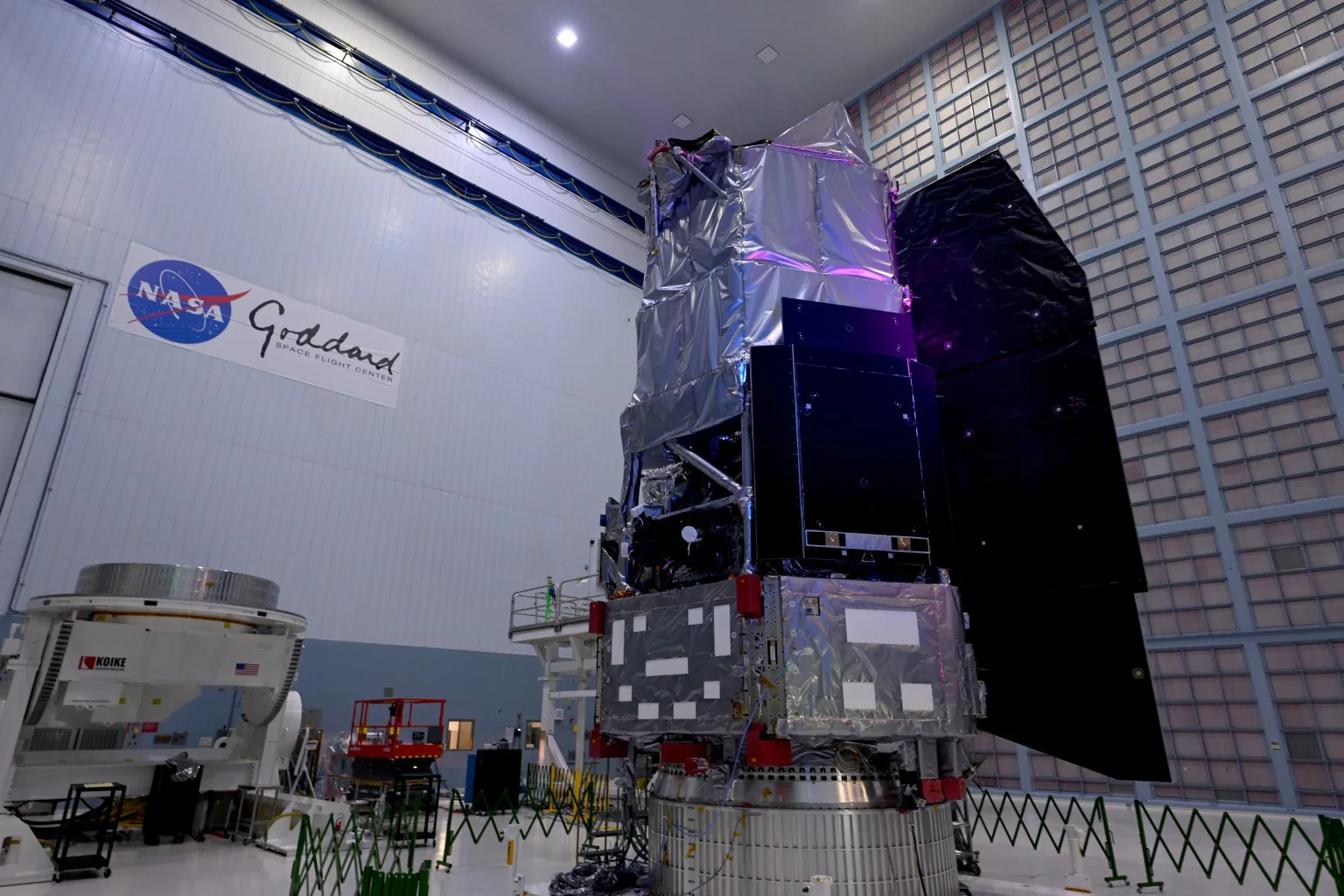
The Nancy Grace Roman Space Telescope has arrived at NASA’s Kennedy Space Center in Florida, marking a decisive step forward for one of the agency’s most anticipated missions. The fully assembled observatory, already tested, was transported via the Pegasus barge from the Goddard Space Flight Center in Maryland. NASA invited media to cover the arrival, with credentialing open exclusively to U.S. citizens and closing on June 4, 2026. The telescope’s arrival signals the final phase of ground preparations before its planned launch.
Media Invited to Witness Historical Arrival
Journalists with approved credentials will observe the unloading of the transport container at the Kennedy Space Center turn basin. NASA experts will be on site to answer questions about the delicate operation. After arrival, technicians will move the observatory to the Payload Hazardous Servicing Facility for final prelaunch preparations. The coverage opportunity, however, was restricted to American media professionals, with registration closing at 23:59 on June 4.
Credentialing Window Closes for International Press
Media outlets that missed the June 4 deadline cannot participate in the on-site coverage. NASA stated that approved journalists will receive a confirmation email with additional details, including the exact date of arrival activities. Questions about accreditation can be directed to [email protected]. The agency’s accreditation policy is available online for reference. This restriction highlights the selective nature of the event.
Unprecedented Cosmic Survey Capabilities
The Nancy Grace Roman telescope, named after NASA’s first chief astronomer, will provide a panoramic and deep view of the cosmos. It is designed to generate unprecedented images that could revolutionize our understanding of the universe, revealing billions of celestial objects. The observatory will investigate mysteries like dark energy and exoplanets. One of its most advanced technologies enables direct imaging of planets around nearby stars, a crucial step in the search for life beyond Earth.
Global Partnership Backs Roman Mission
The Roman telescope is managed by NASA’s Goddard Space Flight Center, with participation from JPL, Caltech/IPAC, STScI, and a diverse scientific team. Key industrial partners include BAE Systems, L3Harris Technologies, and Teledyne Scientific & Imaging. Additionally, significant contributions come from ESA, JAXA, CNES, and the Max Planck Institute for Astronomy. The mission represents a global effort to expand knowledge of the cosmos.
Launch Window Set for Early September
NASA’s Launch Services Program, based at Kennedy Space Center, is managing the Roman launch service. The observatory will launch aboard a SpaceX Falcon Heavy rocket from Launch Complex 39A. The launch window is scheduled for early September 2026. The arrival at Kennedy is the last major milestone before integration with the launch vehicle. Preparations now shift to final testing and vehicle integration.