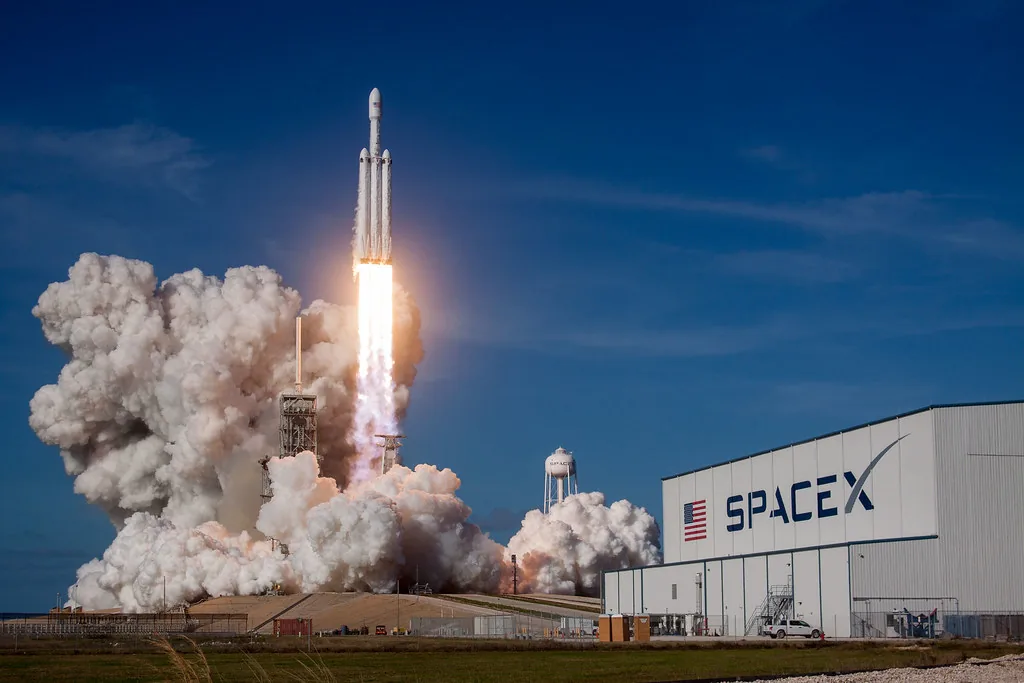
SpaceX has priced its initial public offering at $135 per share, a move that could make it the largest IPO in history and push founder Elon Musk to billionaire status — and possibly beyond. The aerospace company, led by the world’s richest man, disclosed the suggested price weeks before its scheduled Nasdaq debut on June 12, an unusually early announcement that signals strong confidence in its valuation. If the offering meets expectations, SpaceX could raise $75 billion and achieve a market capitalization of $1.75 trillion. The listing is set to be one of the most anticipated market events in decades.
Early Pricing Break from Market Norms
In a departure from standard practice, where companies typically reveal the final IPO price only on the eve of trading, SpaceX chose to publicize its $135 estimate well ahead of time. The prospectus also indicates a significant jump from the company’s earlier private valuation of $1.25 trillion at the start of 2026. However, the disclosed price remains a suggestion — buyers will ultimately determine the final figure, which could rise or fall. The June 12 listing date is fixed, and the offering is expected to generate billions in trading volume.
Analyst Skepticism on Valuation
Samuel Kerr, director of capital markets research at Mergermarket, called the valuation "incredibly high" and noted that the ratio of SpaceX’s price to its sales exceeds that of any company in the so-called Magnificent Seven — Alphabet, Amazon, Apple, Meta, Nvidia, Microsoft, and Tesla. He pointed out that the company is being valued on future revenue and profit projections rather than current performance. Kerr added that some investors may overlook the steep valuation due to the company’s long-term growth narrative.
Financial Realities Behind the Hype
Despite the optimistic projections, SpaceX’s financial statements reveal a mixed picture. In 2025, the company generated $18.6 billion in revenue but recorded a net loss of $4.9 billion. For the first quarter of 2026, sales reached $4.7 billion while the net loss widened to $4.3 billion. The balance sheet shows $102 billion in assets, including rockets and equipment, offset by $60.5 billion in debt. Laurence Pevsner, a partner at Lux Capital, described the company’s pivot into artificial intelligence as risky, noting that AI is driving much of the elevated valuation. “SpaceX started as a simple launch company, then became a satellite internet provider, and now it’s a social media company and an AI lab,” Pevsner said.
Race for Artificial Intelligence Capital
SpaceX’s IPO arrives amid a global scramble for AI funding. Rival AI firm Anthropic has announced plans for its own public offering in 2026, while Alphabet — Google’s parent — revealed intentions to raise $80 billion for AI investments. OpenAI is also reportedly considering going public this year. This competitive landscape for capital could influence demand for SpaceX shares, especially given that the company already controls xAI (creator of the Grok chatbot) and plans to launch AI satellites and orbital data centers.
If the IPO succeeds, Elon Musk — who holds more than 80% of SpaceX — could become the world’s first trillionaire. But success is not guaranteed. Dealogic data shows that nearly half of all companies that went public in the last 30 years saw their stock price fall relative to the offering price. The current record for largest IPO proceeds belongs to Saudi Aramco, which raised $25.6 billion in 2019. SpaceX aims to raise $75 billion — nearly three times that amount — but achieving it depends on investor conviction in a business that so far has generated billions in losses.