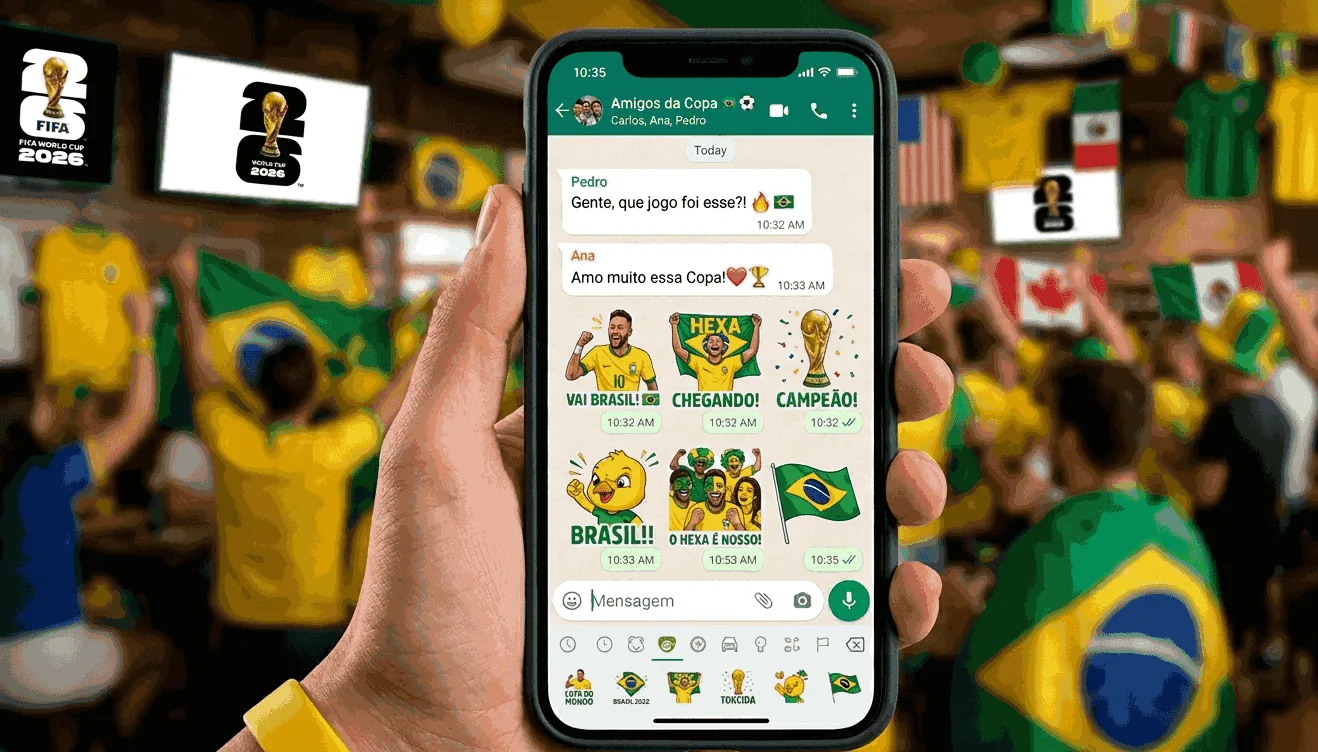
WhatsApp has announced a series of World Cup 2026 features on Thursday, June 4, just one week before the tournament kicks off on June 11. The update introduces thematic stickers, immersive video call effects, and integration with Meta AI for real-time match information. The platform aims to engage its billions of users during one of the most-watched sporting events globally. The release comes at a strategic moment when worldwide anticipation for the championship is at its peak.
Immersive Stickers and Reactions for Matchday Emotions
Starting immediately and lasting until the final match, users can react to messages with the Trionda, the official ball of the World Cup. When this emoji is selected, an animation shows multiple balls bouncing across the phone screen, adding a playful layer to conversations. The app has also launched a special sticker pack featuring images of a goalpost, a cleat, a nervous ball, a crying ball, and red and yellow cards. These themed stickers allow fans to express typical game-day emotions without typing a single word.
The Trionda Ball Animation Brings a Lively Touch
The Trionda reaction automatically triggers a bouncing ball animation that makes interactions more lively, according to the company. This feature is designed to help users celebrate goals and key plays in a dynamic way. The sticker pack offers a visual shorthand for common football moments, from tension to disappointment and fouls. Together, these tools aim to turn every chat into a mini stadium experience.
Video Call Effects Turn Screens into Stadiums
WhatsApp has also rolled out themed effects for video calls, including a ball hovering above the user's head, a goalpost background simulating a football field, and a ball sticker applied to the face. These filters are intended to make group and one-on-one conversations more entertaining, especially during celebratory moments. The company hopes people can cheer for goals as if they were inside the arena. The effects are activated easily during video calls by tapping the effects icon.
Meta AI Brings Live Match Data Directly into Chats
The Meta AI, the company’s artificial intelligence, will now display real-time information about matches, including the latest tournament standings. This means users can follow results, tables, and statistics without leaving the messaging app. The feature marks a step forward in integrating artificial intelligence with instant communication. For WhatsApp, it represents a strategy to keep the audience engaged throughout the entire championship.
WhatsApp noted that the 2022 World Cup final in Qatar recorded a peak of 25 million messages per second on its platform. That figure underscores the enormous demand the service faces during major sporting events. With the addition of the new features, traffic is expected to increase even further for the 2026 edition. The company did not provide estimates for the upcoming tournament, but the historical benchmark highlights the strain on its infrastructure.
All new features are available from Thursday, June 4, and will remain active until the end of the World Cup. To use the Trionda reaction, users select the emoji from the reaction menu, and the animation appears automatically. The sticker pack can be downloaded from the app’s sticker store. Video call effects are activated during video calls by tapping the effects icon. Meta AI requires no additional setup—it will be ready to display tournament data when users ask or when the information becomes relevant.