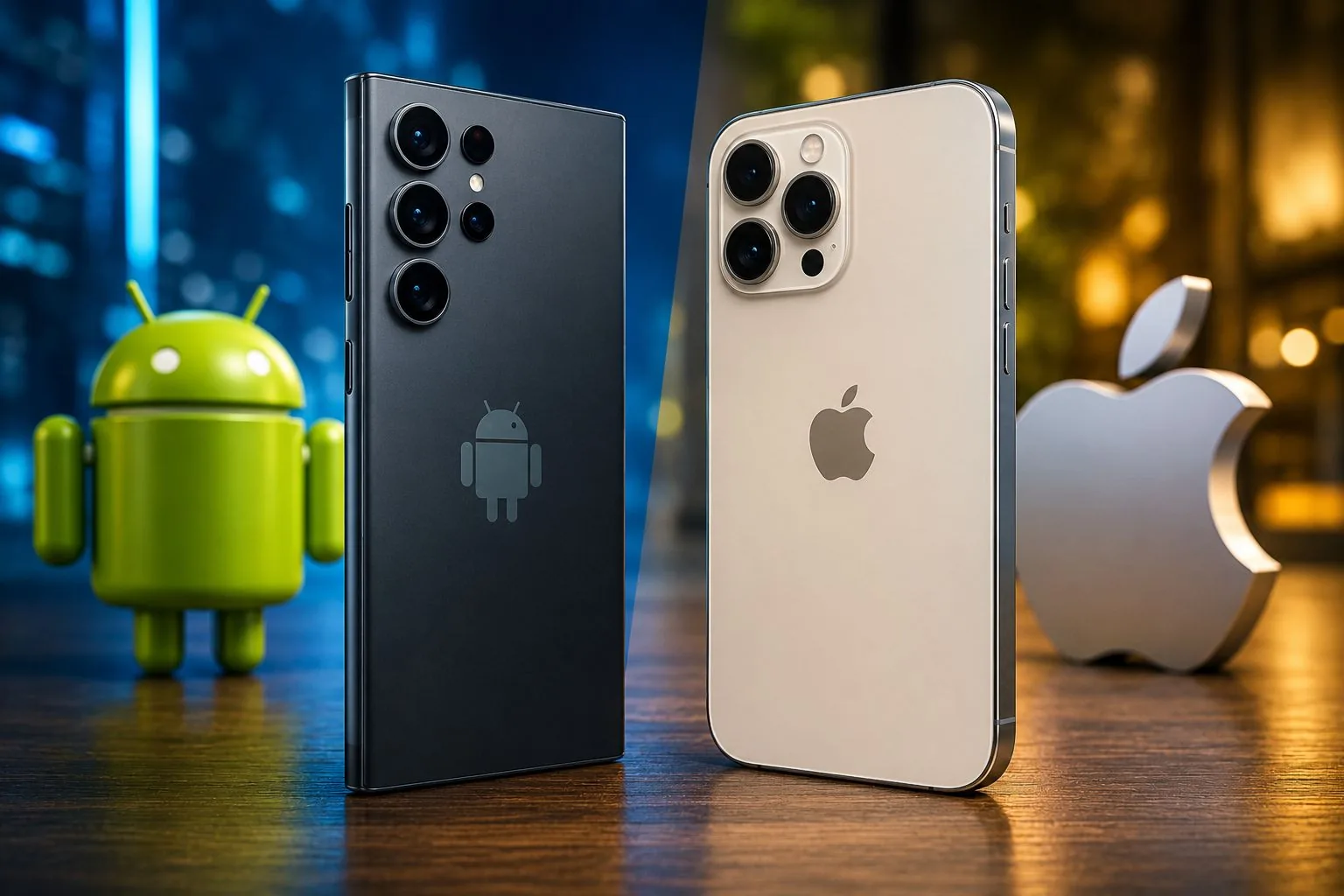
The matchup between Android and iPhone has reached an unprecedented level of parity in 2026, turning what was once a clear technical hierarchy into a matter of personal taste. For years, consumers split between Android's flexibility and Apple's integrated experience, but today, artificial intelligence, next-generation processors, and operating system changes have scrambled that landscape. The classic question of "which is the best smartphone" no longer yields a straightforward answer, requiring a deep dive into each ecosystem's strengths.
Performance and Innovation: The New Technological Contest
Historically, Apple's A-series chips gave the iPhone a commanding lead in raw performance. In 2026, however, Android processors like the Snapdragon 8 Elite, Dimensity 9500, and Tensor G6 have dramatically closed the gap. Despite this, benchmarks still show Apple ahead in demanding tasks such as video editing, rendering, and local AI processing. In practice, according to experts, most users will hardly notice relevant differences in everyday use.
Customization: The Uncontested Android Domain
When it comes to personalization, Android remains the undisputed champion. Users can alter virtually everything: complete themes, icons, advanced widgets, home screens, default apps, custom launchers, and sophisticated automation. Although Apple has expanded its customization options in recent years, iOS still offers far less freedom than its rival. For those who enjoy tailoring their device to their own style, Android stays the best choice.
Security, Cameras, and the AI Revolution
Apple has built its reputation on a strong focus on privacy — features such as app tracking transparency, on-device data processing, and strict App Store controls have made the iPhone a benchmark for data protection. Android has also evolved considerably, especially after improvements driven by Google. However, due to the huge variety of manufacturers and system versions, Apple's centralized control still offers a perceived advantage among many analysts.
On the camera front, the competition has reached extreme balance. A few years ago it would have been easy to pick a winner, but currently the race is extremely tight. Premium Android models often lead in optical zoom, night photography, and experimental AI features. iPhones, meanwhile, remain references for video recording, color consistency, and stability. Among the best smartphones for photography in 2026 are:
- Samsung Galaxy S Ultra;
- Google Pixel Pro;
- iPhone Pro Max;
- Xiaomi Ultra;
- Vivo X Series.
The choice depends more on the user's photography style than on absolute quality.
AI, Battery, and Charging Dynamics
If 2025 was the year of AI explosion in smartphones, 2026 has consolidated that trend. Android manufacturers have been heavily investing in generative AI features integrated into the system — functions like automatic text summarization, intelligent image editing, content creation, real-time translation, advanced contextual search, and multimodal assistants. Apple has also entered strongly with Apple Intelligence, but several analysts consider that some Android makers have advanced faster with innovative features.
When it comes to battery and charging, Android phones continue to dominate charging speed — some models already easily exceed 100W of power, enabling full recharges in just a few minutes. iPhones remain more conservative in this aspect. On the other hand, Apple's hardware-software integration often yields excellent energy efficiency. In daily autonomy, both systems deliver very similar results in top-tier devices.
Updates, Pricing, and Ecosystem Evolution
Historically, Apple led the update segment by a wide margin — in 2026, however, Android manufacturers have radically changed their policies. Companies like Samsung and Google now offer up to seven years of updates on several premium models, reducing one of the iPhone's main historical advantages. In terms of price and value, perhaps the biggest Android advantage emerges: while Apple focuses efforts on the premium segment, Android offers options for virtually any budget — entry-level, mid-range, premium, ultra-premium, foldables, and gaming-specific devices. This diversity allows finding very competitive devices at significantly lower prices than the latest iPhones.
If there is one area where Apple continues to impress, it is the integration between devices. Users who own an iPhone, Mac, iPad, Apple Watch, and AirPods enjoy an extremely integrated experience — file transfer, data synchronization, and task continuity work almost seamlessly. Android has advanced considerably in this field, especially with the Google ecosystem, but it has not yet reached the same level of integration. The ideal decision in 2026 will depend more on personal preferences and the ecosystem already in use than on absolute technical differences.