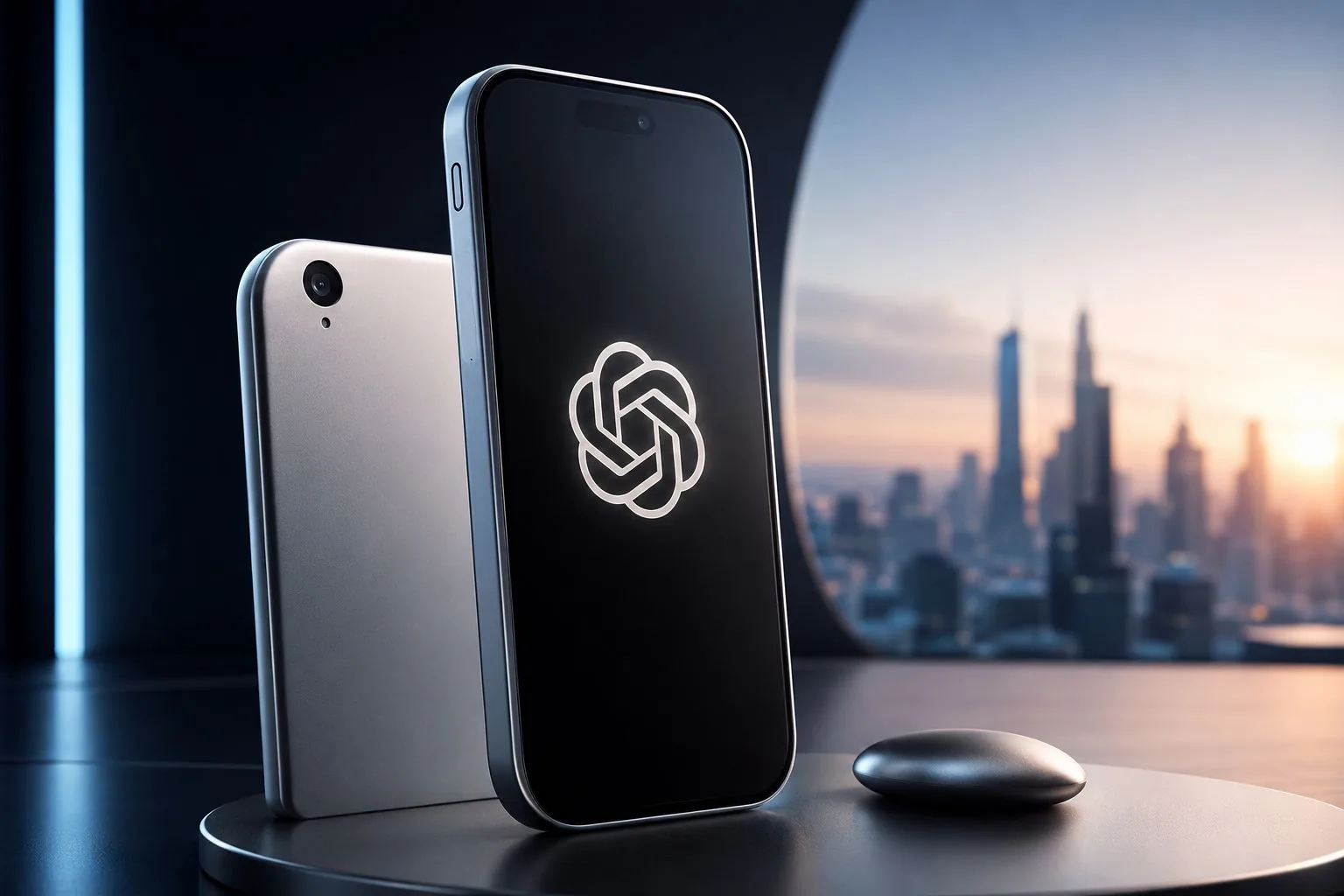
OpenAI is developing a smartphone built entirely around artificial intelligence, a project that could fundamentally change how people interact with digital services. According to reports from specialized outlets, the company is working on a mobile device that may represent the biggest transformation since the launch of the first iPhone in 2007. While many details remain confidential, the initiative has already drawn enormous interest from investors, manufacturers, developers, and consumers. The reason is straightforward: OpenAI does not intend to release just another handset but rather to completely redefine the way people engage with technology.
Why OpenAI Is Building a Smartphone
For decades, smartphones have followed a relatively similar structure: users open applications, perform specific tasks, and switch between different services. OpenAI believes artificial intelligence can change that paradigm. Instead of relying on dozens or hundreds of separate programs, an intelligent assistant could centralize virtually all digital interactions. Imagine requesting, through a single conversational interface based on AI, tasks such as:
- Booking a flight.
- Scheduling an appointment.
- Making online purchases.
- Responding to emails.
- Creating documents.
- Editing photos.
- Searching for information.
- Organizing commitments.
This is the vision guiding the project's development, according to sources close to the matter.
Design and Hardware: The Jony Ive Factor
One of the elements that has most intensified interest in the device is the involvement of Jony Ive, the legendary designer behind some of the most iconic products in the history of Apple. Ive led the design of products including the iPhone, iPad, iMac, MacBook, and Apple Watch. His collaboration with OpenAI suggests that the project will not be merely a software platform but also a carefully engineered piece of hardware. Experts believe that the combination of Ive's design expertise and OpenAI's technology could result in an entirely new category of device.
Hardware Details Remain Unclear
So far, few concrete specifications have been disclosed. The screen size, processor, cameras, battery, operating system, and price remain unknown. However, specialists anticipate that the hardware will be specifically developed to optimize artificial intelligence capabilities. One of the most important current market trends is the local execution of AI models, which offers greater privacy, lower latency, faster response times, offline functionality, and reduced operational costs. It is likely that OpenAI's smartphone will heavily leverage this approach.
A New Paradigm for Digital Interaction
Even the most advanced smartphones today still rely heavily on manual interaction. Users must open apps, navigate menus, fill out forms, switch screens, and search for information by hand. OpenAI's proposal would drastically reduce these steps. Artificial intelligence would act as an intermediary between the user and digital services. Instead of launching multiple programs to plan a trip, for example, one would simply request the task from the intelligent assistant, which would automatically execute all necessary steps.
Autonomous Agents and the End of Apps?
A large part of the strategy appears to be based on the concept of autonomous agents. These systems do not merely answer questions; they also perform tasks. Expected capabilities include simple decision-making, executing online processes, automating repetitive activities, managing schedules, coordinating between multiple services, and interacting with third-party applications. AI agents represent a significant evolution over traditional virtual assistants from companies like Anthropic and Microsoft AI. One of the most debated hypotheses among analysts is that AI-centered devices could reduce the importance of conventional apps. This does not mean they will disappear entirely, but they may become invisible to the end user. The AI would function as an overarching layer responsible for accessing different services without requiring direct interaction with each individual program. This new model poses a potential challenge to Google DeepMind and Apple, which have dominated the mobile market for more than a decade. If OpenAI can create a significantly superior experience, it could trigger a shift similar to the one the iPhone caused when it replaced traditional cellphones.
Market Impact and Privacy Concerns
The launch of a device of this magnitude could affect multiple sectors, including smartphones, virtual assistants, search engines, social networks, e-commerce, productivity tools, and digital advertising. Companies that currently control the distribution of apps and services could face new competitors. Another relevant aspect involves search mechanisms: if AI becomes the primary interface of mobile devices, the way users find information could change radically, with answers synthesized by intelligent agents instead of visits to dozens of websites. Privacy issues become fundamental, as the device may have access to messages, emails, calendars, browsing history, location, and personal files. Ensuring security and transparency will be essential to gaining public trust. No official date has been confirmed yet; analysts believe development is still in a relatively early stage. Nevertheless, OpenAI's moves indicate that the company intends to play a much broader role than merely providing language models. An AI-centered ecosystem could also create new opportunities for developers, who instead of building traditional apps, could create specialized tools for integration with intelligent agents, generating a new digital economy based on AI-compatible services.