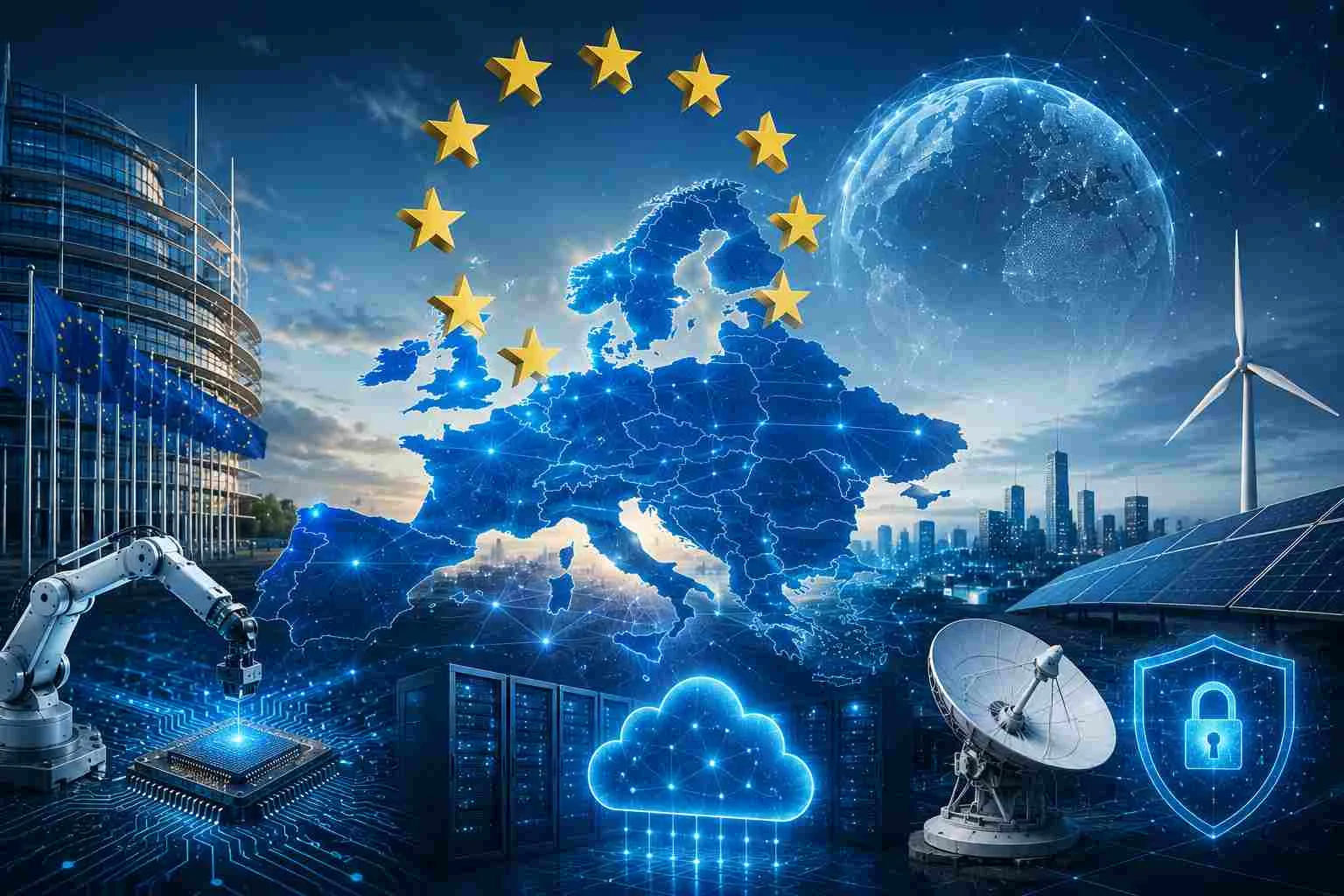
The European Union has launched one of its most ambitious technology initiatives in decades, unveiling a comprehensive strategy designed to strengthen the bloc's technological sovereignty, reduce reliance on external digital infrastructure, and secure a competitive position in artificial intelligence, semiconductor manufacturing, cybersecurity, cloud computing, and quantum technologies. The announcement reflects deep concerns among European policymakers that the continent risks falling behind in the global technology race, particularly as the United States and China continue pouring resources into advanced technologies that are reshaping economies, industries, and geopolitical dynamics. European leaders argue that technological independence has become a fundamental pillar of economic security, national resilience, and long-term competitiveness. The newly unveiled strategy seeks to address these challenges through substantial investments, targeted industrial policies, public-private partnerships, and research initiatives that could shape Europe's digital future for decades. The plan arrives at a critical juncture for the global technology sector, where artificial intelligence, advanced chips, cloud infrastructure, and cybersecurity are increasingly treated as strategic assets rather than mere commercial products.
Why Europe Is Pursuing Technological Sovereignty
Technology sovereignty has emerged as one of the European Union's highest strategic priorities. Policymakers believe that excessive dependence on foreign technology providers creates vulnerabilities that could undermine economic stability, digital security, and geopolitical influence. For years, many of Europe's most essential digital services have relied heavily on infrastructure developed and operated by companies headquartered outside the continent — including cloud computing platforms, artificial intelligence systems, semiconductor supply chains, and digital services that often originate from providers based in the United States and Asia. European officials increasingly argue that this dependence limits strategic flexibility and exposes critical sectors to external risks. Consequently, the European Union is pursuing a long-term strategy aimed at building stronger domestic capabilities across the most vital technological sectors.
How does the global technology race affect Europe's strategy?
The launch of the sovereignty initiative mirrors broader transformations occurring throughout the international technology landscape. Governments worldwide are investing billions of dollars to secure leadership positions in industries expected to define economic growth throughout the twenty-first century. Artificial intelligence, semiconductors, quantum computing, cybersecurity, robotics, and advanced manufacturing have become central pillars of national development strategies. Competition among major economies is no longer confined to trade and industrial production — increasingly, technological innovation has become one of the most important measures of geopolitical influence and economic power. The European Union's strategy represents a determined effort to ensure that Europe remains a major player in this rapidly evolving environment.
Artificial Intelligence Takes Center Stage in the EU Plan
Artificial intelligence is a cornerstone of the new European strategy. European policymakers believe AI will transform virtually every sector of the economy, including healthcare, transportation, education, finance, manufacturing, scientific research, and public administration. The European Union plans to support the development of advanced AI models, expand computing infrastructure, strengthen research institutions, and encourage greater collaboration between universities and private companies. The objective is to create a competitive AI ecosystem capable of rivaling leading international technology firms while preserving Europe's regulatory and ethical standards. Officials intend to establish a stronger European artificial intelligence ecosystem that supports startups, research centers, and large technology companies, combining scientific expertise with industrial capacity to accelerate innovation and reduce technological dependence. Investments in AI infrastructure are expected to become a major component of future digital development initiatives.
What role do semiconductors play in Europe's sovereignty plans?
Semiconductors have become one of the most strategically important industries in the world. Modern economies rely on advanced chips for everything from smartphones and computers to automobiles, medical equipment, industrial systems, defense technologies, and artificial intelligence platforms. Recent supply chain disruptions exposed vulnerabilities in global semiconductor production and highlighted the risks associated with concentrated manufacturing capacity. In response, the European Union is expanding efforts to strengthen domestic semiconductor capabilities through investment, research, and industrial partnerships. The goal is not necessarily complete self-sufficiency but rather greater resilience and reduced exposure to external disruptions.
Cloud Computing, Cybersecurity, and Quantum Technologies
Cloud computing has become the foundation of the modern digital economy. Businesses, governments, healthcare systems, financial institutions, and research organizations increasingly depend on cloud infrastructure to store data, operate services, and support digital innovation. European leaders have expressed concerns about relying too heavily on cloud platforms controlled by foreign companies. The sovereignty strategy therefore includes initiatives aimed at expanding European cloud infrastructure, supporting domestic providers, and improving data security. Officials argue that stronger local capabilities can enhance resilience while ensuring greater control over critical digital assets. Cybersecurity has evolved into one of the most important policy concerns for governments around the world. As digital systems become increasingly interconnected, cyber threats have grown more sophisticated and potentially more disruptive. European institutions, businesses, and infrastructure operators face constant pressure to strengthen defenses against cyberattacks, espionage campaigns, ransomware operations, and other digital threats. The new strategy includes significant investments in cybersecurity capabilities, threat detection systems, research initiatives, and workforce development programs, with a focus on protecting critical infrastructure — energy networks, transportation systems, telecommunications, healthcare services, and financial institutions. Although quantum computing remains an emerging field, many experts consider it one of the most transformative technologies under development. Quantum systems could eventually revolutionize scientific research, cryptography, logistics, materials science, pharmaceutical development, and financial modeling. Recognizing this potential, European policymakers have included quantum technologies among the priority areas covered by the sovereignty initiative. Research institutions and technology companies across Europe are expected to benefit from increased funding and collaboration opportunities, with the long-term objective of ensuring that Europe remains competitive as quantum technologies mature.
Economic Growth, Startups, and Reducing Dependence
Technology sovereignty is not solely about security and independence — it is also closely linked to economic growth and job creation. European officials view advanced technologies as essential drivers of future prosperity. By investing in innovation, infrastructure, and industrial capabilities, policymakers hope to create new opportunities for businesses, entrepreneurs, researchers, and workers throughout the continent. Technology-intensive industries often generate high-value employment and attract significant private investment. Startups are expected to play a critical role in achieving the goals outlined in the sovereignty strategy. Europe has produced a growing number of successful technology companies in recent years, but policymakers believe greater support is needed to scale innovative businesses and compete globally. The initiative seeks to improve access to funding, strengthen innovation ecosystems, and encourage entrepreneurship across key technology sectors. Private investment will be essential for transforming research breakthroughs into commercially viable products and services. Collaboration between governments, investors, and industry leaders is expected to accelerate progress. One of the most discussed aspects of the initiative is its focus on reducing dependence on external technology providers. European policymakers argue that technological dependence can create strategic vulnerabilities during periods of geopolitical tension, economic uncertainty, or supply chain disruption. Developing stronger domestic capabilities does not necessarily mean isolating Europe from international markets. Instead, the objective is to create a more balanced and resilient technological ecosystem capable of supporting critical sectors regardless of external conditions. This approach reflects broader efforts to improve economic security while maintaining global cooperation.
Research, Education, and Geopolitical Implications
Europe's universities and research institutions are considered among its greatest competitive advantages. The sovereignty strategy emphasizes the importance of scientific excellence, talent development, and international collaboration. Investments in education, training programs, and advanced research are expected to support innovation across multiple sectors. Developing highly skilled workers will be essential as demand for expertise in artificial intelligence, cybersecurity, engineering, quantum science, and semiconductor technology continues to grow. Human capital remains one of the most valuable assets in the global technology economy. The European Union's technology sovereignty initiative carries significant geopolitical implications. Technology increasingly influences international relations, economic competitiveness, and national security. Countries that lead in advanced technologies often gain advantages that extend far beyond commercial markets. As technological competition intensifies among major global powers, Europe seeks to strengthen its position while maintaining strategic autonomy. The initiative reflects a growing recognition that technological leadership is becoming inseparable from geopolitical influence.
The Future of Europe's Digital Transformation
The success of the sovereignty strategy will depend on sustained investment, effective implementation, and close cooperation between governments, businesses, researchers, and investors. Transforming Europe's technological landscape will require long-term commitment and significant resources. However, many analysts believe the initiative represents a necessary step toward ensuring that Europe remains competitive in an increasingly technology-driven world. The coming years will likely determine whether the continent can successfully strengthen its digital capabilities while fostering innovation, economic growth, and strategic resilience. The European Union's technology sovereignty strategy represents one of the most ambitious digital initiatives in its history. By prioritizing artificial intelligence, semiconductors, cloud computing, cybersecurity, quantum technologies, and digital infrastructure, Europe aims to strengthen its technological independence and secure a more influential role in the global innovation landscape. The initiative reflects broader concerns about economic security, technological resilience, and international competitiveness in an era increasingly defined by rapid digital transformation. As governments and businesses worldwide race to shape the future of technology, Europe's investment in sovereignty and innovation could play a decisive role in determining its position within the next generation of the global digital economy.
Frequently Asked Questions
What is the European Union's technology sovereignty strategy?
The strategy is a comprehensive initiative unveiled by the European Union to strengthen Europe's technological independence, reduce reliance on foreign digital infrastructure, and position the bloc as a leading force in artificial intelligence, semiconductor manufacturing, cybersecurity, cloud computing, and quantum technologies.
Why does the EU want to reduce dependence on foreign technology?
European policymakers believe that excessive reliance on foreign technology providers creates vulnerabilities that could impact economic stability, digital security, and geopolitical influence, limiting strategic flexibility and exposing critical sectors to external risks.
What technologies are prioritized in the EU sovereignty plan?
The plan prioritizes artificial intelligence, semiconductors, cloud computing, cybersecurity, quantum technologies, and digital infrastructure, with additional focus on startups, research, education, and innovation ecosystems.