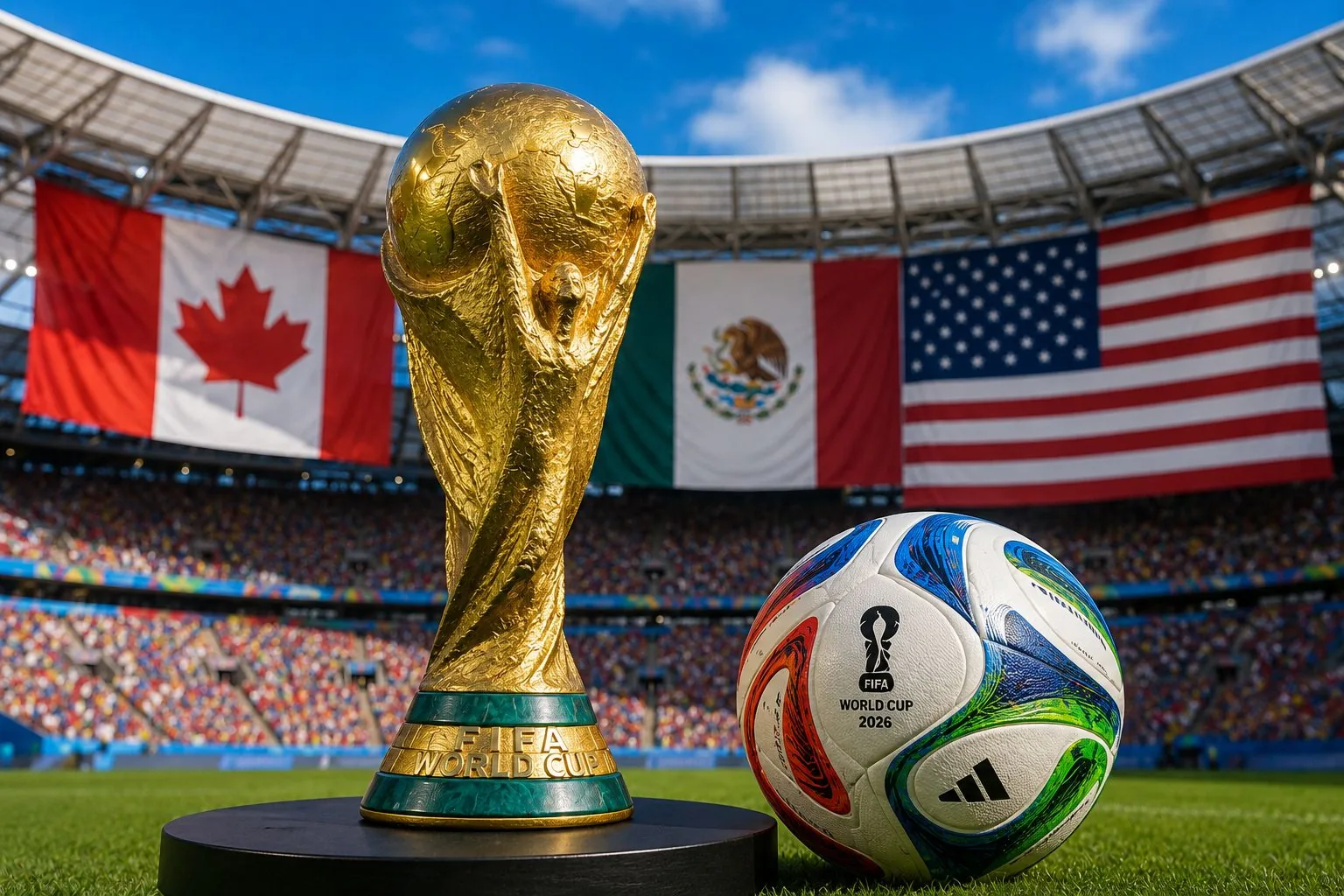
The 2026 FIFA World Cup is set to break ground before a single ball is kicked, as the tournament expands to 48 teams for the first time in its history. Organized jointly by the United States, Canada, and Mexico, the competition will feature 104 matches — a significant leap from the 64 games played in previous editions. Millions of fans are expected to follow the action across dozens of cities throughout North America. The expansion, approved by FIFA years ago, is part of a strategic project to increase global representation in football. According to the governing body, the move will allow more countries to experience the world's premier sporting event, fostering the sport's development in regions that historically had limited slots.
A Historic Expansion: 48 Teams and 104 Matches
The decision to enlarge the tournament field marks the most significant change to the World Cup since 1998, when the competition last expanded. For nearly three decades, the format remained stable at 32 teams divided into eight groups of four, with the top two from each group advancing to the round of 16. FIFA officials argued that this setup left many competitive nations on the sidelines, particularly from Africa, Asia, Central America, and Oceania. The expansion to 48 teams aims to address that imbalance, opening up new sporting markets and boosting international exposure for emerging football regions. The new format also promises more decisive matches and deeper fan engagement, according to FIFA's projections.
New Group Stage and Knockout Structure
Under the revised system, the 48 qualified teams will be allocated into 12 groups of four. The top two finishers from each group will automatically advance to the knockout phase. In addition, the eight best third-placed teams will also progress, creating a new preliminary knockout round known as the round of 32. This stage, effectively a 16th-final, adds an extra layer of competition before the traditional round of 16. Experts consulted by international media believe the structure may reduce early eliminations for traditional powerhouses while offering emerging teams more opportunities to spring surprises. The FIFA expects the new format to heighten excitement, as more teams stay alive longer in the tournament.
Globalization and Historic Debuts
One of the most notable consequences of the expansion is the inclusion of nations that have never before qualified for a World Cup. In 2026, countries such as Uzbekistan, Jordan, and Cape Verde have secured historic berths — a feat that would have been far more challenging under the previous 32-team model. These debut appearances illustrate how football is becoming increasingly globalized, with investments in infrastructure, player development, and domestic leagues raising competitive standards worldwide. Participation in a World Cup often generates substantial economic benefits: sponsorship deals, broadcasting rights, sports tourism, and increased player valuations are among the key advantages. FIFA anticipates that the expansion will further solidify its presence in emerging markets, particularly in regions that previously had limited representation.
Logistical Hurdles and Criticism of the New Model
Organizing a tournament of this magnitude requires unprecedented coordination across transportation, accommodation, security, telecommunications, and sports infrastructure. The three host nations have had to synchronize efforts to ensure that delegations, fans, journalists, and sponsors can move efficiently between cities and countries throughout the event. Another major challenge involves playing surfaces: many North American stadiums originally used artificial turf, which did not meet FIFA standards. Millions of dollars have been invested to replace those surfaces with natural grass. Researchers from the United States Golf Association and turf management specialists have conducted advanced studies to guarantee uniform quality across all venues. Beyond logistics, the new format has drawn criticism: some experts argue that increasing the number of participants could dilute the overall technical level of the competition, while others point out that the sheer volume of matches adds physical strain on players. European clubs have expressed concerns about the tournament's impact on future seasons, given that many players will be involved for longer periods. Despite these criticisms, FIFA maintains that the benefits outweigh the challenges and that the new format will contribute to the sustainable growth of global football.
Star Power and Record Viewership
Another factor fueling anticipation for the 2026 edition is the presence of some of the greatest footballers of the modern era. Players such as Cristiano Ronaldo, Lionel Messi, and Neymar are competing in what many fans expect could be their farewell appearances at a World Cup. The combination of the expanded format and the potential final chapter for these iconic stars has significantly raised global expectations. Analysts predict that billions of viewers will follow the tournament across television, digital platforms, and online streams. FIFA expects record revenue, driven by new commercial opportunities involving sponsors, advertising, ticket sales, and international broadcast agreements. According to data from Statista, the football industry generates hundreds of billions of dollars globally, with the World Cup serving as the centerpiece of that economic ecosystem. With 104 matches scheduled, the tournament also creates more chances for players to shine on the international stage. Young talents can use the competition as a showcase to attract interest from major European clubs and other top leagues. Historically, World Cups have transformed careers, and the expansion amplifies that potential by including athletes from markets that were traditionally less scouted.
FIFA's Bet on a Permanent Model and Sustainable Growth
If the 2026 edition proves successful, the 48-team format is likely to become permanent for future World Cups. FIFA views the expansion as a natural step in the tournament's evolution, one that could accelerate football development in dozens of countries. The organization also hopes to expand its footprint in emerging markets, strengthening domestic leagues, grassroots programs, and sports infrastructure investments worldwide. With more participating nations, interest in previously marginalized regions is expected to grow, generating new revenue streams and opportunities. The governing body insists that the long-term benefits of inclusion and global reach outweigh the short-term logistical and competitive concerns.