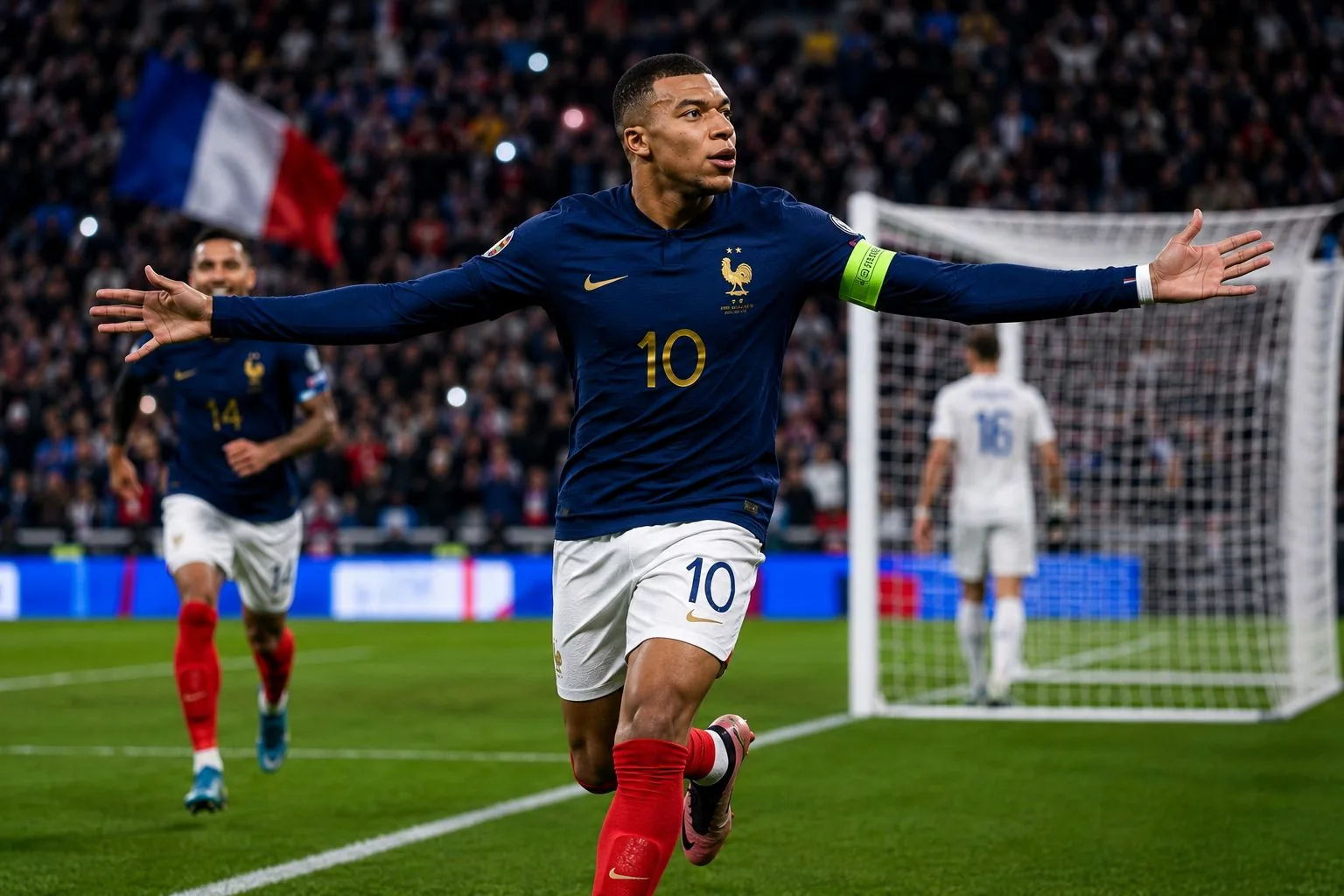
France arrives at the 2026 World Cup with a clear mission: reclaim the trophy and solidify a generation that has already proven its worth in recent tournaments. Led by captain Kylian Mbappé, the French national team is regarded by analysts as one of the strongest squads in the competition, carrying the experience of winning in 2018 and reaching the final in 2022. Now, on North American soil, the objective is to convert talent and ambition into yet another historic title. The squad assembled by Didier Deschamps features high-level players in every position, fueling elevated expectations for the campaign.
Mbappé at His Peak and the Weight of Expectation
Kylian Mbappé arrives at age 27 as France's primary offensive reference and one of global football's biggest stars. His trajectory is impressive: world champion in 2018, protagonist in 2022, and now team captain. Speed, finishing, and leadership have made the forward the natural successor to French legends. International analysts point out that this World Cup could definitively place him among the greatest players in history if he leads France to the title. The responsibility on his shoulders is immense, but Mbappé appears ready for the challenge.
Legacy on the Line for the French Captain
Numerous international analysts believe Mbappé's performance in the 2026 World Cup will be decisive for his legacy. If he can guide France to a third star, his name will enter discussions reserved only for the sport's greatest champions. With each match, the forward carries the expectations of millions and the pressure of representing a talented generation. His influence, however, extends beyond the field: he is one of the most globally recognized figures, driving audiences and sponsors. The World Cup could further amplify that international reach.
The Quest for a Third Star in an Expanded Tournament
France has already won two World Cups: in 1998 with Zidane and in 2018 with Deschamps at the helm. Now, the team seeks a third world title, which would place it in a select group of multiple champions. The path, however, is complex. The 2026 edition features 48 teams and a record number of matches, making the competition a true marathon. Even so, recent experience in finals and semifinals gives France valuable composure for decisive moments.
Deschamps: The Final Mission at the Helm
Didier Deschamps is expected to end his cycle with the French national team after the World Cup. The coach has been in charge for more than a decade and has built one of the most victorious periods in the country's history. Under his leadership, France won important titles and maintained consistency in major competitions. His ability to manage egos and renew generations is recognized worldwide. The 2026 World Cup represents the chance to crown this trajectory with another unforgettable achievement, something players and fans see as a tribute to the manager.
Luxury Attack and Solid Defense: France's Trumps
The French offensive sector is capable of intimidating any opponent. Beyond Mbappé, names like Ousmane Dembélé, Michael Olise, Marcus Thuram, Bradley Barcola, Désiré Doué, and Rayan Cherki offer multiple solutions. This abundance allows France to adapt its style between rapid transitions and positional attacks, a rarity among competitors. In defense, William Saliba, Dayot Upamecano, and Ibrahima Konaté form a solid line, combining strength and game reading. On the flanks, Theo Hernandez contributes both defensively and in supporting the attack, expanding tactical options.
Group Stage: Mbappé vs. Haaland in the Opening Phase
France is placed in a group that mixes tradition and surprises. Senegal represents the strength of African football, Iraq seeks prominence, and Norway features Erling Haaland, one of the most lethal forwards today. The clash between Mbappé and Haaland is highlighted by experts as one of the most anticipated duels of the group stage. Both symbolize the new generation of superstars expected to dominate football in the next decade. The opening phase will be an important test for France to demonstrate its consistency.
Favoritism and Constant Renewal
Nearly all projections place France among the title favorites, alongside Argentina, Spain, Brazil, England, and Portugal. The balance between youth and experience, combined with squad depth, justifies the favoritism. France continues to produce talent at an impressive pace, thanks to an efficient training structure. Academies spread across the country reveal athletes who keep the national team competitive even with constant renewals. This model has become a reference for federations around the world.
The Dream of Entering History
The 2026 World Cup represents more than a trophy for France. It is the chance to consolidate a generation that has already proven to be one of the most talented in the country's history. For Mbappé, it strengthens his legacy and brings him closer to the greatest names in football. For Deschamps, it ends a brilliant career with another conquest. Regardless of the result, France begins the campaign surrounded by global expectations. Few teams gather as much talent and experience as this French squad.