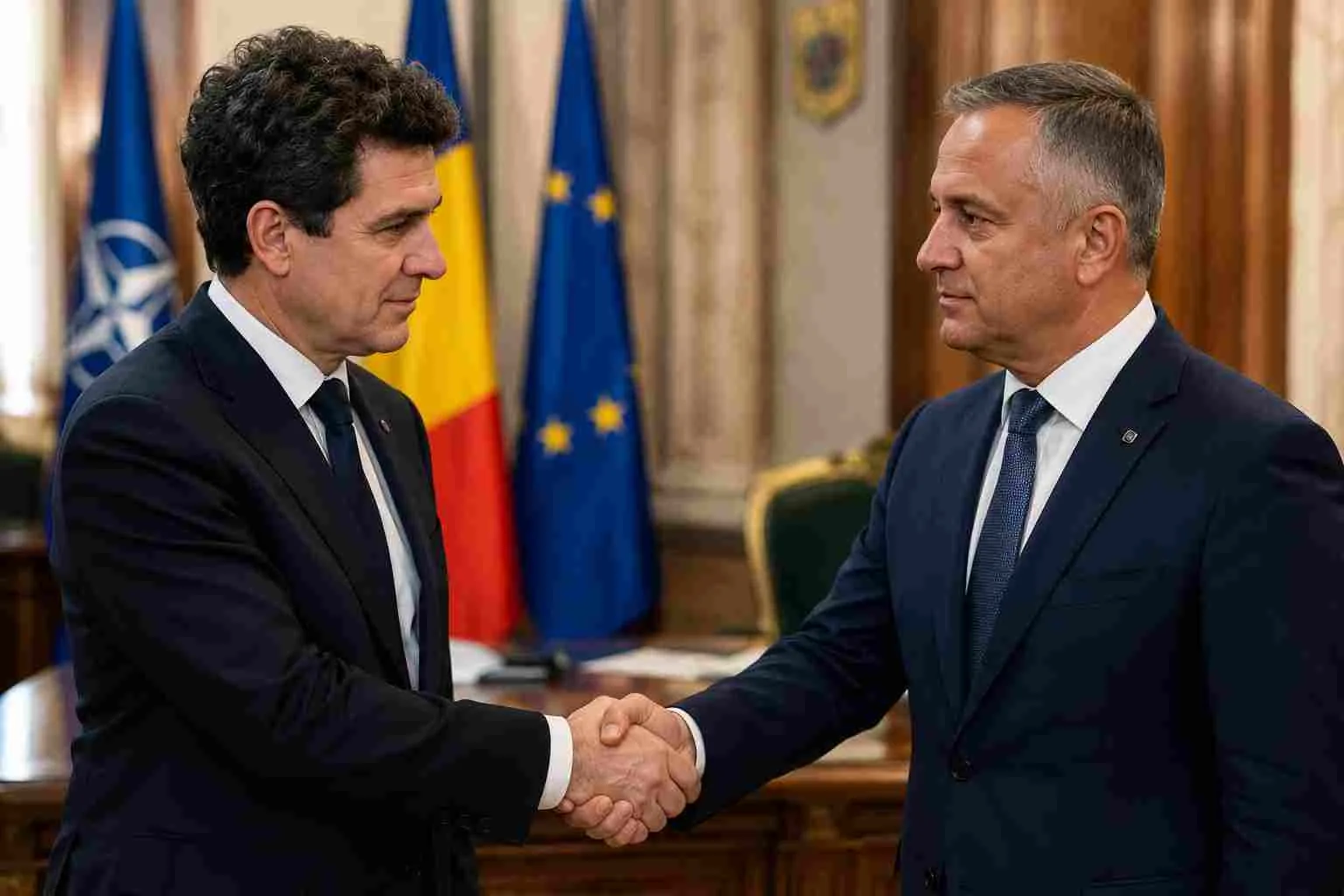
Romania's President Nicușor Dan has nominated Adrian Veștea as prime minister in a decisive move to resolve weeks of political paralysis that has shaken investor confidence and raised alarms among European allies. The appointment comes after failed negotiations to form a government with sufficient parliamentary backing, leaving the country in a precarious institutional vacuum. As a member of both the European Union and NATO, Romania’s stability carries implications far beyond its borders, particularly given its strategic position in Eastern Europe. The nomination seeks to restore governance at a moment of mounting fiscal strain and geopolitical uncertainty.
The Path to Government Formation
Adrian Veștea, a veteran politician from the National Liberal Party (PNL), brings decades of administrative experience to the role. Before being tapped for the premiership, he served as president of the Brașov County Council and as Minister of Development, earning a reputation for advancing infrastructure projects and regional modernization. Analysts say his record of bureaucratic competence and cross-party dialogue made him a logical choice for President Nicușor Dan, who needed a candidate capable of calming financial markets and reassuring international partners. The president’s strategy reflects a preference for a political solution over a technocratic cabinet, betting on Veștea’s ability to forge a working majority.
Who is Adrian Veștea and what is his political background?
Adrian Veștea is a senior figure in Romania’s political scene, having built a career across multiple levels of government. He is a member of the National Liberal Party (PNL) and previously held influential posts, including leading the Brașov County Council and serving as Development Minister. His trajectory is closely linked to efforts in infrastructure, regional development, and public administration reform — credentials that weighed heavily in his selection during this delicate period. President Nicușor Dan reportedly valued Veștea’s capacity to engage with diverse political forces and project stability to external stakeholders.
Why did the previous Romanian government collapse?
The current crisis was triggered by the fall of the government led by Ilie Bolojan, which lost parliamentary support and was ousted through a no-confidence vote in the Romanian Parliament. The motion exposed deep fractures among major parties, plunging the country into institutional uncertainty. Subsequent attempts to build a new parliamentary majority all failed, leading President Nicușor Dan to search for an alternative that could bridge these divides. The episode highlighted the fragility of coalition politics in Romania’s multiparty system.
Economic Pressures and EU Risks
The political turmoil unfolds against a challenging economic backdrop. Romania is grappling with inflation above the European average, a widening budget deficit, and rising fiscal pressure. Authorities warn that sustained instability could deter investment, undermine business confidence, and hamper economic growth in the coming years. A stable administration is seen as essential to restoring market trust and meeting fiscal targets negotiated with European institutions.
How does the economic crisis affect Romania’s EU funds?
One of the most urgent concerns involves billions of euros in EU funding allocated for development and modernization programs. Romania has access to substantial European resources for infrastructure, digitalization, environmental sustainability, and economic expansion. However, disbursements are conditional on implementing specific reforms and meeting agreed milestones. Experts caution that political delays could disrupt timelines and jeopardize critical investments that are vital for the country’s long-term progress. Projects in transportation, energy, education, and digital transformation all depend on administrative continuity and the government’s ability to execute multiyear plans.
Why is Romania’s stability critical for European security?
Romania’s geographic position has gained heightened significance since the outbreak of the war in Ukraine. Bordering strategic areas of the Black Sea region, the country plays a key role within NATO’s defensive posture. Western allies are closely monitoring developments in Bucharest, as a politically stable Romania is considered essential for coordinating defense initiatives, military logistics, and regional security cooperation. The nation is also involved in numerous programs aimed at strengthening the alliance’s eastern flank.
Geopolitical and Domestic Challenges
Alongside economic and security pressures, Romania faces the rise of nationalist opposition parties that have gained ground in recent years. These movements have capitalized on public frustration over the cost of living, immigration, sovereignty concerns, and disillusionment with traditional parties. Their growing influence adds pressure on centrist and pro-European forces seeking to maintain their parliamentary footing. Analysts note that the current crisis could reshape the electoral landscape ahead of future national contests.
What is at stake for financial markets in Romania?
International investors are closely tracking the political developments, viewing institutional stability as a cornerstone of economic confidence. Credit rating agencies, banks, and investment funds are particularly focused on Romania’s ability to control its budget deficit and advance structural reforms. A swift resolution to the crisis would likely be received positively by markets, whereas prolonged uncertainty could trigger further nervousness. The speed of government formation is thus being treated as a barometer of the country’s governance resilience.
What will be Adrian Veștea’s agenda if he forms a government?
Should Adrian Veștea secure parliamentary approval, his initial priorities would center on restoring political and economic stability. Key areas include fiscal consolidation, attracting foreign investment, modernizing national infrastructure, and accelerating EU-funded projects. The new government would also need to address social challenges linked to the cost of living, labor market conditions, and strengthening public services. Continuity in foreign policy, particularly cooperation with the European Union and NATO, is expected to remain central to Romania’s external stance.
The coming days are critical for Romania’s political future. Whether Adrian Veștea can gather enough parliamentary support will determine not only the formation of the next government but also the country’s economic and institutional trajectory. Success would end a period of uncertainty and launch a new phase of governance; failure could deepen the crisis and intensify pressure on the political system. With significant economic hurdles, regional geopolitical tensions, and high expectations from both citizens and international partners, Romania stands at a decisive crossroads.
Frequently Asked Questions
Who is Adrian Veștea?
Adrian Veștea is a Romanian politician from the National Liberal Party (PNL) who previously served as president of the Brașov County Council and as Minister of Development. He was nominated as prime minister by President Nicușor Dan amid the current political and economic crisis.
Why did the previous government fall?
The government led by Ilie Bolojan collapsed after losing parliamentary support and being toppled by a no-confidence vote in the Romanian Parliament. The event exposed significant divisions among the country’s main political parties.
What are the main economic challenges facing Romania?
Romania is dealing with inflation above the European average, a high budget deficit, and growing fiscal pressure. Political instability could hinder investments and jeopardize economic growth, while also threatening access to European Union funds.
What is at stake with European Union funds for Romania?
Romania has access to billions of euros from the EU for projects in infrastructure, digitalization, and sustainability. However, these funds depend on implementing specific reforms and maintaining political stability to meet established deadlines.