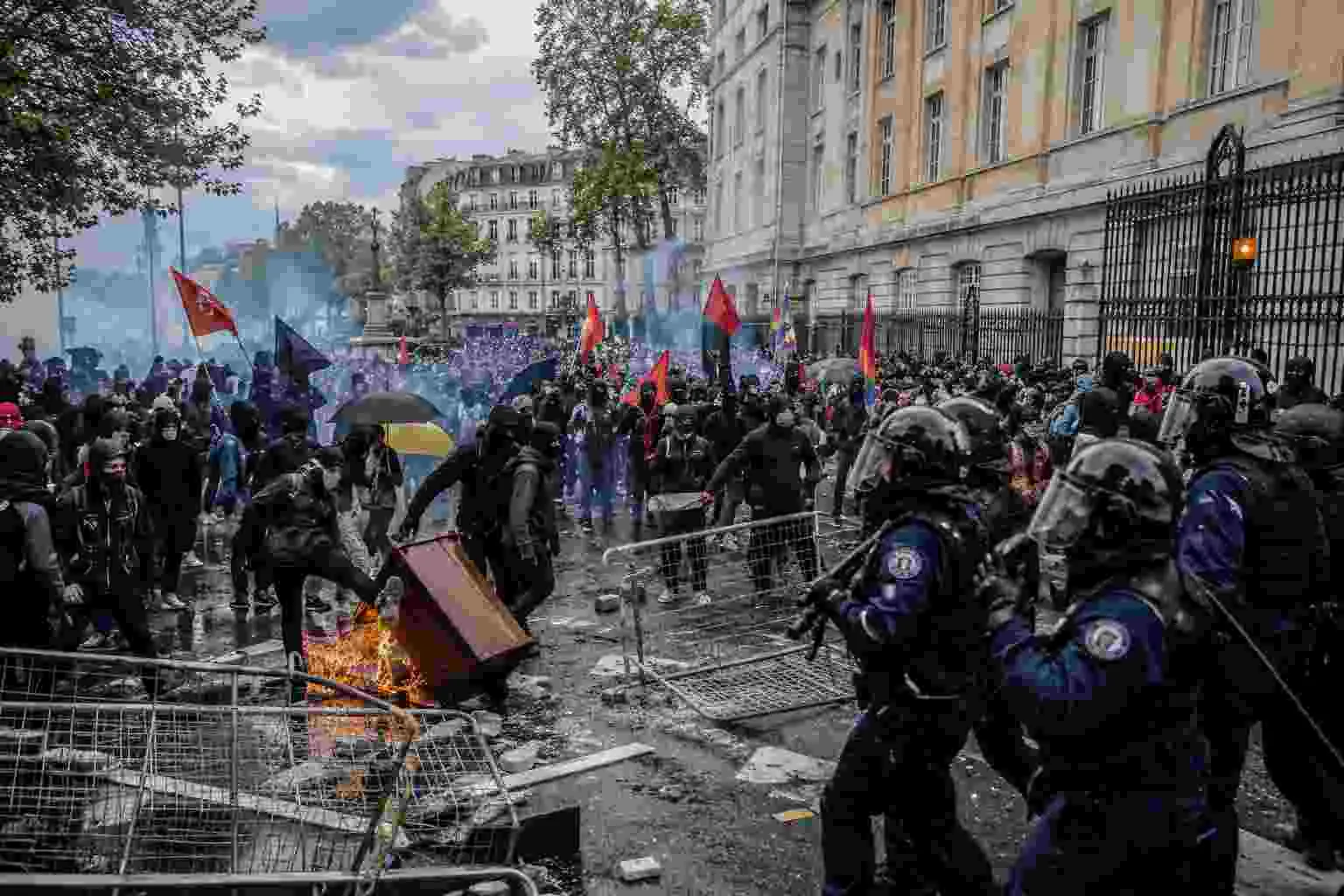
Thousands of protesters flooded the streets of Geneva, Switzerland, on Sunday, June 14, 2026, in one of the largest political mobilizations seen in Europe this year. The demonstrations take place on the eve of the G7 summit in Évian-les-Bains, France, bringing together activists, environmental movements, unions, and anti-globalization groups. While the mobilization was predominantly peaceful, it recorded moments of tension with clashes between radical groups and security forces. Swiss authorities confirmed episodes of vandalism, vehicle fires, and the use of tear gas to disperse those involved in the disturbances.
What Drove Thousands to Protest Against the G7 in Geneva?
The protests were organized by a broad coalition of groups claiming to represent different sectors of the international civil society. Organizers allege that the G7 concentrates excessive influence on global decisions without adequately representing the political, economic, and social diversity of the planet. Among the main criticisms raised are issues related to economic inequality, climate change, migration policies, armed conflicts, and the influence of major powers over international organizations. Many participants advocate for a deep reform of global institutions and argue that the richest countries hold disproportionate power over decisions affecting billions of people.
Anti-Globalization Movements Return to the Spotlight
The actions mark the return of large mobilizations associated with the anti-globalization movement, which gained notoriety in the late 1990s and early 2000s during international meetings of political and economic leaders. Activists say that issues such as global inflation, social inequality, and environmental crises have renewed interest in such demonstrations. The movement returns to the streets at a time when the legitimacy of multilateral institutions is questioned by different sectors. The presence of these groups in Geneva reinforces dissatisfaction with the current model of global governance.
Geneva’s Symbolic Role as a Stage for International Mobilization
Geneva was chosen as the main point of concentration due to its proximity to the G7 summit venue and its historical importance as an international diplomatic center. The city hosts various global organizations, including agencies of the United Nations, humanitarian organizations, and multilateral institutions. This characteristic has turned Geneva into a symbolic location for groups seeking to draw attention to international agendas related to global governance and human rights. Since the early hours of the day, thousands of people occupied central streets, squares, and avenues to participate in the demonstrations.
Confrontations with Police and Acts of Vandalism Mark Part of the Protests
Despite the predominantly peaceful nature of the mobilization, isolated groups clashed with security forces along the route of the protests. Authorities reported that some protesters threw objects at buildings and properties, causing material damage in different parts of the city. Among the incidents recorded were broken storefronts, graffiti, vehicle fires, and attacks on structures considered symbols of global economic power. Images released by international media showed moments of tension involving masked groups and police teams positioned to protect areas considered strategic.
Police Use Tear Gas to Disperse Violent Groups
As confrontations escalated in certain locations, the Swiss police used tear gas to disperse groups involved in violent acts. Authorities stated that the measure was adopted to restore public order and prevent greater damage to property and the safety of residents. Civil rights organizations urged that all actions be conducted proportionally and with respect for the right to peaceful assembly. There is no official balance of injured or detained persons as of now.
Unprecedented Security Operation Between France and Switzerland
The holding of the G7 summit led France and Switzerland to implement one of the largest security operations in the region in recent years. Thousands of agents were mobilized to protect international leaders, diplomatic delegations, journalists, and strategic facilities. Measures include aerial monitoring, reinforced patrolling, border controls, and advanced surveillance systems. Authorities also established restricted access zones near areas where meetings between heads of state and government will take place.
The security operation involves permanent coordination between French and Swiss authorities. The objective is to guarantee adequate protection given the presence of some of the most influential leaders on the planet. Security experts consider that the current international context requires high levels of preparation due to the risks associated with terrorism, extremism, and hybrid threats. The border between the two countries received reinforced crossing controls.
Key Topics on the 2026 G7 Summit Agenda
This year’s meeting takes place at a particularly delicate moment for international politics. Among the main topics expected on the agenda are the conflicts in the Middle East, especially the tensions involving Iran and Israel, as well as the continuation of the war in Ukraine. Discussions will also include issues related to global security, artificial intelligence, economic growth, energy transition, and climate change. Authorities hope the meeting will produce joint declarations and cooperation mechanisms aimed at reducing international risks.
Middle East Tensions Dominate Leaders’ Concerns
Diplomats indicate that the situation in the Middle East will occupy a central position in the discussions. The risk of conflict escalation worries governments and financial markets due to potential impacts on global energy supply. The tensions between Iran and Israel are at the top of the security agenda. The war in Ukraine also continues to demand attention from G7 leaders.
World Leaders Arrive in Évian-les-Bains for the G7 Summit
Among the most closely watched participants are the President of the United States, Donald Trump, and the President of France, Emmanuel Macron. Also participating are leaders from the United Kingdom, Germany, Italy, Canada, and Japan, in addition to invited representatives from other nations and international organizations. Bilateral meetings between these leaders are considered as important as the formal sessions, since many diplomatic negotiations occur parallel to the official agenda. The presence of Trump and Macron is expected to draw special attention from the global media.
Protesters Criticize Global Economic Policies and Inequality
One of the main messages conveyed by participants in the protests concerns the economic inequalities observed in different regions of the world. Organizing groups argue that the current international economic model favors developed countries and large corporations to the detriment of vulnerable populations. Demonstrators advocate for greater participation of developing countries in international forums and call for reforms in global financial institutions. Issues related to the cost of living, access to housing, and wealth concentration were also highlighted during the acts.
Climate Change Remains Central to Demands
Environmental movements had a significant presence in the demonstrations in Geneva. The groups demand faster action to reduce greenhouse gas emissions and accelerate investments in renewable energy. Activists argue that the major economies have a special responsibility in the fight against global warming due to the historical volume of emissions associated with industrial development. The expectation is that this topic will also be discussed during the G7 summit.
Economic and Logistical Impact of the Protests and Summit
The mobilization of thousands of people and the security measures adopted have caused significant changes in the routine of various areas of the Franco-Swiss region. Some roads were temporarily closed, transport underwent adjustments, and commercial activities needed to be reorganized to meet security requirements. Although these impacts are temporary, authorities believe that the diplomatic and economic benefits associated with holding the summit justify the investments made. Local commerce also feels the effects of the presence of protesters and tourists.
What to Expect in the Coming Days as the G7 Summit Begins
With the official start of the G7 summit, international attention will remain focused on the region. Analysts will closely follow the decisions made by the leaders and the unfolding of the protests. The outcomes of the meetings could influence issues related to international security, the global economy, and technological cooperation. At the same time, the protests demonstrate that part of civil society continues to seek greater participation in debates about the future of global governance.
Frequently Asked Questions
Why was Geneva chosen as the stage for the protests?
Geneva was chosen for its proximity to the G7 summit venue in Évian-les-Bains and its historical importance as an international diplomatic center, hosting UN agencies and other multilateral organizations. The city has become a symbol for groups seeking to draw attention to issues of global governance and human rights.
Which leaders will participate in the G7 summit in Évian-les-Bains?
Participating are the leaders of the seven member countries: the United States (President Donald Trump), France (President Emmanuel Macron), the United Kingdom, Germany, Italy, Canada, and Japan, along with invited representatives from other nations and international organizations. Parallel bilateral meetings are considered as important as the formal sessions.
What do the protesters hope to achieve with the demonstrations?
Protesters hope to pressure G7 leaders to adopt concrete measures against economic inequality, climate change, and migration policies. They also advocate for reforms in global financial institutions and greater participation of developing countries in international forums.