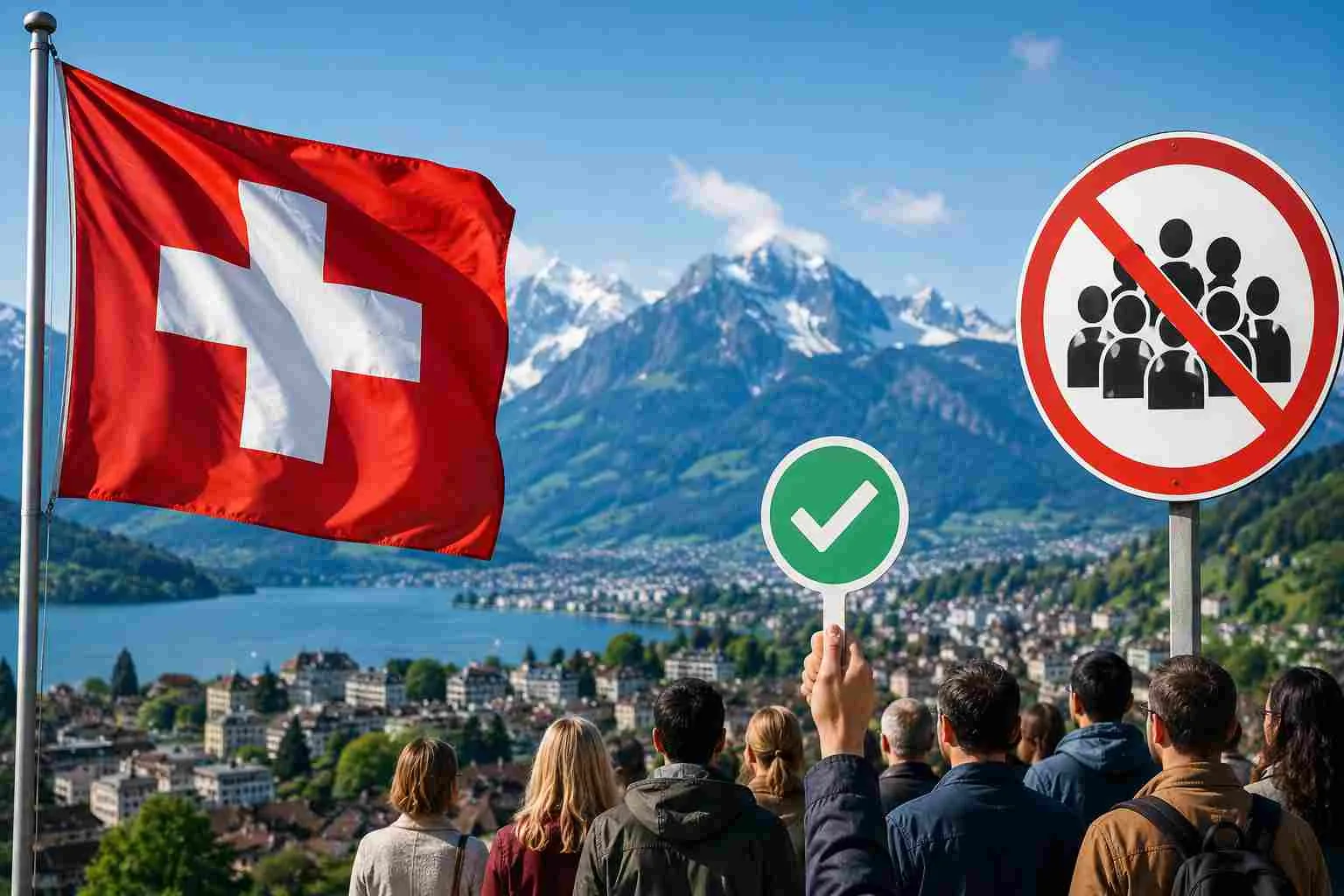
Switzerland's voters have decisively rejected a controversial anti-immigration initiative that would have capped the nation's permanent population at 10 million people. The proposal, put forward by the far-right Swiss People's Party (UDC), was defeated on Sunday, June 14, 2026, with 55% of ballots cast against it, according to projections from the polling institute gsf.bern. The result, announced just 30 minutes after polling stations closed, marked a clear victory for the 'No' camp in what had been considered an extremely tight vote. The outcome sends a strong signal about the electorate's stance on immigration and integration with the broader European community.
A decisive defeat for the far-right population cap initiative
The proposed referendum, authored by the UDC — Switzerland's largest political party — aimed to prevent the country's permanent resident count from exceeding 10 million by the year 2050. Currently, foreign nationals account for more than 25% of the Swiss population, a figure that has long been a central concern for the radical right. Switzerland also holds the world's highest Human Development Index (HDI), standing at 0.967 according to the United Nations Development Programme (UNDP). Supporters of the measure argued that unchecked immigration was driving shortages in housing, pushing up rents, accelerating urban sprawl, creating traffic congestion, overcrowding trains, increasing crime, straining the healthcare system, and lowering educational quality.
What did the rejected referendum propose?
The initiative specifically sought to amend the constitution to impose a hard cap on the number of permanent residents. The UDC, using its parliamentary influence, gathered enough signatures to force the nationwide vote. Monika Rühl, director of the business organization Economiesuisse, told the public broadcaster RTS that she was “very relieved and happy” with the defeat. Her reaction reflected widespread relief among economic stakeholders, who had warned that the cap would severely disrupt labor markets and hinder the country's ability to attract skilled foreign workers. The proposal's failure means no legally binding population ceiling exists in Switzerland.
How could the population limit have affected relations with the European Union?
Had the measure passed, it would have placed Switzerland at odds with the European Union, its primary trading partner. Although Switzerland is not a member of the bloc, it maintains deep economic ties through a series of bilateral agreements, including the free movement of persons. Limiting immigration would have directly violated those accords, potentially triggering retaliatory measures from Brussels. The Swiss government, Parliament, major political parties, labor unions, and employer associations all opposed the initiative. Monika Rühl emphasized that the result is “important for our country and for our relations with the EU,” underscoring the business community's relief that cross-border cooperation remains intact.
Why did the far-right push for immigration restrictions?
The UDC argued that uncontrolled immigration was overwhelming infrastructure and public services, citing a litany of problems such as housing shortages, rising rents, uncontrolled urbanization, traffic jams, crowded trains, growing crime rates, an overburdened healthcare system, and declining educational quality. Despite Switzerland's reputation for having one of the highest living standards globally, proponents insisted the country's capacity was being tested to its limits. The referendum's defeat demonstrates that a majority of the population does not share that alarmist view, preferring to maintain existing immigration policies and the economic benefits they bring.
What other decisions did Swiss voters make on June 14?
In a separate vote held on the same day, Swiss citizens approved, according to initial estimates, a proposal to tighten access to civilian service — the alternative to compulsory military service. This decision comes against the backdrop of the war in Ukraine and rising geopolitical tensions, which have prompted many countries to bolster their armed forces. The approval of stricter civilian service rules contrasts sharply with the rejection of the anti-immigration initiative, revealing an electorate that favors stronger defense measures but does not support population restrictions. Civilian service in Switzerland has long been an option for conscientious objectors, and the stricter rules reflect a broader global trend of military reinforcement.
What are the immediate consequences of the rejection?
With the proposal defeated, the UDC suffers a significant political setback, as the population cap was one of its flagship campaigns. The Swiss government, which opposed the text, will now maintain current immigration policies without a statutory population ceiling. Relations with the European Union remain stable, with no immediate threat of disruption over free movement. Economic sectors, represented by Economiesuisse, celebrate the decision, which preserves access to foreign workers vital for the Swiss economy — from healthcare to technology. The outcome reinforces Switzerland's position as an open, economically integrated nation within Europe.
Frequently Asked Questions
Does Switzerland have a population limit until 2050?
No. The rejected proposal would have set a cap of 10 million permanent residents by 2050, but it was defeated with 55% of votes against. With the rejection, there is no legal limit on the country's population.
What percentage of Switzerland's population is foreign?
According to the source, foreign nationals make up more than 25% of the Swiss population. This high percentage was a key argument used by the far right to push for immigration limits.
What is the Swiss People's Party (UDC)?
The UDC is the largest party in Switzerland, with a far-right orientation. It authored the anti-immigration popular initiative that was rejected in the referendum of June 14, 2026.