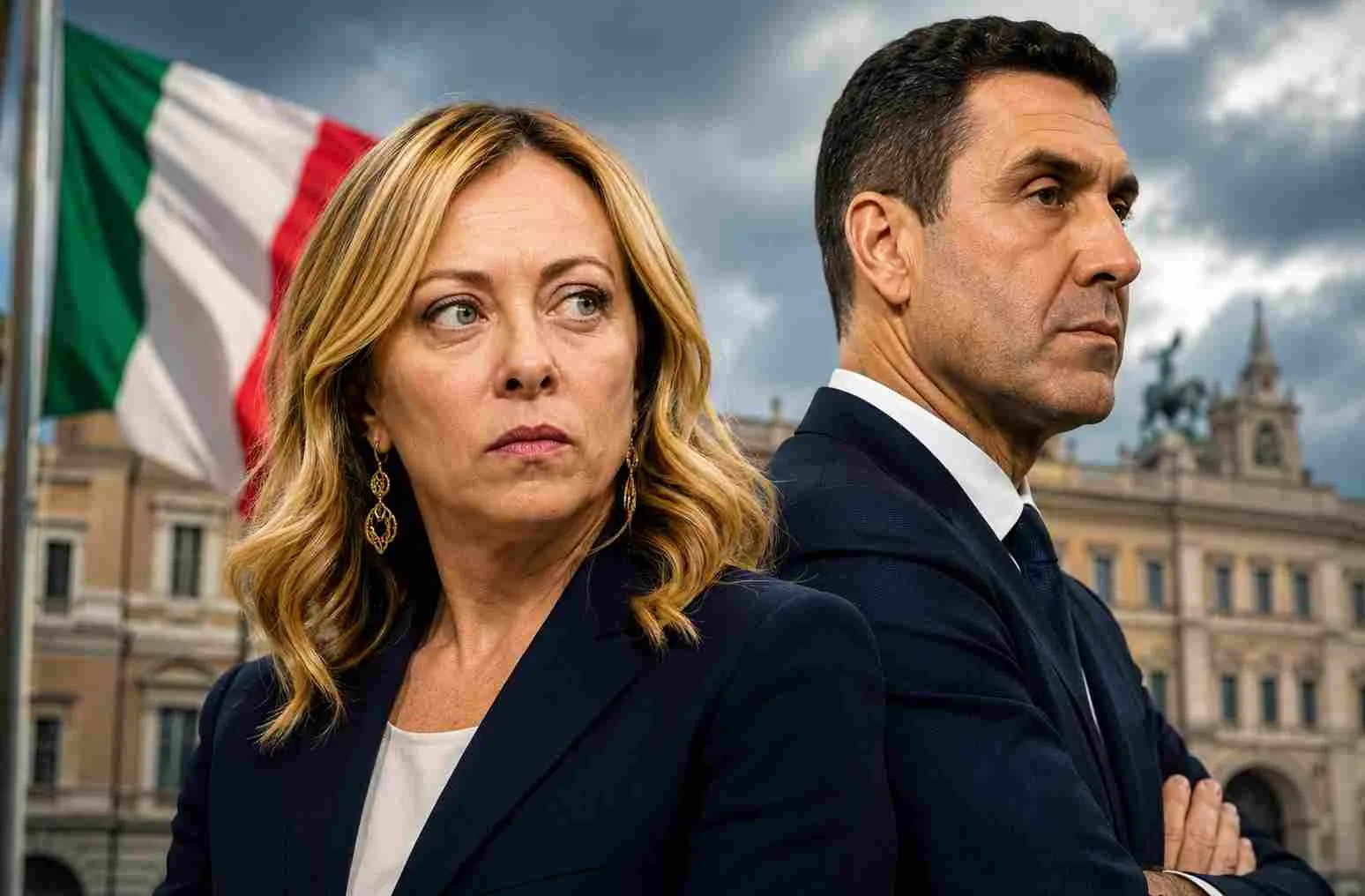
The launch of the Futuro Nazionale party led by former general and MEP Roberto Vannacci has triggered a new phase of instability in Italian politics, directly challenging Prime Minister Giorgia Meloni’s leadership. Meloni’s coalition has governed Italy since 2022 and ranks among the leading conservative forces in Europe. The rise of this new movement has sparked concern among political analysts, investors, and European authorities, who are monitoring the potential impact on the country’s electoral balance. Although Meloni’s government retains a relatively solid position in the Italian Parliament, the emergence of an additional right-wing force could significantly reshape the political landscape heading into the general elections scheduled for 2027.
Who is Roberto Vannacci and how did he build his political capital?
Roberto Vannacci has become one of the most controversial and influential figures in Italian politics in recent years. A former general in the Italian Army, he gained national notoriety after publishing books and making statements defending conservative positions on immigration, national identity, cultural values, and sovereignty. His popularity grew rapidly among segments of the population that believe traditional parties have abandoned issues considered priorities for part of the conservative electorate. In the elections to the European Parliament, Vannacci achieved a strong performance, solidifying his image as a political figure with national mobilisation capacity.
From military officer to party leader: Vannacci’s trajectory
Over the last few years, Vannacci has transitioned from a respected military figure to one of the most recognisable names on the Italian right. His direct and often controversial rhetoric helped build a loyal base of supporters across various regions of the country. Now, with the creation of Futuro Nazionale, he is seeking to convert that popularity into a party structure capable of competing for seats in the Italian Parliament. This shift in status represents one of the most talked-about political phenomena in Italy in 2026.
Why does Futuro Nazionale represent a real threat to Meloni?
Although Giorgia Meloni remains one of the most influential leaders in Europe, the rise of Vannacci presents a significant political challenge. Over the past few years, Meloni has sought to balance her conservative base with the need to govern one of the largest economies in the European Union. This process has required constant negotiations with European partners, financial markets, and international allies. However, some of the most conservative voters believe that certain original promises were softened after she took office, and it is precisely this group that Vannacci is attempting to attract to his new party.
The danger of fragmentation of the conservative electorate
Analysts point out that the main risk for Meloni is not necessarily losing government immediately, but facing fragmentation of the conservative electorate. Even if Futuro Nazionale only achieves a few percentage points in the polls, that could be enough to alter the political balance in future parliamentary elections. In multiparty systems such as Italy’s, small changes in popular support can have significant consequences for the formation of governing coalitions. The Italian right is therefore experiencing an internal contest for leadership and ideological direction.
What are Vannacci’s main policy proposals?
Among the issues most frequently associated with the new party are immigration, public security, national sovereignty, and reform of Italy’s relationship with European institutions. The movement argues that Italy needs to regain greater control over certain political and economic decisions. In addition, the group advocates stricter policies to combat irregular immigration and measures aimed at promoting Italian cultural identity. These platform positions resonate with specific sectors of Italian society and help explain the party’s early growth.
How is the European Union observing the Italian scenario?
The development of the political situation in Italy is being closely monitored by European Union authorities. Italy is the third-largest economy in the eurozone and plays a fundamental role in decisions related to budget, immigration, energy, and security. Any significant change in the country’s internal political balance could produce ripple effects in broader European negotiations. For this reason, European leaders are paying close attention to the advance of new political movements and their possible consequences for institutional stability.
Italy’s strategic geographic position, its economic weight, and its political influence make the country one of the key players within the European Union. Issues involving Rome frequently reverberate in Brussels, Berlin, Paris, and other European capitals. The emergence of Futuro Nazionale adds an unpredictable variable to an already complex continental political chessboard.
What do polls indicate about the new party’s growth?
Surveys released by Italian research institutes indicate that Futuro Nazionale began its political trajectory with ratings capable of influencing future electoral contests. Although the numbers are still far from those achieved by Italy’s main parties, experts note that the speed of initial growth is drawing attention. The party’s performance in upcoming regional and municipal elections will be considered an important test for evaluating its real capacity to expand. If it manages to consolidate its presence across different regions of the country, the party could play a relevant role in the national elections of 2027.
Economy and governance: Meloni’s priority in the face of political crisis
While confronting new political challenges, the Meloni government is trying to maintain focus on economic and administrative issues. Italy continues to face challenges related to economic growth, public debt, productivity, and international competitiveness. The government argues that political stability is essential to preserve market confidence and guarantee the investments needed for the country’s development. For this reason, allies of the prime minister downplay the initial impact of the new party and assert that the population will continue to prioritise concrete results in the economy.
2027 elections: what to expect from the contest
Although the next general elections are still relatively distant, the political moves observed in 2026 are already beginning to shape the national debate. The coming months will be decisive in determining whether Futuro Nazionale can turn its current visibility into a consolidated political structure. It will also be important to observe how Giorgia Meloni responds to this new challenge. The prime minister possesses significant political experience and maintains a broad electoral base, but she will need to balance her strategy between governability and preserving popular support. Italy’s economic performance, migration challenges, and the international context could also directly influence voter behaviour.
Frequently Asked Questions about the crisis on the Italian right
Can Futuro Nazionale win the 2027 elections?
Based on the current scenario, Vannacci’s party is still far from the main parties in the polls, but its initial growth is drawing attention. To win, it would need to consolidate a nationwide structure and overcome Meloni’s broad base, something experts consider unlikely in the short term.
Is Meloni at risk of losing power before 2027?
The Meloni government maintains a relatively solid position in Parliament, and the immediate risk is not loss of office but fragmentation of the conservative electorate. The governing coalition still holds a majority, and no impeachment motion or institutional crisis has been recorded.
How does Futuro Nazionale affect relations with the European Union?
European authorities are closely monitoring the advance of the new party because Italy is the third-largest economy in the eurozone. Significant changes in Italy’s internal political balance could affect negotiations on budget, immigration, and energy within the bloc.
Did Vannacci have relevant previous parliamentary experience?
Yes, Vannacci was elected to the European Parliament, where he achieved a strong performance. That experience consolidated his image as a political figure with national mobilisation capacity, paving the way for the creation of Futuro Nazionale.