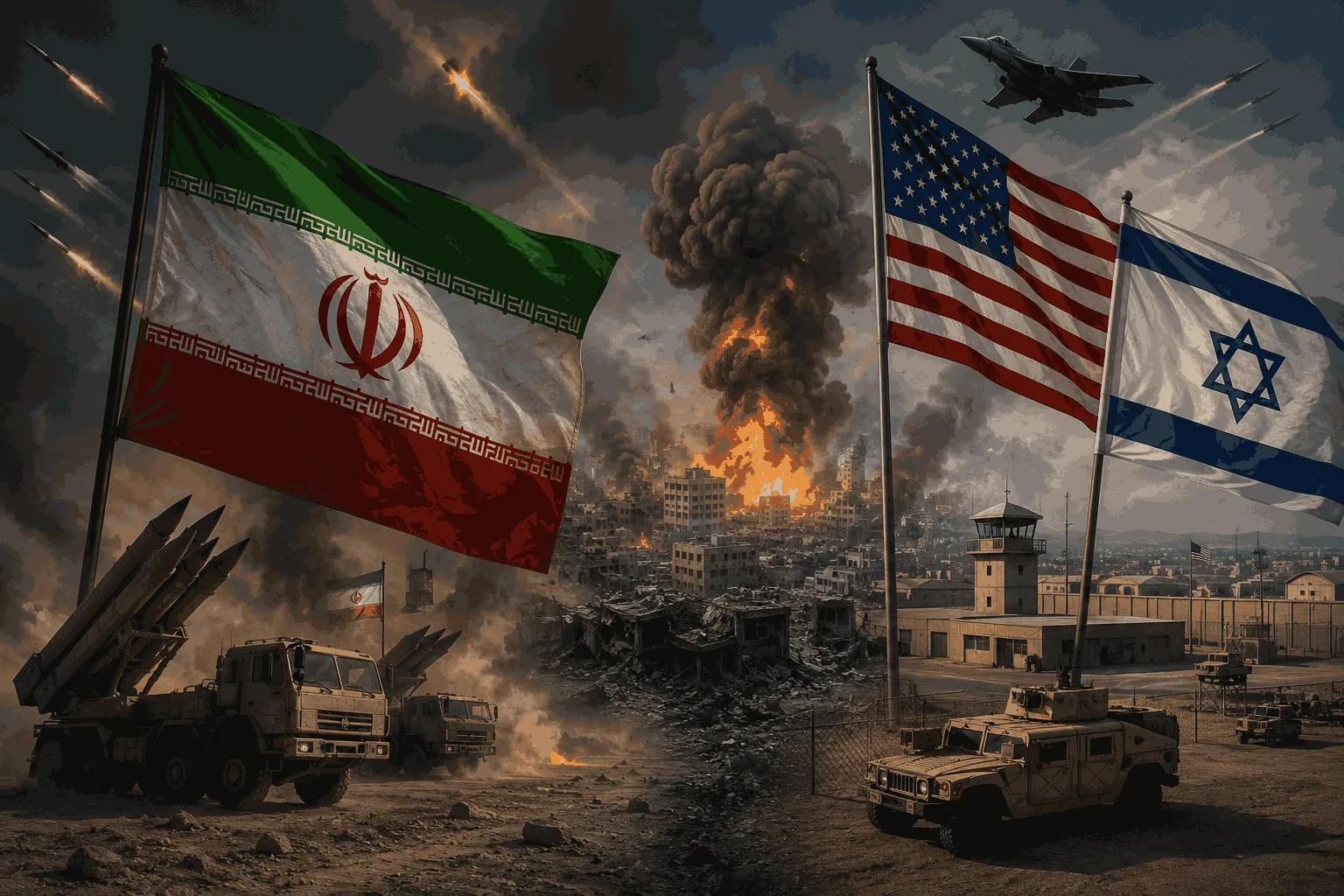
Iran has threatened to attack United States military bases in retaliation for an Israeli airstrike in Beirut that broke a fragile ceasefire, the country’s top negotiator said Sunday. Mohammad Qalibaf, who also serves as Iran’s parliament speaker, issued the warning on social media, accusing Washington of failing to uphold the truce. The Israeli bombing targeted buildings in a suburb of the Lebanese capital, with officials in Tel Aviv claiming the site housed Hezbollah militants. The strike has dramatically escalated tensions across the Middle East, triggering a direct threat against American forces stationed in the region.
A Ceasefire Broken in Beirut
Israel carried out the bombing hours before Tehran’s announcement, and the operation was immediately condemned as a violation of the existing ceasefire. Israeli authorities justified the attack by stating that the target was a group of Hezbollah operatives planning an assault. In response, Iran’s leadership chose not to limit its reaction to verbal condemnation. Qalibaf wrote that the United States “is not committed to a ceasefire nor believes in dialogue,” citing a naval blockade and breaches of agreements concerning Lebanon as grounds for retaliation.
Tehran’s Direct Threat to American Forces
The Iranian government has classified all 19 American military installations across the Middle East as “legitimate targets.” These bases are located in countries including the United Arab Emirates, Oman, Saudi Arabia, Iraq, and Egypt. The threat also extends to Israeli assets in the region. Qalibaf’s statement, delivered from his powerful position as parliament speaker, signals a calculated show of strength within Iran’s political hierarchy. Local media published a map listing the precise bases now considered at risk, amplifying the gravity of the warning.
The US-Israel Rift Turns Public
The Israeli airstrike represented a direct challenge to President Donald Trump, who had assured just last week that Israel would not resume bombing Lebanon. The broken promise triggered a heated exchange between Trump and Prime Minister Benjamin Netanyahu. The American president confirmed he had called Netanyahu “completely crazy” because of the incursions into Lebanese territory. The dispute between the two allies has now spilled into public view, exposing significant cracks in their strategic partnership.
Divergent Views on the Truce’s Scope
Pakistan, which has been acting as a mediator in the negotiations, and Iran both insist that Lebanon was covered under the ceasefire agreement. In contrast, the United States and Israel maintain that the truce only applied to attacks on Iranian soil and Gulf nations. This disagreement over the ceasefire’s scope is fueling further instability. Last week, Trump had stated that Israel and Hezbollah had agreed to halt attacks in Lebanon and northern Israel, but the latest strike contradicts that claim.
A Region on Edge
Hezbollah, the Iran-backed group, continues to launch attacks against northern Israel, and the current situation combines a direct Iranian threat to US bases with ongoing combat between Israel and the Lebanese militia. The broken truce deepens both the diplomatic and military crisis. The international community is watching nervously for Tehran’s next move and Israel’s potential response. The outcome of this confrontation could fundamentally reshape the balance of power in the Middle East.
The escalation has left diplomats scrambling to prevent a wider war. Mediators from Pakistan are reportedly trying to clarify the ceasefire terms, but the differing interpretations have yet to be reconciled. Meanwhile, the Biden administration—having inherited the Trump policy—faces a delicate balancing act. Every additional day without a renewed truce increases the risk of a direct Iran-Israel conflict that could draw in American forces stationed across the region.