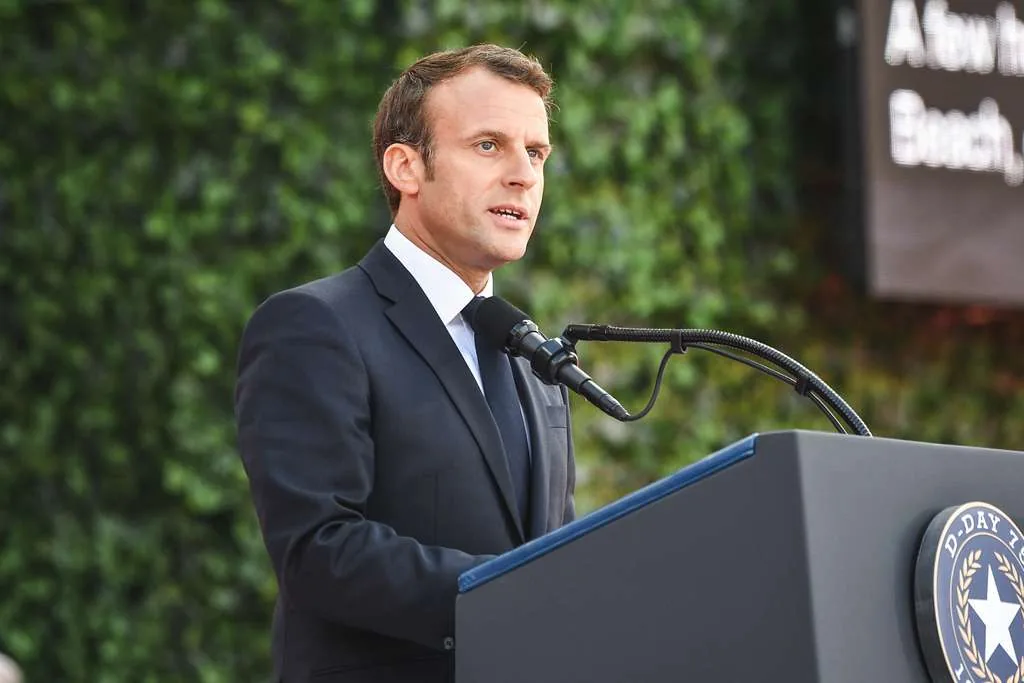
French President Emmanuel Macron announced a record €93 billion in foreign investment commitments on Monday, June 1, during the annual Choose France conference held at the Palace of Versailles. The figure far surpasses the €20 billion recorded at last year's edition and even exceeds the €87 billion accumulated over the event's eight-year history, according to data from the Élysée Palace. Approximately 200 business leaders from around the world attended the gathering, which has generated more than 230 projects since its inception in 2018, a year after Macron took office. The head of state called the sum "by far a record edition and historic," with expectations that it will create over 15,000 direct jobs.
Choose France Hits Landmark €93 Billion Mark
The annual summit has become a flagship initiative for Macron's administration, aiming to position France as a top destination for global capital. This year's total of €93 billion dwarfs previous years, underscoring a renewed confidence among international investors. The Élysée Palace noted that since 2018, more than 230 projects have been announced, representing several thousand jobs, though it did not specify how many have actually been implemented. The record-breaking announcement comes at a time when France is competing fiercely with other European nations for foreign direct investment.
SoftBank's €45 Billion Commitment Anchors AI Infrastructure
The largest single pledge came from Japanese conglomerate SoftBank, which will invest €45 billion by 2031 in data centers in northern France, as Macron revealed during the event. SoftBank founder Masayoshi Son had signaled over the previous weekend that he planned to spend €75 billion on artificial intelligence infrastructure overall, with €45 billion earmarked for France. Son highlighted that French nuclear electricity was a decisive factor in the choice, allowing the company to "transform electricity, as raw material, into intelligence of higher added value," including for export. Macron asserted that these projects will help make France "the main host country for data centers" and for "computing capabilities in Europe," as well as a platform for advanced AI robot production and industrialization through artificial intelligence.
Global Giants Bolster French Digital Ecosystem
Other major announcements included Canadian asset manager Brookfield, which will invest $10 billion (about €8.5 billion) in a data center in the Escaudain area in northern France. Investment firm Ardian, in partnership with Nordic data platform Verne, committed $5 billion (€4.2 billion) for another data center in the Paris region. American company Salesforce announced investments of $2 billion (€1.7 billion) by 2030, including the creation of an AI hub in Paris. Together, these three projects alone amount to over €14 billion, reinforcing the French government's bet on cutting-edge digital infrastructure.
Foxconn and Amazon Add Manufacturing and Logistics Capacity
Taiwanese group Foxconn is set to invest €120 million in a production line for AI motherboards in the city of Angers, western France, in partnership with French supercomputer specialist Bull, according to sources cited by AFP. E-commerce giant Amazon, which earlier this month had already announced over €15 billion in investments in the country over the next three years along with 7,000 new jobs, added another 1,000 positions across three logistics centers. Macron also mentioned that part of the funds will be directed to sectors such as semiconductors, critical minerals, tractors, trucks, steel, and health, though specific details on those projects have not yet been fully disclosed.
Record Numbers Mask Underlying Economic Weaknesses
According to consulting firm EY, France has been the country attracting the most foreign investment in Europe for seven consecutive years, with 852 projects recorded last year out of a total of 5,026 across 47 European countries — a 17% drop in a challenging international environment. Macron acknowledged that this performance "does not fall from the sky" and that the country must continue its efforts. Despite the leadership in AI-related projects, French industry has suffered, especially in automotive, chemical, and metallurgy sectors. Economist Sylvain Bersinger warned that the announcements at Versailles "should not hide the fact that, overall, business investment in France is depressed, that reindustrialization remains more a pious hope than a reality, and that France is not necessarily more attractive to foreign investors than its neighbors."
Macron has the ambition to transform France into a world leader in artificial intelligence and has already announced €1.55 billion in public investment to develop quantum technologies and semiconductors. During the event, he stated that the new projects will help "reduce the lag we had in computing capabilities in Europe" relative to the United States and China. The Choose France conference may also include announcements about rare earths, but no concrete details have been released yet. The Élysée Palace highlighted that since 2018, more than 230 projects have been announced, but did not specify how many have been effectively implemented.