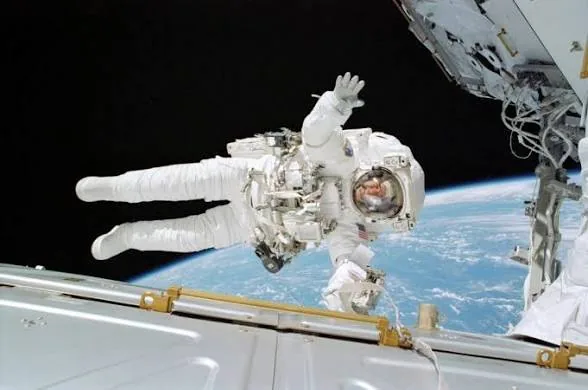
NASA has placed the four astronauts of the Crew-12 mission on an emergency evacuation footing after the rate of an air leak from the International Space Station's Zvezda module doubled within days. The order, communicated on Friday, June 5, 2026, instructs the crew to don their spacesuits and take refuge inside the SpaceX-built Crew Dragon capsule docked to the station. The leak, previously described as minor, intensified sharply on Monday, June 1. According to a NASA official speaking on condition of anonymity, the daily air loss increased from approximately 0.45 kilograms to about 0.9 kilograms. The directive to enter the Crew Dragon was first issued at 9:04 a.m. Eastern time that Monday and has been maintained and reinforced ever since.
Leak Rate Doubles, Evacuation Alert Issued
The escalation in the rate of air escaping from the Zvezda module prompted NASA's control center to take immediate precautionary action. The agency's anonymous official revealed that the leak, which had been considered minor for months, suddenly worsened at the start of the week. As a result, the four crew members were told to seal themselves inside the Crew Dragon and remain ready for a possible emergency undocking. The sustained order over subsequent days indicates that NASA views the situation with a high degree of seriousness.
Roscosmos Confirms Two Leaks in Zvezda Module
Russia's space agency, Roscosmos, acknowledged the presence of two separate leaks in the Zvezda module, a key structural element of the ISS's Russian segment. In a statement released on Friday, the agency confirmed that one leak point has already been repaired using a hermetic sealant compound. The second leak, situated in the conical part of the module's transfer compartment, is still undergoing sealing efforts. Despite the deterioration, Roscosmos declared that the situation does not pose an immediate risk to the crew and that internal station pressure remains stable.
Crew-12 Mission and the Astronauts on Alert
The Crew-12 mission represents the 12th operational crew rotation flight conducted by SpaceX under NASA's Commercial Crew Program. Launched in February 2026, the mission is planned to last approximately nine months aboard the ISS. The four crew members are American astronauts Jessica Meir and Jack Hathaway, French astronaut Sophie Adenot from the European Space Agency, and Russian cosmonaut Andrey Fedyaev from Roscosmos. They are the individuals now sheltering inside the Crew Dragon capsule, which serves as their primary emergency escape vehicle.
Crew Dragon as Lifeboat for Emergency
As a preventive measure, the astronauts have been told to keep their spacesuits on and stay close to the SpaceX capsule docked to the station. The Crew Dragon is designed for a high degree of automation, capable of carrying up to seven people and performing docking and return maneuvers without manual input. Should the leak force an evacuation, the spacecraft can undock rapidly and bring the crew back to Earth. It functions as the station's de facto lifeboat, ready to deploy at a moment's notice.
Aging Station Raises Longer-Term Questions
The International Space Station orbits Earth at an altitude of roughly 400 kilometers and has been continuously occupied since the year 2000. It is the largest human-made structure in space, the result of a partnership among the United States, Russia, Canada, Japan, and European nations. The Zvezda module is a fundamental component of this complex, which spans dimensions comparable to a football field. The station completes about 16 orbits of the planet every day and normally accommodates up to seven crew members on long-duration missions.