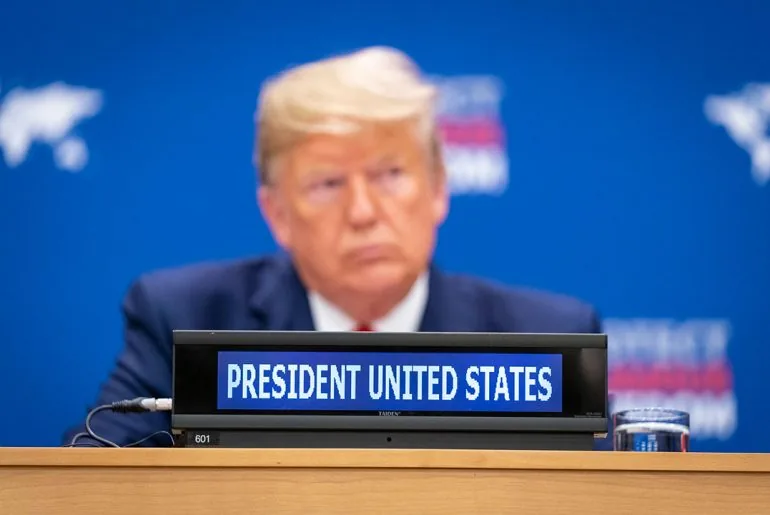
President Donald Trump has declared that Iran has agreed to forgo nuclear weapons and has suggested the possibility of a personal meeting with Supreme Leader Mojtaba Khamenei, even as ceasefire violations and regional tensions persist. In an interview with a podcast, the U.S. leader expressed a desire to meet the ayatollah, whom he described as actively involved in peace negotiations between Washington and Tehran. "Probably we will meet at some point, depending on how everything unfolds," Trump said, striking a tone that blended optimism with caution. The remarks come amid repeated breaches of the April 7 ceasefire and escalating hostilities involving Lebanon and other regional actors.
Ceasefire Fragility Amid Hostile Rhetoric
Despite the conciliatory posture from the White House, conditions on the ground remain tense. Hours before Trump's statements, Mohsen Rezaei, the military advisor to Khamenei, posted a message on social media platform X that appeared to directly contradict the administration's upbeat narrative. "Every shot fired and every attack will be met with a barrage of missiles and drones," Rezaei wrote, referencing U.S. bombings of an Iranian oil tanker and Qeshm Island that had prompted retaliatory strikes by Iran against Kuwait and Bahrain. The exchange of fire underscores the precarious nature of the ceasefire, which has been broken multiple times in recent weeks since it took effect on April 7.
Retaliatory Threats and Diplomatic Blame
The Iranian military advisor was not alone in escalating tensions. Esmaeil Baghaei, spokesman for Iran's foreign ministry, accused the United States of continuing to violate the ceasefire and declared that Tehran would not hesitate to take all necessary measures to defend its national security. "We insist that a ceasefire in Lebanon is an essential condition for any agreement aimed at ending the war," Baghaei stated, tying the bilateral negotiations directly to the conflict between Israel and the extremist group Hezbollah. On the American side, Trump acknowledged having spoken with Israeli Prime Minister Benjamin Netanyahu in "aggressive terms" on Tuesday, expressing dissatisfaction with Israel's "constant fights" with Lebanon.
Lebanon as a Central Point of Contention
The Israeli offensive in Lebanese territory has emerged as a major friction point between Washington and Tehran. Iran has conditioned any truce with the United States on the implementation of an effective ceasefire in Lebanon, a position reiterated by its foreign ministry spokesman. Trump, for his part, said he managed to overcome a setback after Iran threatened to suspend negotiations due to the exchange of attacks between Israel and Hezbollah. "So I spoke with Hezbollah and told them not to fire, and I spoke with Bibi and told him not to fire, and both stopped attacking each other," the president recounted, suggesting direct mediation by the White House.
Strait of Hormuz Remains Blockaded
Amid the diplomatic ebb and flow, the Strait of Hormuz — through which about one-fifth of the world's oil production passes — remains closed to navigation. Trump mentioned on Monday that the United States and Iran should reach an agreement to reopen the passage as early as next week, but no breakthrough has materialized. The closure of this strategic waterway is having a direct impact on global energy markets, exacerbating economic uncertainty. Meanwhile, the nuclear issue continues to dominate the agenda: Washington demands that Tehran commit never to develop atomic weapons, while Iran insists the matter is not currently under discussion.
Nuclear Program at the Heart of Stalemate
The principal sticking point in the ongoing negotiations is precisely Iran's nuclear program. Trump declared that Iran has already agreed not to possess nuclear arms, but Tehran's official position does not confirm such a commitment. The president's statement appears to reflect his personal optimism regarding the talks. "Iran is a great success. We'll see what happens. We are working on an agreement, and if it happens, great. If not, that's okay too. We'll do it another way," Trump said, blending confidence with ambiguity. Analysts point out that the absence of a formal pledge from Iran makes the president's assertion premature and potentially risky.