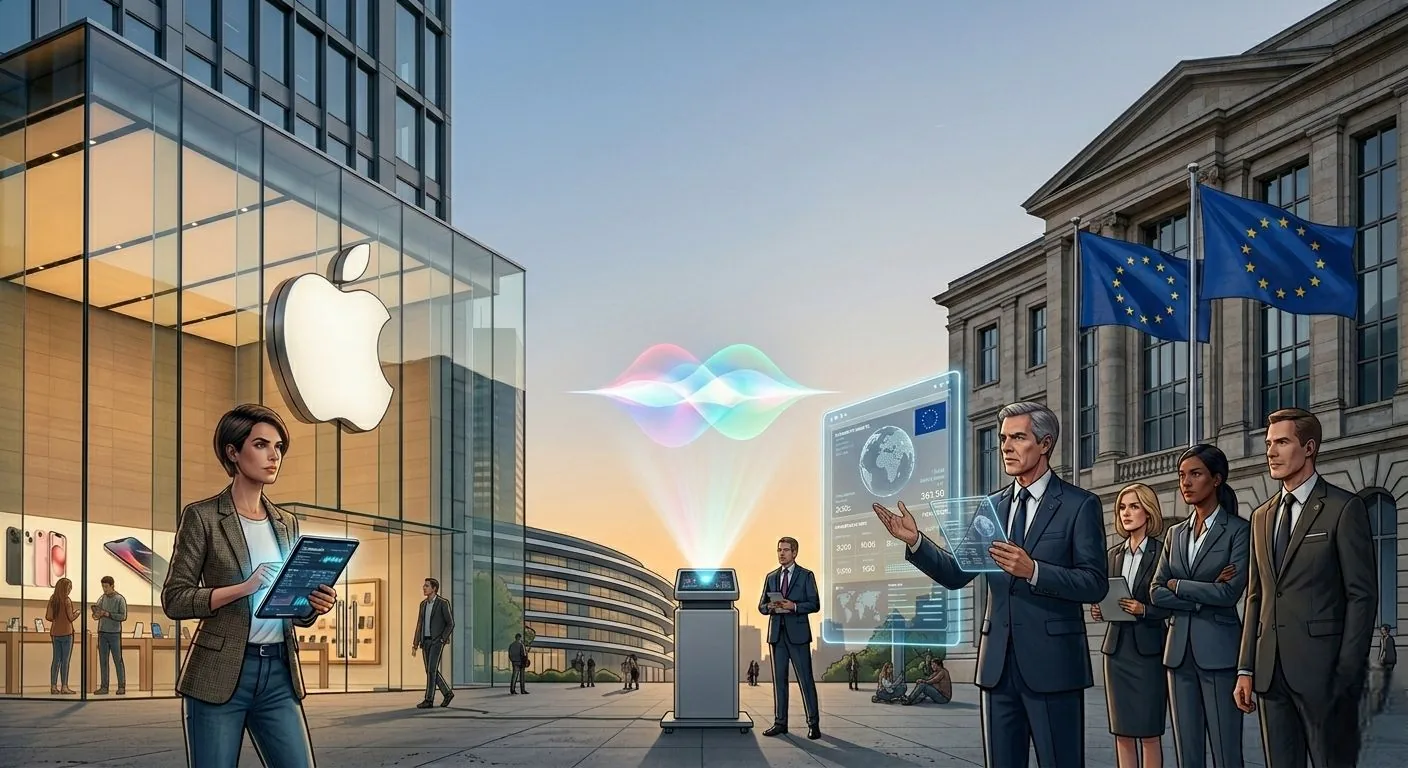
Siri AI will not launch in the European Union anytime soon, as Apple and EU regulators remain locked in a dispute over compliance with the Digital Markets Act. The company has decided against rolling out the feature, citing regulatory demands it deems unreasonable, while the European Commission insists the tech giant had sufficient time to align its plans with the law. The impasse leaves EU consumers without access to Apple's latest artificial intelligence capabilities. Both parties are now engaged in a public war of words over who is truly at fault.
Exemption Rejection Sparks Standoff
Apple's first move was to apply for an 18-month exemption from specific DMA interoperability obligations tied to Siri AI. The European Commission rejected that request outright, stating that such a temporary waiver was not permissible under the current framework. EU spokesperson Thomas Regnier told reporters, according to Reuters, that instead of seeking a suitable compliance solution, Apple simply asked to be excused from its responsibilities. "That's not an option," Regnier said, underscoring the Commission's firm stance.
EU Spokesperson: 'Apple's Decision Only'
The EU places full responsibility on Apple for the absence of Siri AI in the region. Regnier stated bluntly, "The decision not to roll out Siri AI in the EU is Apple's and Apple's only." He emphasized that nothing in the Digital Markets Act prevents the introduction of new products, provided they meet interoperability requirements. The Commission sees Apple's request for exemption as an attempt to bypass obligations rather than a genuine effort to comply. In the EU's view, the company chose to withhold the feature rather than adapt it to the rules.
Security or Strategy? Apple's Defense
Apple counters with security concerns, arguing that Siri AI's deep integration into user devices makes interoperability dangerous. Greg Joswiak, an Apple executive, claimed that giving rivals access could enable them to read messages, edit files, delete content, or execute actions without user knowledge or consent. The company views the DMA's mandate as an unreasonable risk to user privacy and device integrity. Joswiak also asserted that Apple attempted to negotiate with EU regulators but was met with a refusal to discuss alternatives—a charge the Commission denies.
No Room for Compromise
Both sides insist they want Siri AI available in the EU, yet neither is willing to budge. The EU accuses Apple of seeking only a special carve-out rather than a workable compliance path. Apple claims the EU refused to engage in any meaningful dialogue. The finger-pointing makes it nearly impossible to determine who is telling the truth. Observers expect this blame game to continue indefinitely, as neither party shows signs of yielding.
What Lies Ahead for EU Users
EU consumers are left without a flagship AI feature that is available in other markets. The deadlock highlights the tension between proprietary ecosystem control and the EU's push for open digital markets. Apple's decision to withhold the product rather than comply sets a potential precedent for future regulatory standoffs. Other technology companies may watch closely to gauge how far the Commission will enforce its rules. For now, the path to Siri AI in the EU remains blocked by mutual distrust and rigid positions.
The ongoing dispute shows no signs of resolution. Both Apple and the European Commission have entrenched themselves in opposing narratives. The company withholds its product; the regulator refuses to bend its DMA requirements. EU consumers are caught in the middle, without access to a feature that could enhance their devices. The standoff underscores the broader challenge of regulating powerful digital platforms in a way that balances innovation, security, and market fairness. Diplomacy appears stalled, and the spin war is likely to continue for the foreseeable future.