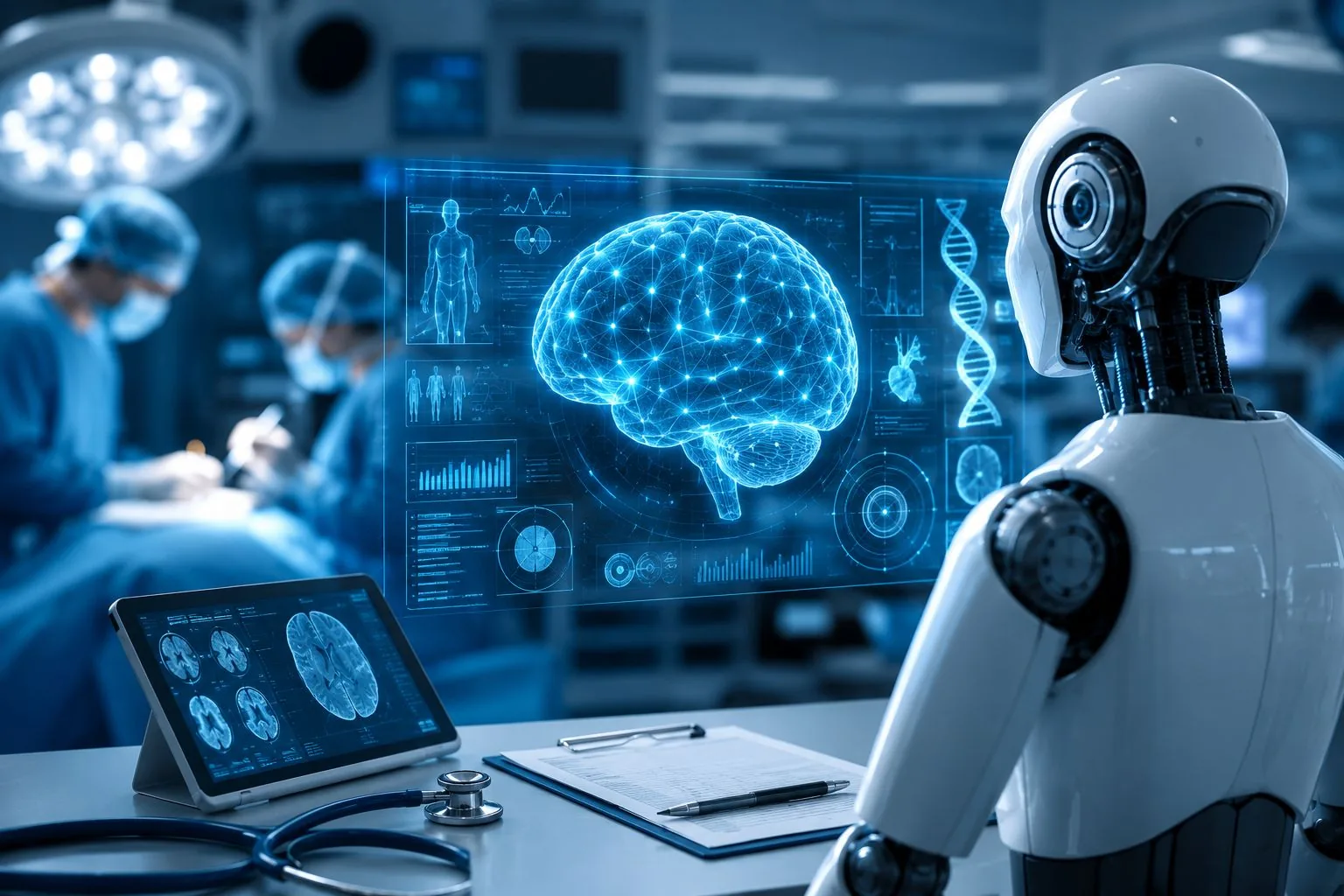
Artificial Intelligence has moved beyond futurist speculation to become one of the most vital instruments in modern medicine. Across hospitals, laboratories, research centers and clinics worldwide, intelligent systems are assisting physicians in diagnosing diseases with greater speed, developing novel therapies, and delivering increasingly tailored patient care. The momentum behind AI in healthcare is fueled by the convergence of massive medical datasets, high-performance computing, and ever-more sophisticated algorithms. This technological fusion is creating unprecedented opportunities to elevate the quality of medical services and broaden access to care. According to analyses from institutions such as the World Health Organization and the National Institutes of Health, AI is poised to play a decisive role in disease prevention, early diagnosis, and efficient health system management in the decades ahead.
AI’s Impact on Diagnostic Accuracy and Early Detection
In the realm of medical imaging, AI has demonstrated remarkable capabilities. Deep learning models can scan thousands of radiology images within seconds, flagging subtle anomalies that human eyes might miss. Researchers at the National Cancer Institute have applied these techniques to identify tumors in early stages, particularly in mammography where algorithms match the accuracy of seasoned specialists. The earlier a malignancy is detected, the greater the likelihood of successful intervention. Modern hospitals now deploy AI to assist with computed tomography and magnetic resonance imaging, highlighting suspicious regions and shortening report turnaround times. Ophthalmology has also benefited: algorithms trained on millions of retinal images can detect signs of diabetic retinopathy, glaucoma, and macular degeneration, enabling timely treatment.
Tailoring Treatments Through Genomics and Machine Learning
Personalized medicine represents another frontier transformed by AI. Traditional one-size-fits-all therapies often fail because individuals respond differently to the same medication. By integrating genetic profiles, clinical histories, and environmental data, intelligent systems can recommend therapeutic strategies uniquely suited to each patient, improving efficacy and minimizing side effects. Genomic sequencing has become more accessible, and AI tools assist researchers in interpreting vast quantities of genomic data to identify disease-associated mutations. The National Human Genome Research Institute employs advanced computational resources to speed up scientific discovery. Furthermore, AI is accelerating drug development. Pharmaceutical companies now leverage machine learning to streamline research, with applications such as:
- Identifying new chemical compounds
- Predicting drug interactions
- Reducing research costs
- Optimizing clinical trials
- Increasing the success rate of new treatments
This computational approach can compress the typical decade-long drug development timeline, especially for therapies targeting rare diseases, cancer, and neurodegenerative conditions.
Redefining Patient Care and Hospital Management
Wearable devices and connected medical equipment are revolutionizing patient monitoring. Smartwatches, biometric sensors, and other gadgets continuously generate health data, which AI algorithms analyze in real time to detect anomalies that may signal emerging problems. Early warnings allow clinicians to intervene before conditions deteriorate. In cardiology, intelligent monitoring can identify arrhythmias, blood pressure fluctuations, and other critical indicators, enabling remote supervision. Beyond direct care, AI is optimizing hospital operations. Administrative systems now use smart algorithms to manage bed availability, forecast patient admissions, regulate medication inventories, schedule staff, and reduce waiting times. These improvements not only boost efficiency but also enhance the overall patient experience.
Robotics, Natural Language Processing, and Epidemic Surveillance
The convergence of AI and robotics is elevating surgical precision. Robotic systems enable ultra-precise movements, reducing complications and improving control during intricate procedures. While the surgeon retains decision-making authority, the technology provides advanced assistance throughout the operation, leading to shorter recovery periods, smaller incisions, and greater surgical accuracy. Meanwhile, natural language processing tools are unlocking the information contained in millions of unstructured medical records, facilitating better clinical decisions by making critical data readily accessible. In public health, predictive models analyze global data to spot patterns associated with infectious disease outbreaks. Organizations such as the WHO are studying how AI can strengthen epidemiological surveillance and help authorities craft more effective responses during health emergencies.
Ethical, Regulatory, and Future Considerations
Despite rapid progress, significant obstacles remain. Data privacy is paramount: medical information is extremely sensitive, and protecting it is essential for maintaining patient trust. Algorithmic bias poses another risk—if training data is limited or unbalanced, AI systems may produce inaccurate results for certain populations. Regulators and governments are working to establish norms that ensure safe and responsible deployment. Transparency is also a concern, as many advanced models operate as black boxes, making their decision-making processes difficult to understand. Looking ahead, experts anticipate closer integration of AI and healthcare in the coming decade. Key trends include:
- Earlier and more accurate diagnoses
- Highly personalized treatments
- Fully connected smart hospitals
- Advanced surgical robots
- Accelerated drug discovery
- Continuous patient monitoring
- Deep integration of genomics and AI
As computational power continues to advance, new applications will likely emerge across virtually every domain of medicine, pointing toward a future of more precise, preventive, efficient, and accessible healthcare.