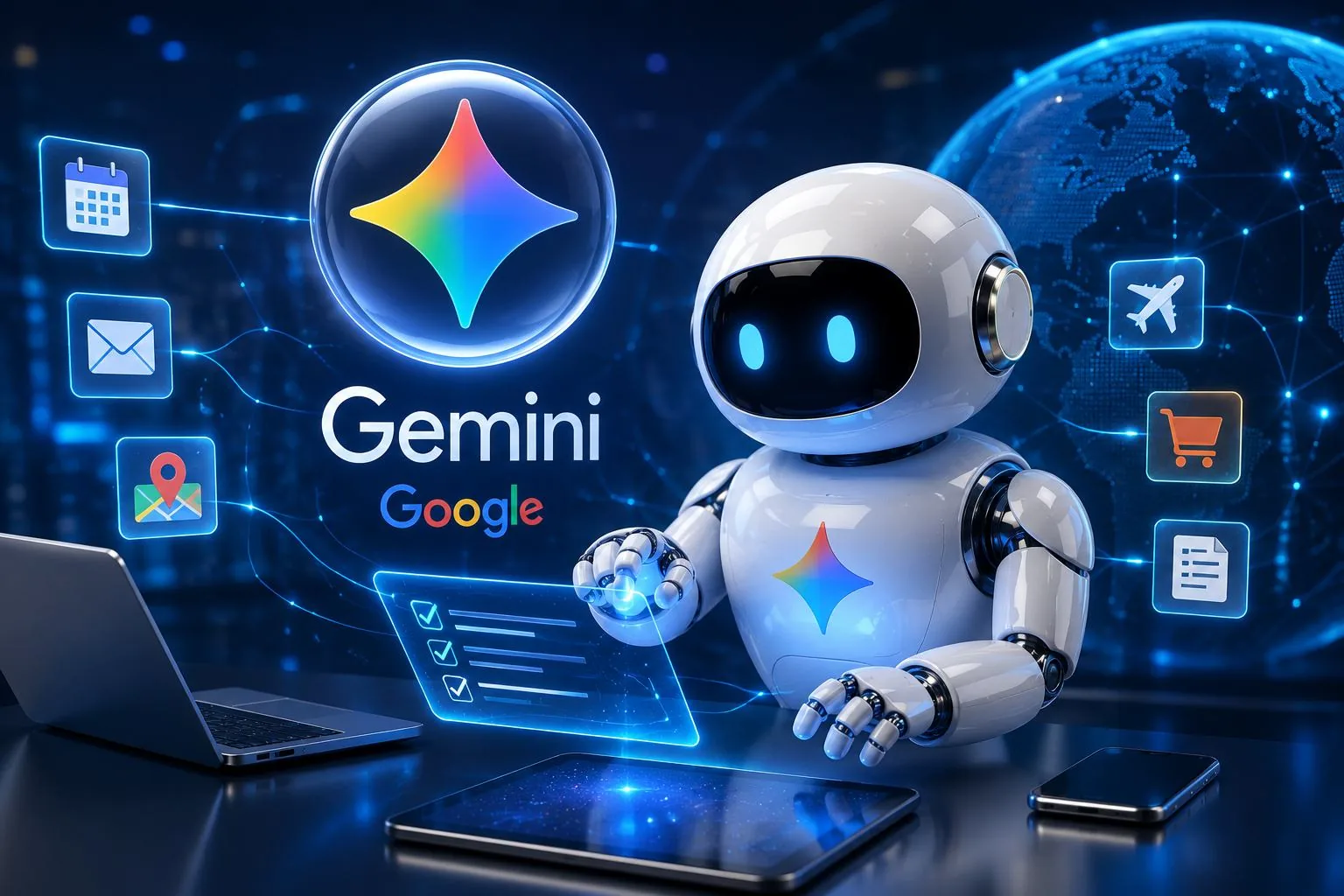
Google has officially launched Gemini Spark, an autonomous artificial intelligence agent designed to carry out complex tasks on behalf of users without constant human oversight. This new platform, which the company presented as a digital agent, can understand broad objectives and independently perform research, make reservations, monitor prices, organize schedules, and compare products. The initiative represents one of the most significant changes since the debut of the company's search engine and points to a profound transformation in how people engage with the internet. The technology builds on the latest advances in the Gemini family, developed by the Google DeepMind research lab.
A New Era of Autonomous Agents
Industry experts compare the arrival of autonomous agents like Gemini Spark to the impact of smartphones in the late 2000s, when manual interaction with individual applications gave way to integrated experiences. In the past, each task required direct user action; now, a single AI can orchestrate the entire process from start to finish. In practice, a user defines criteria—for example, finding the best travel option—and Gemini Spark executes every intermediate step, such as consulting airlines, comparing fares, and filling in personal details. According to company executives, the primary goal is to drastically reduce the time spent on repetitive and bureaucratic chores, freeing users to focus on more consequential decisions.
Multimodal Capabilities and Demonstrated Functions
The system combines computer vision, natural language processing, and access to external tools to interpret text, voice, images, documents, videos, and even content displayed on a device screen. Among the key functions revealed by Google are:
- Automatic hotel and restaurant bookings;
- Price monitoring for airline tickets;
- Schedule management;
- Full travel organization;
- Product and service comparison;
- Advanced information search;
- Administrative task automation;
- Custom report creation.
The platform can also interact with third-party applications through APIs and integrations authorized by users, expanding its reach across the digital ecosystem. The company emphasizes that all execution occurs within boundaries predefined by each individual.
Global Race and Economic Pressures
The announcement comes amid an intense technological race involving OpenAI, Microsoft, Anthropic, and Meta, all of which are investing billions of dollars in increasingly sophisticated agents. Analysts predict this market could reach trillions of dollars in the coming decade, and Google is seeking a leadership position by leveraging its existing services such as Gmail, Google Maps, Calendar, Android, and Chrome. However, this shift creates an economic dilemma for the company itself: a large portion of its revenue comes from advertising displayed in search results. If users begin to receive ready-made answers without visiting web pages, Google will need to develop entirely new monetization models.
The Future of Search Under Threat
Perhaps the most profound consequence of Gemini Spark lies in the future of online search. For decades, the dominant model involved listing links for users to choose from; now, the logic may reverse toward delivering a ready-made response with automatic execution of actions. This raises serious questions for content producers, news outlets, and digital marketing professionals, who could see traditional traffic undergo radical changes. The company is attempting to balance innovation with preservation of its revenue streams, while competitors closely watch the results of this strategy.
Privacy and Security Under Scrutiny
One of the biggest concerns involves access to personal data, browsing history, and sensitive information, which is necessary for the AI to perform complex tasks. Google states that Gemini Spark was developed with multiple layers of protection and advanced authorization mechanisms, ensuring that users retain control over the permissions they grant. Critical actions will require additional confirmation before execution. Nevertheless, cybersecurity experts warn that any technology with a high degree of autonomy increases the potential attack surface and risk of abuse, demanding careful regulation.