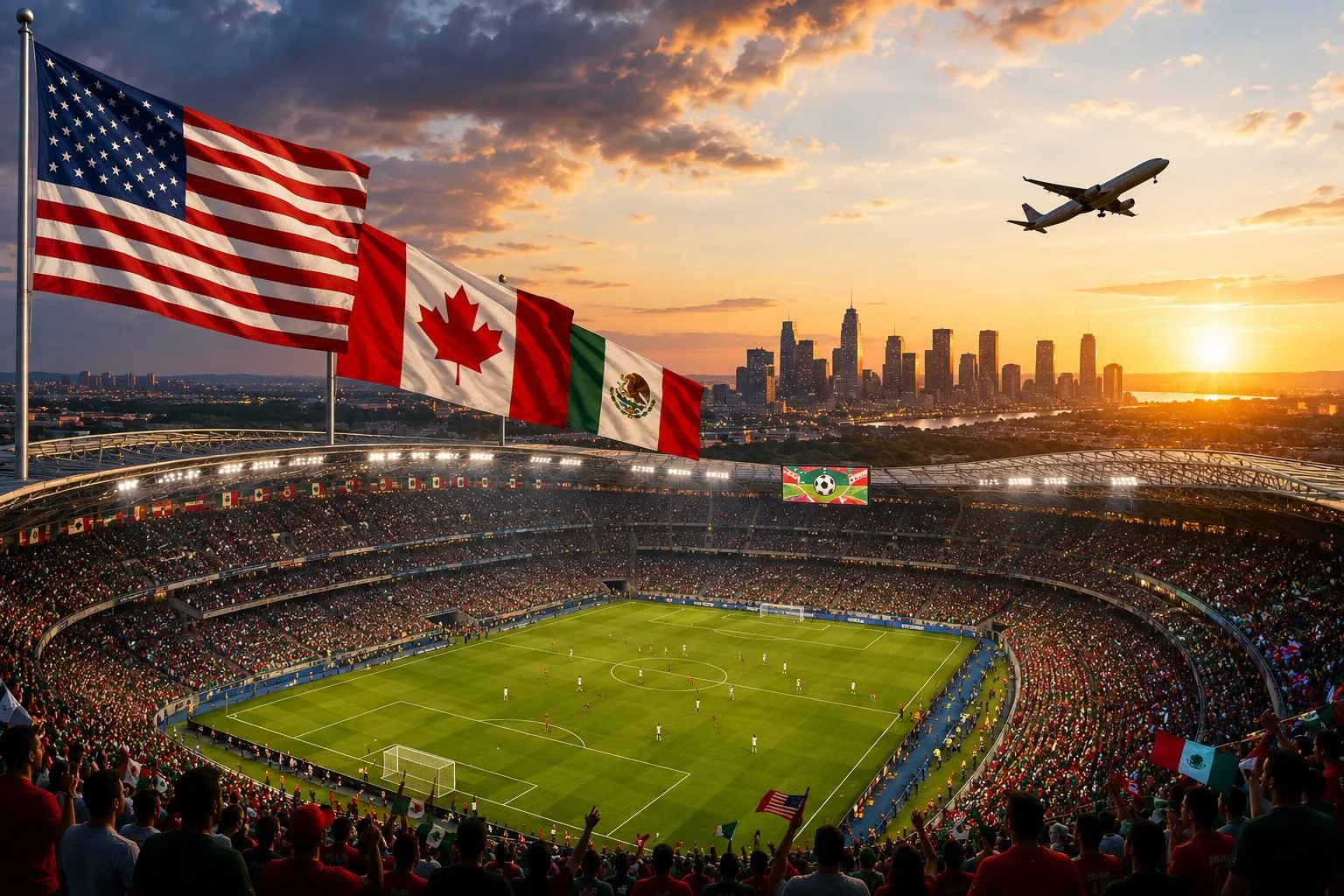
The 2026 FIFA World Cup, set to be the largest in history with 48 teams and three host nations, is already drawing sharp criticism from environmental groups, human rights organizations, and infrastructure experts over its carbon footprint, visa bureaucracy, and cross-border coordination. The unprecedented scale of the tournament, spanning the United States, Canada, and Mexico, has ignited concerns about emissions from extensive air travel, administrative barriers for millions of fans, and the ability of three governments to align their policies. Organizers at FIFA are working to balance sporting enthusiasm with increasingly rigorous societal demands, but the challenges are mounting as the start date approaches.
Triple-Host Challenge Reshapes Tournament Logistics
For the first time, the World Cup will be staged simultaneously by three countries, elevating operational complexity to an unprecedented level. The expansion from 32 to 48 teams means a record number of matches, delegations, and fans traveling across dozens of host cities. According to estimates from sports event specialists, millions of people are expected to move during the tournament, placing immense strain on transportation, security, and urban infrastructure. Host cities have already invested billions of dollars in airport upgrades, public transit networks, and telecommunications, but critics warn these efforts may fall short of mitigating negative side effects.
Carbon Footprint Debate Intensifies
One of the most contentious issues is the projected carbon footprint of the competition. Experts point out that frequent flights between cities in different countries are likely to generate far higher emissions than tournaments held in more compact territories. Environmentalists argue that the increase in teams and matches will inevitably boost total polluting gases, contradicting global reduction targets set by the Paris Agreement. International environmental organizations insist that major sporting events must adapt their operational models, considering not only sustainable construction but also the impacts of air travel, accommodation, and waste management.
Organizers, however, maintain that using existing stadiums significantly reduces the need for new construction, thereby lowering typical environmental impact. Many of the selected arenas were already used by professional football and American football teams, and energy efficiency initiatives and carbon offset programs are being implemented. Nevertheless, analysts caution that such measures may not be enough to counterbalance the scale of expected international travel, keeping sustainability at the center of the debate.
Visa Barriers Test Unity Promise
Another topic drawing international attention involves the immigration policies of the three host countries. Millions of fans will need to apply for visas or travel authorizations to attend matches, raising concerns among civil rights groups. Citizens of certain nations may face additional hurdles due to immigration restrictions, bureaucratic requirements, or lengthy consular processing times. The situation is particularly delicate because the tournament aims to promote global integration through sport, yet these administrative obstacles could undermine that message.
Bureaucratic Backlogs Loom Over Fan Participation
Mobility experts warn that consular systems could face severe pressure in the months leading up to the event. A sudden surge in visa applications tends to cause administrative delays and logistical difficulties for fans, journalists, and professionals involved in the organization. In response, several governments have already begun exploring ways to boost operational capacity and accelerate procedures related to the World Cup. Cooperation among the United States, Canada, and Mexico will be crucial to prevent bureaucracy from hindering the participation of supporters from around the globe.
Despite the criticisms, economic projections for the 2026 tournament remain extremely optimistic. Analysts estimate that the competition could generate tens of billions of dollars in revenue from tourism, accommodation, food, transportation, and advertising. Companies in hospitality, aviation, and technology expect significant growth during the event, and temporary job creation is frequently cited as a key argument by tournament proponents. At the same time, the competition will serve as a showcase for technological innovations such as artificial intelligence, digital security systems, and high-speed telecommunications networks, all of which are expected to play important roles in operations. The United States, hosting the majority of matches, draws much of the international attention, but Canada and Mexico are also working on infrastructure improvements and international coordination, dealing with customs, transportation, and technology integration. The cooperation among three national governments is one of the most complex aspects of the organization and will be closely watched as a test for a new multinational model of sports events.
The debate over the legacy of mega-events has become increasingly relevant in recent decades. Governments often justify billion-dollar investments by arguing that infrastructure improvements will produce lasting benefits for the population, but experts note that results vary depending on planning and management capacity. The 2026 edition will be closely monitored as an experiment in multinational organization that could redefine standards for future competitions. Public perception, increasingly sensitive to issues of sustainability and inclusion, also pressures organizers to go beyond sporting spectacle. Environmental reports, carbon offset programs, and logistical adjustments will remain at the center of discussions in the coming months as governments and sponsors try to address criticisms and refine preparations.