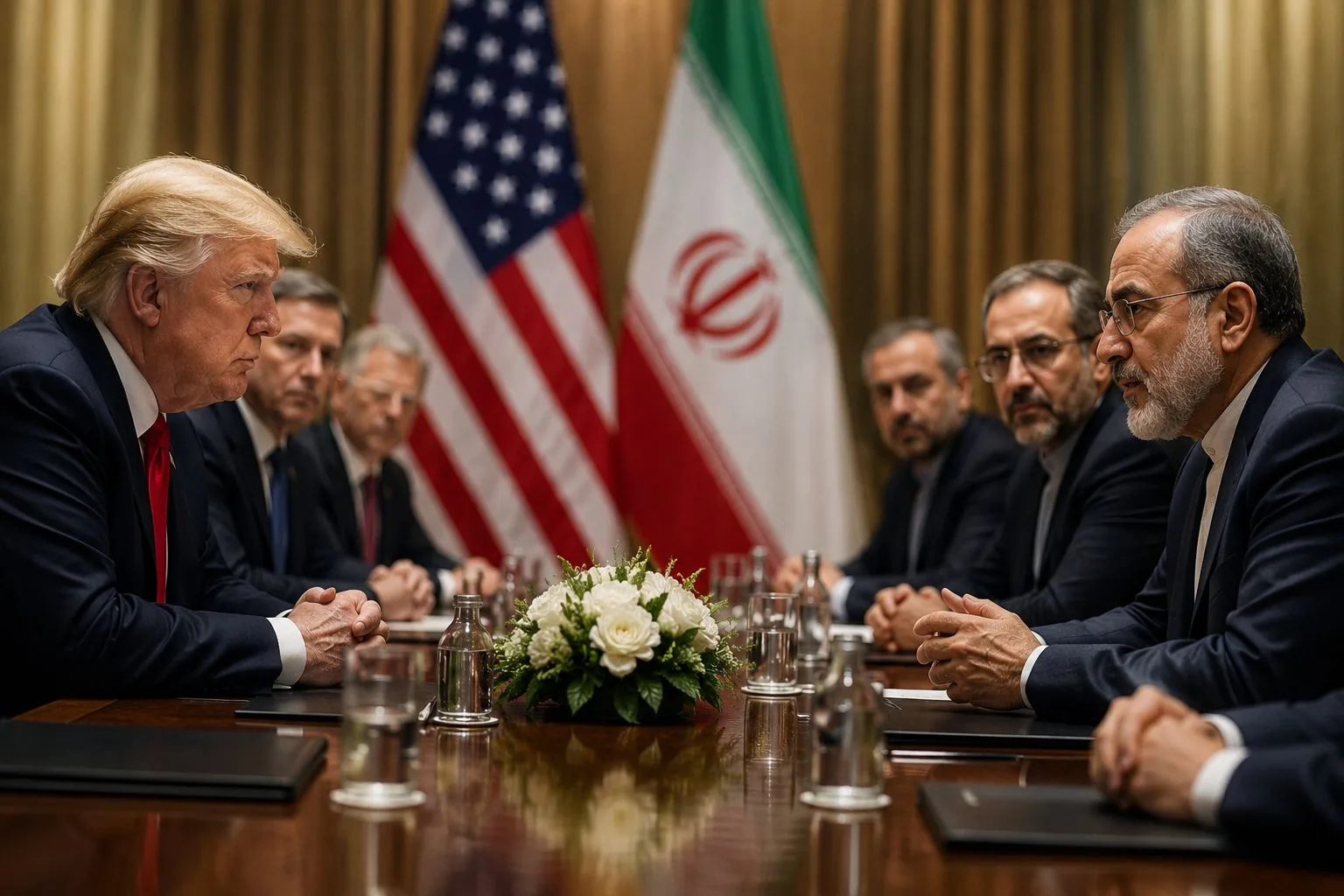
President Donald Trump declared on Wednesday, June 10, 2026, that Iran is on the verge of signing a nuclear deal that could reshape the geopolitical landscape of the Middle East. Speaking to journalists, the U.S. leader asserted that Tehran “only needs to start signing a document,” implying that negotiations have progressed to the point where only formalities remain. The announcement comes amid ongoing military tensions in the region, including security operations in the Persian Gulf and persistent international concerns over Iran's nuclear program. Experts view the statement as an optimistic signal, though they caution that the path to a signed accord still requires navigating complex diplomatic steps.
A Statement That Stoked Global Attention
The declaration, reported by CNN Brasil based on international news agencies, has stirred considerable interest in diplomatic and financial circles. Trump’s phrasing conveyed a perception that the core issues of the talks have already been resolved, even though full official details have not been disclosed. In recent weeks, the White House has indicated that advances have substantially narrowed the gaps between the two sides. The president also remarked that negotiations were proceeding rapidly, suggesting that an understanding could be reached in the near future.
Market Reactions and Economic Stakes
Investors quickly took note of the upbeat rhetoric, as any diplomatic breakthrough between Washington and Tehran carries weighty implications for global energy markets. The Middle East remains a linchpin for the worldwide oil trade, and even signals of progress tend to influence crude prices. Iran holds one of the largest petroleum reserves globally, and a relaxation of sanctions could boost supply. Consequently, market participants are closely monitoring every statement from both capitals and from mediators involved in the talks.
Why a Nuclear Deal Matters Beyond Bilateral Ties
The negotiations between the United States and Iran extend far beyond their direct relationship, with the primary goal being the establishment of verifiable limits on Iranian nuclear activities. Such constraints would alleviate international fears about the potential development of atomic weapons. Simultaneously, a formal accord could open the door to reducing economic sanctions, facilitate trade flows, and de‑escalate military frictions in one of the planet's most strategic zones. The ripple effects of any agreement would be felt across global commerce and security arrangements.
Qatar continues to play a critical mediating role between Washington and Tehran, according to diplomatic sources cited in the coverage. In recent months, Qatari representatives have participated in several rounds of indirect talks, helping to build bridges even during periods of heightened tension. Analysts note that Doha's ability to maintain open channels of communication has been a key factor enabling recent progress. This behind‑the‑scenes diplomacy is widely seen as essential to keeping the negotiations on track.
Sticking Points on the Nuclear Program
The core of the discussions remains Iran's nuclear ambitions, with the United States and Western allies demanding robust monitoring mechanisms to ensure that all activities stay strictly peaceful. Iranian authorities, however, contend that their nation has a legitimate right to develop nuclear technology for energy generation, scientific research, and civilian applications. The International Atomic Energy Agency (IAEA) continues to play a central role in overseeing compliance and verifying commitments made by all parties involved.
What Still Needs to Be Settled
Even at an advanced stage, several elements must be finalized before a signing can take place. These include:
- Defining inspection and monitoring frameworks;
- Setting an implementation timeline;
- Outlining procedures for suspending sanctions;
- Ensuring mutual compliance guarantees;
- Establishing dispute resolution processes for future disagreements.
Such matters typically demand intricate legal and diplomatic work. Israel remains among the most vigilant observers of the talks, historically voicing concerns about any deal it regards as insufficient to constrain Iran's nuclear capabilities. That posture continues to shape the regional debate and adds another layer of complexity to the final stages of negotiation.
Decisive Days Ahead
International relations analysts caution that optimistic statements from political leaders do not always translate into immediate agreements. Nevertheless, Trump’s remarks reinforce a perception that the negotiations are closer to a conclusion than at many previous junctures. The coming days will be crucial in determining whether the document the American president alluded to will actually be signed. The central question remains: will the deal truly be sealed? The answer may emerge soon, as governments, investors, and observers closely track every signal from Washington, Tehran, and the mediating actors. The oil market, in particular, remains highly sensitive to any signs of progress or setback, given that Iran’s vast reserves could significantly alter global supply dynamics if sanctions are eased.