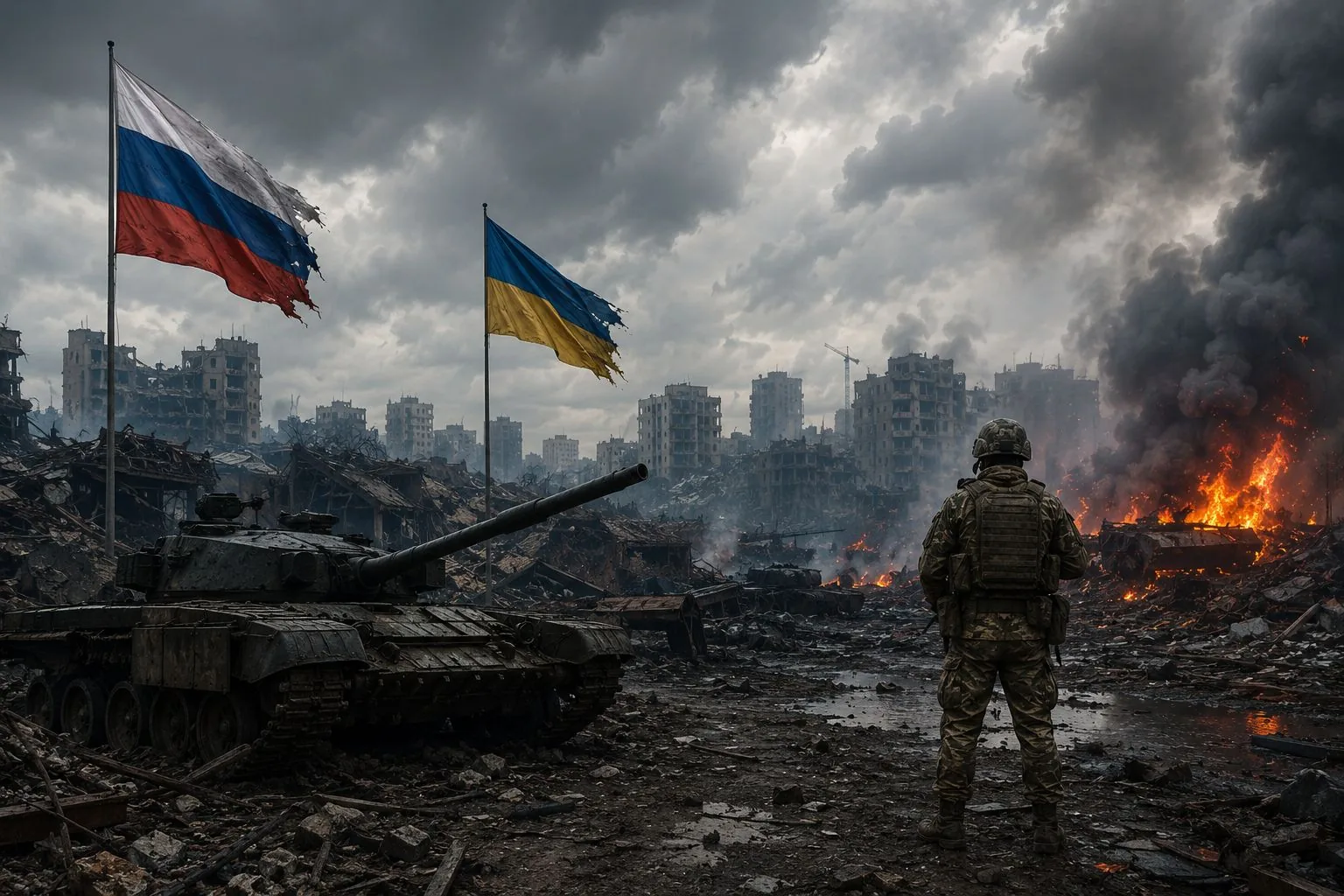
New strategic alerts from Moscow have reignited global fears of escalation in the Russia-Ukraine war, now well into its fifth year. In June 2026, Russian authorities repeated that they are ready to employ every available measure to safeguard their national security interests if they perceive a threat. These statements come amid intensified military operations, fresh Western weapon deliveries to Kyiv, and ongoing debates within NATO about the future of European defense. The conflict, which has long spilled beyond the borders of the two nations, remains far from a conclusive settlement.
Roots of the War and the 2022 Invasion
Although full-scale hostilities erupted in February 2022, the underlying tensions date back further. Following political shifts in Ukraine in 2014, Moscow responded by annexing Crimea and igniting clashes in the eastern regions of Donetsk and Luhansk. Multiple cease-fire agreements were brokered over the years, yet none resolved the territorial and political disputes. In February 2022, Russia justified its invasion by citing national security concerns, NATO expansion, and the need to protect Russian-speaking populations. Kyiv, the United States, and the European Union condemned the action as a violation of Ukrainian sovereignty.
NATO's Growing Role and Moscow's Alarm
The alliance has emerged as a key indirect actor in the conflict without officially participating in combat operations. NATO's support for Ukraine includes:
- Military training.
- Intelligence sharing.
- Provision of air defense systems.
- Delivery of armored vehicles.
- Advanced munitions.
- Financial assistance.
Kremlin officials frequently frame this assistance as proof of a proxy confrontation between Russia and NATO. The latest warnings from Moscow reflect growing unease over the conflict's trajectory and the steady flow of modern military equipment to Kyiv. Russian authorities argue that Western actions could heighten the risk of broader clashes.
Drone Technology Reshaping the Battlefield
The military landscape remains extraordinarily intricate, with both sides deploying cutting-edge technology. Drones have become indispensable assets, employed for:
- Reconnaissance.
- Artillery correction.
- Precision strikes.
- Troop monitoring.
- Long-range operations.
Analysts note that the war is redefining military doctrine, and the lessons learned will shape armies for decades. Beyond drones, electronic warfare systems, long-range missiles, and artificial intelligence for defense are all part of the arsenals in use. Front lines shift constantly, while strikes on strategic infrastructure continue unabated.
Economic Shockwaves and a Reshaped Global Order
The conflict's effects extend far beyond the warring parties, hitting multiple sectors hard. Industries affected include:
- Energy.
- Agriculture.
- Maritime shipping.
- Financial markets.
- Manufacturing.
- International trade.
Volatility in oil and natural gas prices remains under close watch. Since the war began, Russia has faced sanctions that restrict:
- Access to financial markets.
- Technology imports.
- Strategic exports.
- Banking transactions.
- Foreign investments.
Despite the restrictions, the Russian economy has found alternative channels to sustain part of its activity. China and India have expanded trade ties with Moscow, especially in energy, reshaping economic flows and accelerating discussions about a multipolar world order. Europe's energy crisis has spurred massive investments in renewables, liquefied natural gas, and infrastructure.
What Lies Ahead for the Stalemated War
International analysts consider several scenarios. The most likely outcome is a protracted continuation of fighting with no decisive advantage for either side. Another possibility is a revival of peace negotiations, though deep divisions hinder progress. There is also the prospect of a frozen conflict, where combat diminishes without a political resolution. Regional escalation, while less probable, is the scenario governments strive to avert through diplomatic channels. The war is influencing European security, global markets, world energy, international trade, and military technological development.