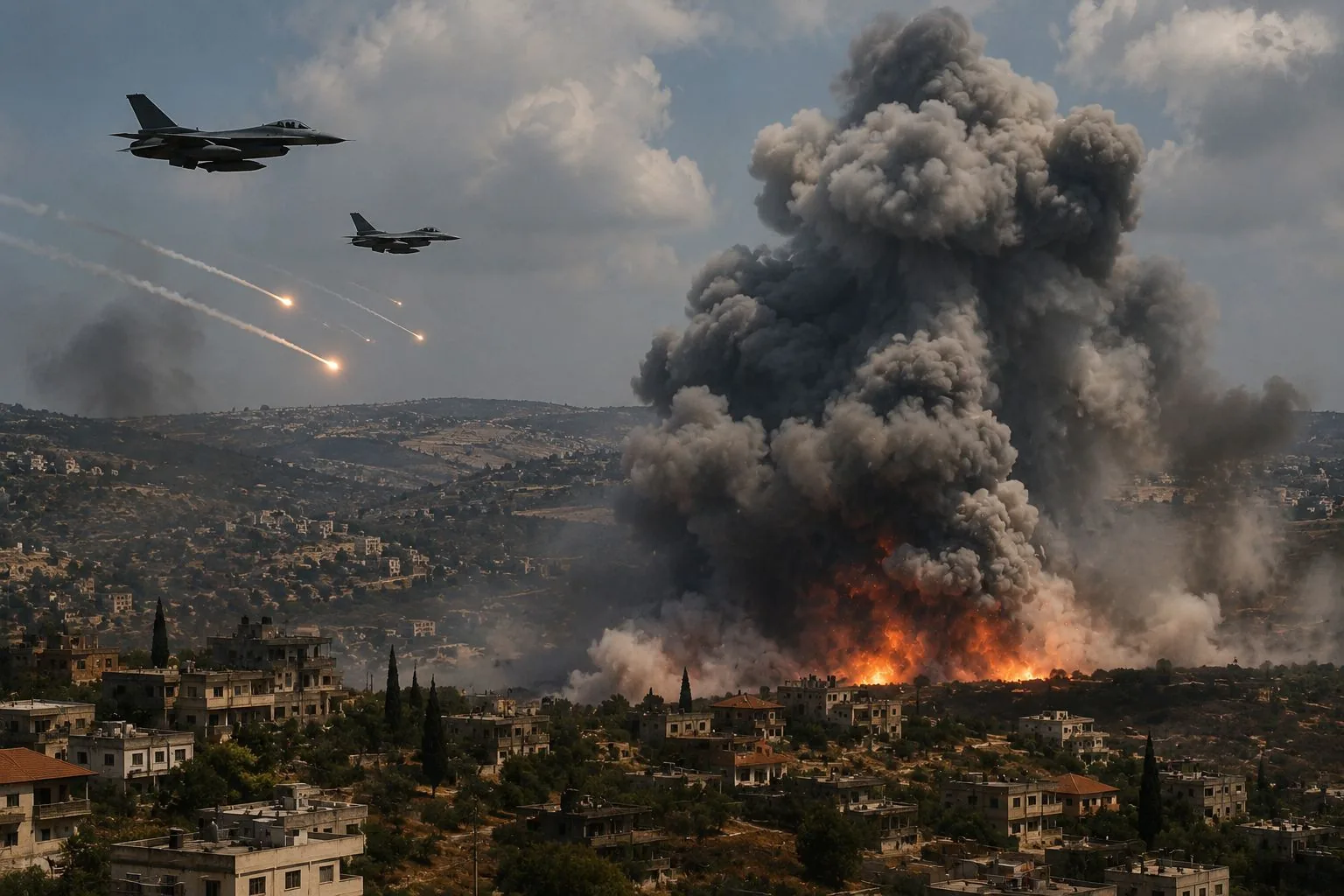
Israeli forces launched new attacks against the historic city of Tyre in southern Lebanon on Tuesday and issued a rare evacuation order for a Christian neighborhood in the area, marking an escalation in military operations. The directive, delivered by military spokesman Avichay Adraee via social media, cited alleged violations of the ceasefire agreement by Hezbollah. For the first time, residents of a Christian district were explicitly warned to leave their homes, signaling that Israeli operations may intensify in that locality. The coastal city, located north of the zone occupied by Israeli troops, now faces a humanitarian crisis as the conflict expands.
Unprecedented Evacuation Order Targets Christian District
Adraee's urgent alert to residents of Tyre and its surroundings, including the Christian quarter, stated that the Israeli Defense Forces are compelled to act forcefully due to Hezbollah's breach of the truce and attacks on Israeli civilians. This is not the first time Israeli forces have accused the group of operating in the region, but it is only the second occasion they have claimed the need to strike the area. The warning came on the same day that Lebanon's National News Agency reported fresh bombings against a social housing area in the city, while rescue teams recovered another body from the rubble — with more people still missing under the debris. The inclusion of the Christian neighborhood in the evacuation order marks a notable shift, as previous such orders had excluded that area. Israeli authorities now assert that Hezbollah is active there, raising questions about the ceasefire's effectiveness and the potential for further clashes.
Humanitarian Toll and Rescue Efforts
On Monday, Lebanese officials reported that five people were killed and eight others wounded in an attack on Tyre. These numbers add to the human cost of an offensive that continues despite the US-mediated ceasefire between Israel and Lebanon. Hezbollah, for its part, has not signed the agreement and rejects it as long as Israeli troops remain on Lebanese soil. Israel maintains that the withdrawal from Tyre is necessary due to the Shiite group's violations. Rescue teams are still searching for missing persons amid the ruins, as the humanitarian crisis worsens with each new bombardment. The advancing death toll underscores the fragility of the truce and the persistent danger facing civilians.
Fragile Ceasefire Under Pressure as Regional Conflict Expands
The attacks in southern Lebanon come after Israel and Iran announced a truce following direct clashes between Sunday and Monday, prompted by a call from US President Donald Trump for an immediate halt to hostilities. However, Tehran stated that it would resume attacks if Israel continued to strike Hezbollah in Lebanon. The wave of assaults that began on Sunday represented the most direct confrontation between the two countries since the April ceasefire and threatens to undermine Washington's efforts to negotiate with Iran and end the war that has already lasted more than three months. This regional dimension complicates the local ceasefire, as Iran backs Hezbollah and has vowed retaliation. The intertwined nature of these conflicts makes a lasting peace elusive.
Retaliatory Strikes and Strategic Targets
Israel attacked Iranian targets after Tehran launched missiles at its territory late Sunday. The Iranians said their attacks were in retaliation for Israeli bombings against Hezbollah strongholds on the outskirts of Beirut. One Israeli strike hit a petrochemical plant in southwestern Iran, which Israel claimed was used to produce ballistic missiles. Iran's Islamic Revolutionary Guard Corps responded by striking a similar Israeli facility in Haifa. This exchange of fire between the two nations highlights the risk of a broader war, especially with both sides showing readiness to continue operations. The targeting of industrial sites suggests a strategy of degrading each other's military production capabilities.
US Mediation and Threat of Prolonged Conflict
In a social media post on Monday, Trump stated that Israel and Iran desire "an immediate ceasefire" and that final peace negotiations are underway, "subject to ignorance or stupidity getting in the way." The president added that the American blockade of Iranian ports would remain in place until a final agreement is reached. An Israeli official said Trump spoke with Prime Minister Benjamin Netanyahu on Monday. Earlier, an Israeli military source stated that the country was prepared to continue operations "as long as necessary" and confirmed attacks on newly rebuilt Iranian air defense systems, in addition to the petrochemical target. Iranian authorities adopted an equally defiant tone: a military source cited by the semi-official Tasnim news agency said Tehran is ready for a prolonged conflict and could resume attacks against American interests in the region. The competing signals — US pressure for peace versus both sides' readiness for escalation — leave the region in a precarious balance.