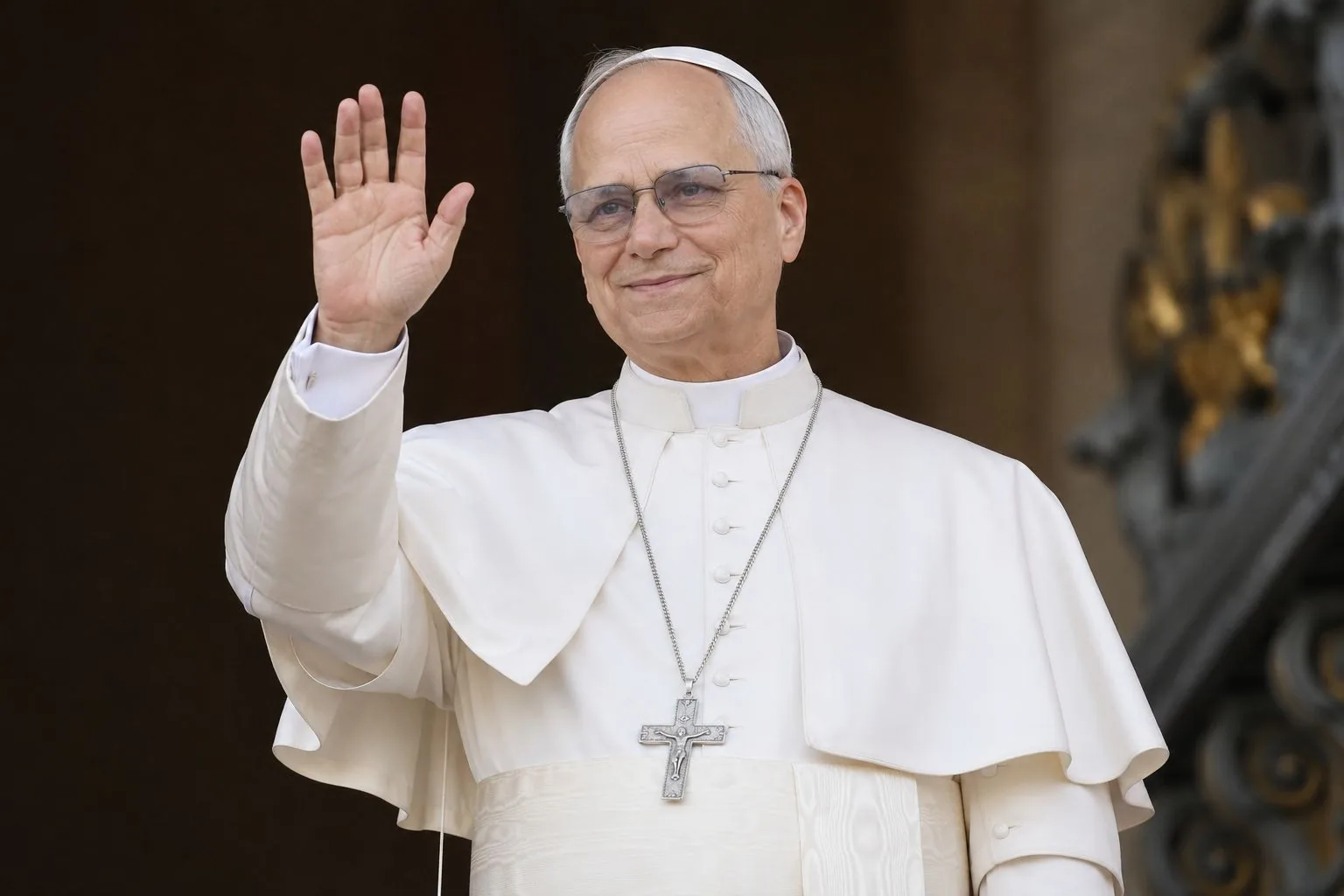
Pope Leo XIV officially inaugurated the Tower of Jesus Christ at Barcelona’s Sagrada Familia on the centenary of architect Antoni Gaudí’s death, using the occasion to deliver a pointed homily against war. The pope, spiritual leader of 1.4 billion Catholics, celebrated a Mass exactly 100 years after Gaudí's passing. Approximately 9,000 people attended inside the basilica and on the esplanade, while tens of thousands more followed via a giant screen. The event also served to bless the new tower, which at 172.5 meters made the basilica the world's tallest church since February 2026. This was the third papal visit to Sagrada Familia, following those of John Paul II and Benedict XVI.
A Papal Homily Against War
During his homily, Pope Leo XIV declared that those who believe in Jesus cannot “promote war,” in remarks that analysts have interpreted as an indirect criticism of the administration of U.S. President Donald Trump. The pope further stated that it is impermissible to “kill innocent people” or “abandon those who suffer, weep, or flee from misery.” The Mass, which lasted an hour and a half, was celebrated in Spanish, Catalan, and Latin, with a choir of 500 adults and 100 children performing Gregorian chants and traditional Catalan songs. Following the service, the pope conducted a brief blessing of the tower on the esplanade, culminating in a light-and-sound show, and he sprinkled holy water on the cross amid applause from the crowd.
Implicit Critique of Washington
The pope’s choice of words was widely seen as a veiled attack on the Trump administration’s foreign policy. The source material notes that analysts specifically linked the homily’s anti-war message to the U.S. president. While the Vatican has historically maintained diplomatic neutrality, the pope’s remarks signal a clear moral stance against ongoing conflicts. The timing of the criticism, delivered from a global stage in Barcelona, amplifies its reach and underscores the pontiff’s willingness to address geopolitical issues.
Mercy and Symbolism: A Morning of Visits
Earlier on the same day, Pope Leo XIV visited Brians prison, located 40 kilometers from Barcelona, where he told inmates that “the past does not condemn the future.” Two prisoners presented him with gifts, and one broke protocol to embrace the pontiff. The pope then traveled by helicopter to the Abbey of Montserrat, an emblematic site of Catalan culture and history, where he was greeted by an enthusiastic crowd. In his speeches, the pope alternated between Catalan and Spanish, a gesture of connection with a region where nationalist sentiment remains strong. The previous evening, he had participated in a vigil at Barcelona’s Olympic Stadium, where he maintained the tradition of blessing babies brought by the public.
From Prison to Montserrat
The pope’s itinerary for the day reflected his broader message of forgiveness and unity. By visiting a prison and a historic abbey, he emphasized the Church’s commitment to reaching marginalized communities and embracing regional identities. His use of Catalan was particularly significant in Catalonia, where language is closely tied to cultural identity. The visits were part of a wider trip to Spain that began in Madrid on Saturday, aimed at revitalizing the Church in a country where religious practice has declined in recent decades.
Technology and Tradition: The World’s Tallest Church
The Tower of Jesus Christ, the tallest of the 18 towers designed by Gaudí, was completed in February with the installation of the upper arm of the cross. The basilica, which received nearly five million visitors in 2025, still requires completion of the Glory Facade and other elements, but experts estimate the end of construction is about ten years away. Progress has been accelerated by the use of drones and artificial intelligence systems, which have replaced the climbers who previously required two years to inspect the entire building. Fernando Villa, the church’s director of technology and innovation, explained that once the AI is fully trained, it will be able to scan the basilica in just one month.
AI Accelerates a Century-Long Project
Since the laying of the foundation stone in 1882, Sagrada Familia has undergone numerous phases. The initial neo-Gothic design was handed to Gaudí in 1883, who transformed it into a “Bible in stone,” according to historian Gijs van Hensbergen. To support its 18 towers, Gaudí employed catenary arches based on the Taq-i Kisra arch, a technique that distributes weight efficiently and eliminates the need for flying buttresses, which he considered “crutches.” Engineer Liam Duff of Arup described the solution as “extremely elegant and functional,” noting that it is self-supporting.
Emotion Among the Faithful
María José Sedano, a 30-year-old lawyer, told AFP that the pope’s visit felt like “putting a full stop” on a construction she has followed throughout her life. María del Carmen Guillaume, 80, was among 4,000 Barcelona residents invited to attend Mass inside the basilica and celebrated the blessing of the tower by the Holy Father. Isabel Magallón, a 60-year-old administrator, said that despite her doubts about the “massification,” she found the event “memorable.” Upon arrival, the pope was received by King Felipe VI and Queen Letizia, and a blind young woman described the new tower through a tactile experience using a model.
The topics covered during the pope’s trip include:
- Barcelona, Spain
- Donald Trump
- Spain
- United States
- Pope Leo XIV