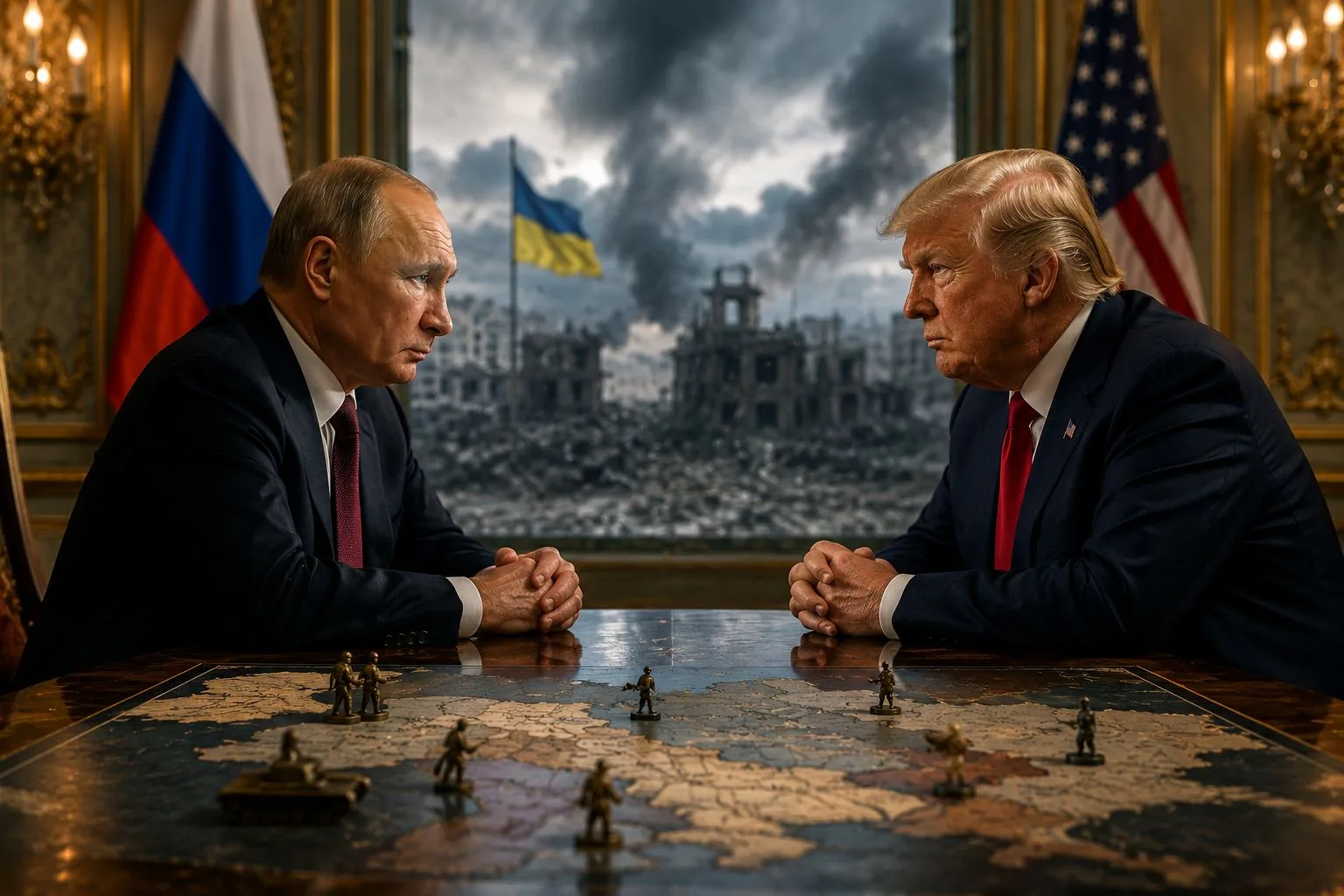
The Kremlin has definitively ruled out any direct conversation between Vladimir Putin and Donald Trump, signaling that high-level negotiations to end the war in Ukraine remain frozen in 2026. The statement, issued amid a flurry of indirect diplomatic efforts, underscores the profound obstacles still separating the two sides. Despite international appeals and ongoing mediation initiatives, no schedule has been set for a potential meeting between the two leaders. The current impasse reflects the complex dynamics that have turned the conflict into one of the most protracted and consequential of the 21st century.
Moscow’s Position and the Diplomatic Deadlock
The Russian government maintains that any lasting solution must incorporate its national security concerns, particularly regarding the expansion of the NATO alliance over recent decades. Officials in Moscow argue that the European strategic balance has been altered unfavorably and that this must be corrected in any future agreement. Territorial issues and security guarantees for Russia are presented as non-negotiable items. By stating that no meetings between Putin and Trump are scheduled, the Kremlin makes clear that, at least in the short term, there will be no progress in direct talks.
Key Factors Blocking a Peace Deal
Experts point to a series of elements that make the peace process extremely thorny. Among them, the following stand out:
- Unresolved territorial disputes between the parties;
- Mutual distrust that erodes any attempt at dialogue;
- Security demands that directly clash with each other;
- Domestic political pressures in Russia, Ukraine, and the United States;
- Divergent geopolitical interests of external powers, such as China and European nations;
- High political costs associated with potential concessions by any side.
Each of these items alone would already be a considerable challenge. Combined, they create a scenario where any progress demands sacrifices that neither side seems willing to make at this time.
International Actors and Their Competing Agendas
Beyond Moscow and Washington, other global players also strongly influence the conflict’s trajectory. Ukrainian President Volodymyr Zelensky continues to defend the preservation of Ukraine’s sovereignty and territorial integrity, demanding robust security guarantees to prevent future aggression. Kyiv has received significant financial, military, and diplomatic support from Western countries, which sustains its capacity to resist. NATO, while not directly participating in combat, provides equipment, training, and financial assistance, and is viewed by Moscow as one of the main strategic threats.
The Human and Economic Toll of the War
Alongside the negotiations, the conflict continues to produce devastating impacts. Millions of people have been displaced from their homes, entire infrastructures have been destroyed, and reconstruction will require billions of dollars in investment over many years. International organizations carry out assistance operations, but humanitarian needs outpace the capacity to respond. On the economic front, energy markets have suffered from volatility in oil and natural gas prices, while agricultural sectors have been shaken by disruptions in global grain supplies. Several countries have had to implement measures to contain inflation generated by the crisis.
The war’s effects transcend borders, shaping European and global politics. European nations have increased defense spending, diversified their energy sources, and strengthened regional cooperation mechanisms. China, in turn, has become a relevant actor in the discussions, maintaining strategic relations with Russia while also holding economic interests in Europe. Analysts believe Beijing could play a mediation role in the future. Meanwhile, Western economic sanctions continue to pressure Russia, which seeks alternative trade routes to mitigate their effects.
Modern technology has also redefined the battlefield. Drones, artificial intelligence, satellites, and digital systems are increasingly central to military and intelligence operations. Governments around the world are using the Ukrainian experience to revise their own defense doctrines. Yet, despite all these advances, the war remains fundamentally a human drama, with millions of lives affected. The absence of a direct conversation between Putin and Trump symbolizes the difficulty of turning sporadic efforts into an effective peace-building process.