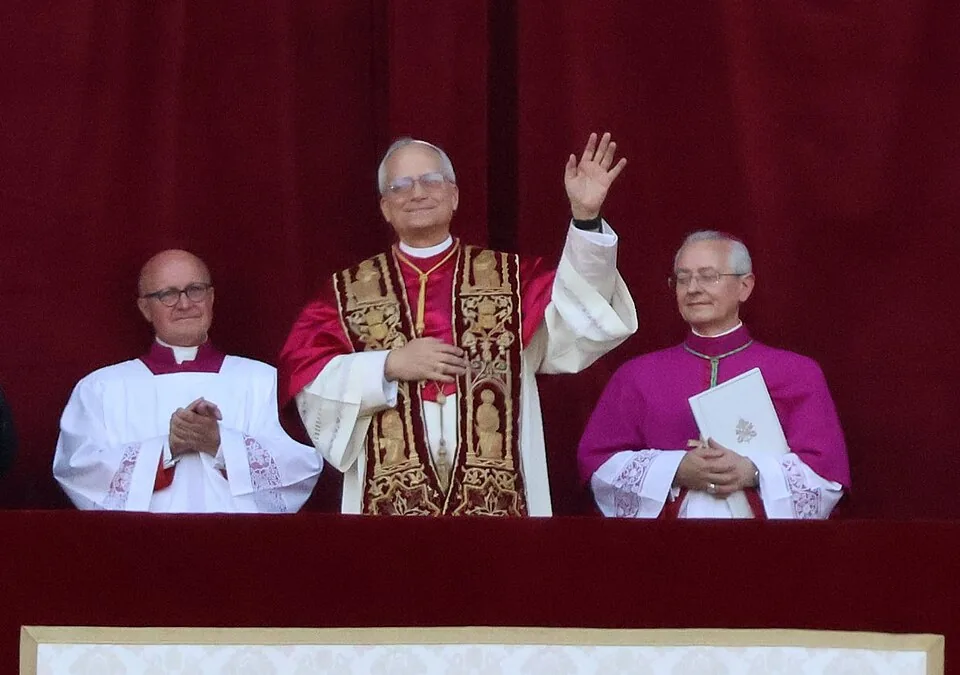
Pope Leo XIV told an audience in Madrid that the desire for goodness, beauty and truth is rooted in humanity's DNA, a statement delivered during a gathering on Sunday, June 7, at the Movistar Arena. The event, part of his apostolic journey to Spain, brought together representatives from culture, art, economics, labor, and sports. The Pontiff directly questioned what legacy is being left for the future and what kind of community is being built. That central inquiry guided his entire reflection during the session titled “Weaving Networks with the World of Culture, Art, Economy, and Sports.”
The Challenge of Safeguarding Society's Soul
After hearing testimonies from figures in academia, business, labor, and sports, the Holy Father acknowledged contemporary society’s immense capacity to innovate, produce, and communicate. Yet he warned of a significant risk: losing sight of what gives meaning to these achievements. “Our society indeed possesses an extraordinary ability to produce, innovate, and communicate; nevertheless, it seems we still need to learn to safeguard the soul of the one who generates it,” he said. Leo XIV reaffirmed that the Church desires a permanent dialogue with the modern world precisely because it shares the great questions that traverse human experience. For the Pope, the search for life’s meaning remains one of the fundamental issues of our time.
An Intrinsic Human Aspiration
The Pope was emphatic in declaring that the longing for good, beauty, and truth is not artificial but an inherent characteristic of humanity. “In the DNA of humanity is rooted the desire for good, beauty, and truth; and it is from this profoundly human aspiration and our secular experience that the Church proposes paths for a dignified life and the common good,” he stated. Based on this foundation, the Catholic Church leader suggested that all social activities—from economics to art, from sports to education—must be oriented by human dignity. He insisted that development cannot exclude the most fragile, and that the situation of the poor remains an urgent call to human conscience.
Weaving Social Bonds Through Authentic Dialogue
Leo XIV compared social dialogue to the art of weaving a net, a process requiring encounter, listening, respect, and collaboration. He stressed the responsibility of communication, education, economic activity, art, sports, and technology in building a more humane society. “Every expression speaks, transmits; it can wound or heal, destroy expectations or open horizons, sow division or awaken hope in the possibility of building together something genuinely human,” he asserted. For the Pontiff, true dialogue must be grounded in the recognition of each person’s dignity and a shared commitment to everyone’s well-being. He renewed the invitation of his predecessors: “Do not be afraid! Open wide the doors to Christ! Jesus Christ takes nothing from us and gives us everything.”
Sports as a School of Humanity
In his reflection, the Pope devoted special attention to sports, an area he knows well. He recalled the educational and social value of this practice, noting that many of the most important lessons of human coexistence are learned on fields and courts. He listed learnings that go beyond words:
- Respect for the opponent, which is often learned more in a game than by listening to a speech.
- The ability to lose without hating and to win without humiliating.
- Resilience to get up after a fall.
The Holy Father highlighted that athletes, through their example, teach fundamental values for life in society. These lessons, he said, contribute to forming more integrated and solidary individuals.
A Call to Become New Threads in Society
In the final portion of his speech, the Pope directly addressed the participants, inviting them to act as protagonists in building the future. “I therefore invite you to be new threads to weave new networks that harmonize all areas of life, to weave a renewed society where time becomes impregnated with eternity,” he declared. He mentioned that culture must safeguard memory and foster dialogue; education must promote the search for truth with a critical spirit; art must awaken wonder and generate noble emotions; business must recognize human dignity; and work must continue as a motor of hope. Concluding, Leo XIV urged those present to cultivate fraternity, solidarity, and peace, so that what he called the “magnificent humanity” of each person and each people may continue to shine in future generations.