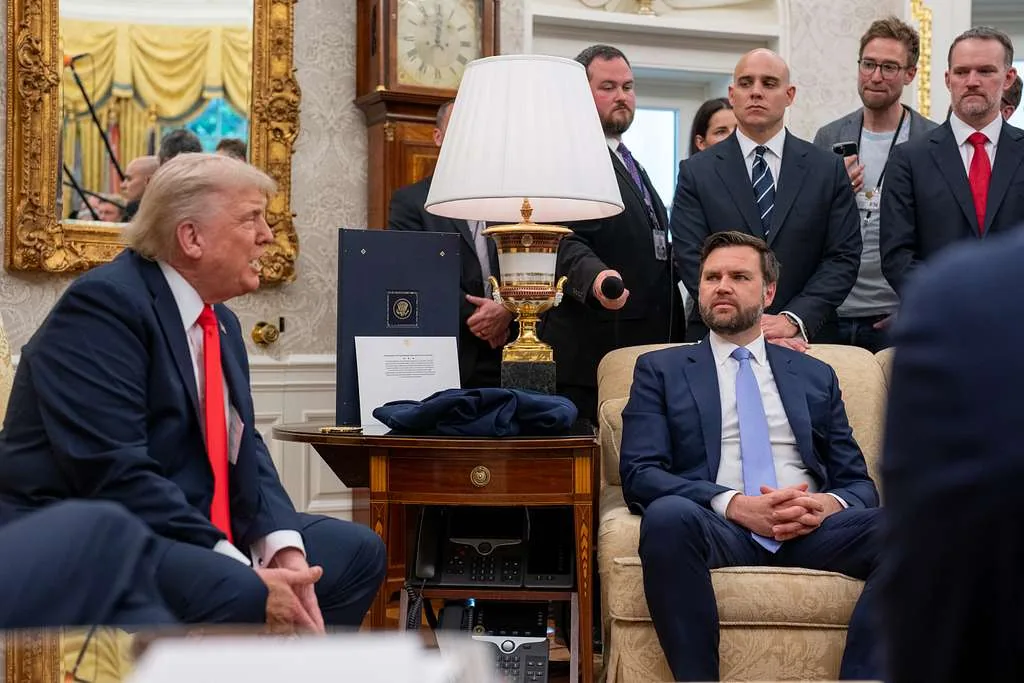
US President Donald Trump confirmed on Monday the signing of a provisional agreement with Iran, a diplomatic advance that could fundamentally alter the war landscape in the Middle East. Vice President J.D. Vance also participated in the signing of the document, which represents the most concrete step so far toward resolving the conflict that erupted in February. On the Iranian side, Mohammad Bagher Ghalibaf, Speaker of the Iranian Parliament, initialed the text, according to a US official who spoke on condition of anonymity. All eyes now turn to the formal ceremony scheduled for next Friday, June 19.
Who signed the provisional agreement between the US and Iran?
The American signatures came from President Donald Trump and Vice President J.D. Vance. Representing Iran, Mohammad Bagher Ghalibaf, the Speaker of the Iranian Parliament, signed the document. The information was confirmed by a US official who requested anonymity. The formal signing ceremony, set for Friday, June 19, suggests the agreement may take on solemn contours and greater international visibility. The terms of the provisional pact have not yet been fully disclosed, but sources indicate it provides for an end to hostilities and the reopening of the Strait of Hormuz, one of the most strategic maritime routes on the planet. The strait, through which roughly one-fifth of the world's oil passes, had been partially blocked due to the conflict.
What are the specific terms of the US-Iran provisional agreement?
According to a US official who spoke under condition of anonymity, the provisional agreement includes provisions for the cessation of hostilities and the gradual reopening of the Strait of Hormuz. The official stated that maritime traffic through the strait will increase gradually. "You will see a significant increase in traffic in the Strait of Hormuz, which is already beginning, and that increase will be gradual over time," the source said. The official cautioned that full normality will not be achieved within two weeks, but a substantial improvement is already expected. The news brought immediate relief to global energy markets, which had been operating under high volatility since the conflict began in February.
How will the agreement affect maritime traffic in the Strait of Hormuz?
The reopening of the strait is one of the pillars of the provisional agreement. "We probably won't return to normality in two weeks, but we will see a significant increase in traffic in the strait," the US official declared. The passage, which connects the Persian Gulf to the Gulf of Oman, is vital for oil exports from Iran and other countries in the region. The gradual increase in ship flow is expected to ease pressure on oil prices, which soared after the joint strikes by the US and Israel against Iran in February. The US official emphasized that the increase in traffic is already beginning and will continue gradually over time.
Does the provisional agreement depend on an end to hostilities in Lebanon?
Washington and Tehran have announced that the pact may depend on the end of hostilities in Lebanon. Although the provisional agreement represents a significant advance, it postpones negotiations on the Iranian nuclear program, one of the thorniest issues in relations between the two countries. The conflict, which has already killed thousands of people and dramatically affected energy markets, began with the joint strikes by the US and Israel against Iran in February. The preliminary text does not directly address the central causes of the war, according to analysts, but establishes a truce that could lead to broader negotiations. The ceasefire in Lebanon is emerging as a condition for the pact to consolidate, according to sources from both sides.
What are the next steps and the nuclear negotiations after the deal?
The formal signing ceremony on Friday, June 19, will be a diplomatic milestone, but the path to full peace remains uncertain. The provisional agreement postpones talks on the Iranian nuclear program, which remains one of the main points of tension between Western powers and Tehran. The current document does not resolve this issue, leaving it for a later phase. Meanwhile, the end of hostilities in Lebanon emerges as a condition for the pact to consolidate, according to sources from both parties. The priority is to end the fighting and reopen the Strait of Hormuz, but the absence of a timeline for the nuclear issue maintains uncertainty about long-term stability in the region.
What happens to the Iranian nuclear program after the provisional agreement?
The provisional agreement postpones negotiations on the Iranian nuclear program, as confirmed by American and Iranian officials. This means that, for now, the nuclear issue will not be discussed, which could draw criticism from more hawkish sectors in Washington and Tel Aviv. The immediate priority is to end the hostilities and reopen the Strait of Hormuz, but the lack of a schedule for the nuclear issue keeps uncertainty about long-term stability in the region. The preliminary document does not directly address the root causes of the war, according to analysts, but establishes a truce that could lead to broader negotiations.
Frequently Asked Questions about the US-Iran provisional agreement
Is the provisional agreement final?
No. The document signed on Monday is a preliminary agreement, as highlighted by the US source. The formal signing ceremony will take place on Friday, June 19, but the pact may still depend on an end to hostilities in Lebanon. It is a step forward, not a definitive treaty.
When will the Strait of Hormuz be fully reopened?
The US official stated that traffic will increase gradually and that normality is not expected to return within two weeks. "You will see a significant increase in traffic in the Strait of Hormuz, which is already beginning," the official said. There is no precise date for full reopening, but the process is already underway.
Will the agreement end the war in the Middle East?
The provisional agreement represents the biggest advance toward resolving the conflict that has killed thousands since February, when the US and Israel struck Iran. However, its implementation may depend on a ceasefire in Lebanon and progress on negotiations over the Iranian nuclear program, which have been postponed. The war does not end automatically, but the pact creates a path toward de-escalation.